Creating split phase 120V from 120V with transformer, safety concerns?

nsaspook

Joined Aug 27, 2009
16,357
User safety in possible trying circumstances dictate not depending on just insulation in possibilly wet, muddy or contaminated conditions for electrical shock protection. Bonding neutrals correctly at a single point and grounding metal frames are not needed in a perfect world but IMO don't tempt Murphy's law with short cuts.
 

Thread Starter

MrSoftware

Joined Oct 29, 2013
2,273
What possible safety benefit can be gained by tying the generator frame ground, or the isolated generator neutral, to the house side of the isolation transformer's secondary ground???
Please explain the means by which that increases any safety. The transformer isolates the generator line and neutral connections from any ground reference. If the generator neutral is not connected to the generator frame, how is there a shock hazard on the generator side, except for connection to both sides of the generator output.
The benefit is on the house side. Should there be a ground to hot fault somewhere along the line, tying the ground and neutral would give a return path for the fault current. These are already bonded in the main electrical panel, I'm just debating if there's any benefit to also bonding them at the transformer.
 

MisterBill2

Joined Jan 23, 2018
27,684
The benefit is on the house side. Should there be a ground to hot fault somewhere along the line, tying the ground and neutral would give a return path for the fault current. These are already bonded in the main electrical panel, I'm just debating if there's any benefit to also bonding them at the transformer.
If the transformer secondary neutral is connected to the grounded house neutral then there is no clear benefit, unless possibly some other connection fails.
My comment is about on the generator side of the transformer, where nothing is intentionally grounded.
 
My comment is about on the generator side of the transformer, where nothing is intentionally grounded.
Well, I said the generator ground should ideally go to the panel ground. The N-Ground bond needs to be broken and it needs to go somewhere.

Why the house ground? If a fault from N to G of the generator would then go to the ground (reference)of the house and would not upset anything.

You could consider the transformer an extension of the generator, so grounding the generator to the transformer case. I would consider that OK too. e.g. big ground strap. This might be preferrable.

You want the house reference (ground) to change if there is a fault.
 
You want the house reference (ground) to change if there is a fault.
I may not have explained this correctly.
#1. Your house is referenced to the ground rod in the ground.
#2. 200 feet away, they are not the same point especially in a lightning storm.
#3. If a HOT to ground fault was introduced in the house. It would be discharged to that ground rod. It would raise the potential of the rod relative to say 200 feet away and the house would not see any neutral to ground reference change.
#4. A HOT-Neutral Generator short, needs to do the same thing.
#5. It's OK if the ground-neutral potential doesn't change during a fault.

While we are t it, lets discuss "isolated grounds". What is this nonsense. The outlets are orange. Why? They may be fed by BX cable and like any other outlet, the screw gets attached to ground. The third prong, however, needs to run all the way back to the panel. This outlet would not be daisy chained.

Daisy chaining is an inherent problem. Lets say 5 outlets separated by 20' apart. Not a normal condition. A fault occurs at the last outlet from HOT to ground. Some crazy person decided to run a cable to a serial printer 100' away on the first outlet. What just happened?

The printer likes to communicate over ground with voltages around 12V. USB is 5V. the ground at the last outlet is at a different potentail than the first outlet during the fault. Something is going to break.

If both of the equipment were direct wired to the breaker box. They could use the same breaker. There would be no issue. That's the problem in a nutshell.

At work, 2 employees were having a problem with ground sparking. They worked maybe 60 hours together trying to find the problem. I came in on Monday and had the problem identified within 5 minutes. I was able to determine that one piece of equipment had a bad ground. I found 60VAC on the ground pin to a real ground. Inspection showed that the ground "lifted" on a few outlets in an outlet strip.

Why 60VAC? That took a little more effort to figure out. A piece of equipment (3 prong) had an RFI filter because of a switching power supply. There is a capacitor from ground to H and N to ground. Capacitors have leakage current. They have about the same leakage, so you might have the equivalent of two 10M resistors not grounded in the center. That's where the 60V comes from. So, it sparks and then goes away because the current is so low.

The plants electricians were baffled with one problem. If you plugged two devices into an outlet and wiggled one of them the ground would lift to the panel. There was only friction that connected the outlet grounds to the ground screw via the mounting tabs.

Reality - there were 420 outlets in the building and some could be bad. They were not willing to invest the time to change ALL of the outlets. The ones changed were brown instead of Ivory. At the same time, they identified what hallway outlets could affect the lab space.
A janitors buffer could trip a lab experiment. Those outlets got a large red dot. The outlets the janitor could use got a big "green" dot.

All lab receptacles were changed. If there was a computer in an office, the outlets were replaced if they were bad. If an office that never had a computer got a computer, the outlet was tested and replaced.

The problem took years to show up, so the contractor was off the hook.

There were "stupid" things done all over the place especially HVAC, electrical and water. No one specifed the power correctly for about 8 pieces of equipment. It needed 50A 4-wire 208 and they only brought in 3 wires. We moved from a 240V system to a 208V system, so all of the heaters in diffusion pumps had to be changed too.

Some guy layed out the placement of equipment in his lab with room plans. The columns were not indicated on the plans, so his equipment was supposed to be placed right in the middle of a column.

"They" decided that a 90 degree 6" pipe cooling loop for the water to air HVAC heat pumps could cool the diffusion pumps that needed 80 PSI water through a 3/8 line at ground water temperature. They tried a booster pump. Now, you re-plum everything to dump water down the drain. Funny thing - We didn't pay for water. long story short. We did a study of all of the cooling water requiremnts and it was decided that a cooling loop system would be beneficial and cost effective until we learned we don;t pay for water. Initially we never had a water meter. Our "Overhead" costs payed for water.

All 36 heat pumps did not drain properly. Not enough pitch on the drain lines. In one case, there were two heat pumps in one room and two thermostats, one for each heat pump. Brilliant! There was a little mechanical timer near each thermostat so you could turn on the heat when the building was in night mode. You can't have a "night mode" because the heat pumps take too long to recover. Besides that, the building had drafts. 36 heat pumps mean power factor correction was added later.

Mechanically. "they" decided to save money by coating the cement floor in the labs. We did semiconductor work. So, what do you do? You tile around the installed equipment. Oil from the vacuum pumps now drip on cement. How do you make an isolated slab? Of course, you pour the entire building slab and then break up the concrete where the isolated slab should go and then pour that one. Brilliant!

The machine shop never got a nice floor. An epoxy floor would have been nice, but the equipment was already installed before anyone knew of the issues.

During a lab upgrade, I got really pissed at my boss and his boss (the director).
Pissed at my boss:
We were told to stay out until the renovations were complete. That really was the wrong move because there was work I could have done in a room where no renovations were taken place. There should have been a project manager and a Ghant chart. That was the director. Anyway, I notice that the doors were not right. They were not supposed to open into the hallway. I caught the problem and "boss" says "What were you doing in there?".

I had to do my normal job and order and install new stuff. I was building and working at the same time with no diagrams. In the end all they got is scribbles. I was successful. There was a time where I did not "complete" a task because I had to design and order parts and there was a lead time associated with that. It was more important to me to minimize the "project time". My boss wanted to kiss his bosses A$$ by being able to say "X" was done. I got to the point I didn't anticipate any snags and went onto the next "unknown".
It was wierd, ordering stuff you "think" you will need.

I also told him that a really expensive piece of equipment ($40,000) USD that we were upgrading and moving would not be supported withing 6 months. No supplies would be available either. He jumped down my throat. I was giving him a "heads up" because I learned of the issue when ordering the expansion parts. he thought I was saying, "You have to replace it now".

Sorry about my ranting.

It finally got us a walk-thru to look the progress before everything was done. We found ventilation levers plastered into the wall so they could not be operated.

If I was in the situation again under the same nano-manager of a boss, I would just let it go and let them take the heat.

In about 4 machines with some valves, someone designed the system so it grabbed 120V power from a 208 source and ground and not neutral for valve power. That guy said it worked for 20+ years. No, you can't fix it. BTW, everything was wired with yellow wire.

I was indirectly responsible for a number of policies like make all of the vacuum pumps use the same vacuum and electrical disconnects. I was the one who had to re-wire the rebuilt pumps. I was responsible for adding 3 phase protection to motors when we lost a phase and it did lots of damage. A compressor (about $10,000 USD) and a vacuum pump. It hit a couple of HVAC blowers, but that was no big deal.
Instrumental to adding oil lubercators to air valves.

Moving in was fun.

I worked where there was a bucket above the ceiling tiles catching the roof leaks and there was mold growing on the ceiling.
 
Last edited:

MisterBill2

Joined Jan 23, 2018
27,684
Well, I said the generator ground should ideally go to the panel ground. The N-Ground bond needs to be broken and it needs to go somewhere.

Why the house ground? If a fault from N to G of the generator would then go to the ground (reference)of the house and would not upset anything.

You could consider the transformer an extension of the generator, so grounding the generator to the transformer case. I would consider that OK too. e.g. big ground strap. This might be preferrable.

You want the house reference (ground) to change if there is a fault.
I consider the transformer an isolation point. Whatever common-mode voltages are present on the primary side do not appear on the secondary side. In my applications the primary was across two legs of the 480 volt buss, no neutral or ground connected to the primary winding, green-wire ground to the transformer frame, though. In the GM plants the 120 volt secondary was not grounded, it tied to two "ground detect" lights, 2 120 volt pilots lights in series with the middle connected to chassis ground. Thus all red wires were 60 volts off ground, and if any portion of that system became grounded then one light went out and the other went full bright. It worked quite well.
 

Thread Starter

MrSoftware

Joined Oct 29, 2013
2,273
I'm going to bond the grounds for the house, transformer enclosure and generator. This way the transformer enclosure and generator are not left floating.

Now, if there is a hot to ground short in the house, this could raise the potential of the the grounds. In theory the ground and neutral are bonded in the electrical panel, which should provide a return path to the transformer neutral and keep the grounds at 0V. But bonding the transformer neutral to ground at the transformer should provide a redundant connection for the same path. The up side is it should be safer if the ground-neutral bond in the main panel has a bad connection, but I don't see any down side. Is there a down side that I'm missing?
 

Reloadron

Joined Jan 15, 2015
7,893
Just as an overview you may want to give this a read. Just about all small portable generators I am familiar with bond neutral and ground on the generator. Since you only have a 120 VAC unit you may want to measure from your plug neutral blade (larger blade) to generator chassis ground.

Looking at your transformer:
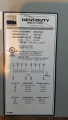
Transformer Nameplate.png

I would connect your 120 VAC output to (tie H1 to H6) and tie (H3 to H8) with 120 VAC to H1 and H8. You can try different taps for your exact primary voltage. On the 240 VAC secondary tie X2 to X3 which become your neutral for your 240 VAC split phase. This allows isolation between your primary source and secondary. This should be apparent in the link. Neutral and Ground bonding happens in your distribution panel at service entry.

Ron
 

MaxHeadRoom

Joined Jul 18, 2013
30,695
Yep, that's how it goes. :)

Ron
+1.
You only need to refer to 'Book on Grounding" by Eustace Soares, published by the IAEI, International Assn of Electrical Inspectors.
This is used by NFPA79 and NFPA70 (NEC) among others as a reference when stipulating ground rules.
Max.
 
Top