Creating a new internet

Thread Starter

Samantha Groves

Joined Nov 25, 2023
151
Hello I am attempting to create a new internet.I need to to design the communication protocol of my new internet.

I decided I am going to use a 3 layer OSI model:

top level is the application level ,middle level is the assembler level ,bottom level is the physical level.

The assembler level is going to translate the message sent by a device into bytes and set the packet ids.

Information is going to be exchanged in the form of data packets.Each data packet will be in this form:

x bits sender address|y bits receiver address|packetid|transmitted data.

I will be using the flooding algorithm(https://www.tutorialspoint.com/data_communication_computer_network/flooding.htm) to transfer the data pckets.

Basically im going to have nodes(routers) which will constantly be exchanging information with any devices connected to them. Each router will have a memory space where the data packets will be held.

The sender address of a data packet will be the address of the first router to receive that data packet and the receiver address of a data packet will be the address of the intented receiving router.

I have already installed Logisim which is a software which deals with digital logic circuits , I would like to implement my router as a sequential circuit,how do I start doing that?
 

MrChips

Joined Oct 2, 2009
34,627
Before you get too involved, read up about peer-to-peer networks. You can do this between two computers via RS-485 connections or even RG-58 coax (thin Ethernet).
 

boostbuck

Joined Oct 5, 2017
1,032
I decided I am going to use a 3 layer OSI model
I believe you have overly simplified the required machinery of the network protocols.

"The term '3 layer OSI model' is a misnomer because the OSI model is a seven-layer model, not a three-layer one. The confusion likely stems from simplified versions of the TCP/IP model that combine the OSI layers for easier understanding.

"The three-layer TCP/IP model
  • Layer 1 (Network Access): This layer is equivalent to OSI layers 1 and 2, handling the physical connection to the network and the data link layer protocols for local network segments.
  • Layer 2 (Internet): This layer is equivalent to OSI layer 3, responsible for logical addressing (like IP addresses) and routing packets across different networks.
  • Layer 3 (Transport): This layer is equivalent to OSI layer 4, managing end-to-end communication and data segmentation, error checking, and flow control."
 

Tonyr1084

Joined Sep 24, 2015
9,744
Let me be the first to welcome you to AAC. New members are eagerly welcomed in.
I only opened this thread out of curiosity. My comment as parsimonious as it may be is "Why would you want to create a new internet? Isn't the old one bad enough?"
 

Ian0

Joined Aug 7, 2020
13,097
If you could build a new internet without porn, spam e-mail and scams, you'd need less than half the bandwidth of the old one.

If you really want to know how something works, then building one yourself seems like a good way to learn!

Could I suggest that it should have an e-mail system where the message resides on the sender's server until the recipient's computer fetches it. That way we know exactly it came from!
 

crutschow

Joined Mar 14, 2008
38,316
Could I suggest that it should have an e-mail system where the message resides on the sender's server until the recipient's computer fetches it. That way we know exactly it came from!
Couldn't that be done with the present internet?
 

Ya’akov

Joined Jan 27, 2019
10,226
No its not , I just woke up today and decided to try to build a new internet.
While I am having difficulty understanding what you expect to do with this—and so what advice you actually need—I can say she general things based on what you've said.

Hello I am attempting to create a new internet.I need to to design the communication protocol of my new internet.
What is an "Internet" in your mind? The ARPANET (Military) that became NSFNET (Research/Academic) and then "The Internet" was an internetwork developed by ARPA starting in the 70s. It became NSFNET when ARPANET was shut down, and originally explicitly prohibited commerce traffic. Starting around 1992, the gradually changed until it became the Internet we know today.

But, an "internet" (small i) from which the Internet (big I) gets it's name refers to a collection of LANs (Local Area Networks) that are able to route traffic from one to another. This is made possible by two things: network addressing and routing tables.

First, it is important to note that we are talking about packet switched communications here. In a packet switch network, a single shared circuit is shared by packetizing the data (bundling the payload with header and sometimes post-payload data) and taking turns transmitting those packets to destination also connected—directly or via routers—to the overall network.

This is in contrast to a circuit switched network where nodes are connected to dedicated circuits for the time they communicate. An example of this is the old PSTN (Public Switched Telephone Network) which relied on point-to-point circuits for every connection. If. for example, a long distance circuit from one city to another was in use for a phone call, it was unavailable to anyone else until the call ended. There were circuit switched data networks as well, but they are very inefficient compare to packet switching.

In a simplification for ease of explanation:

A LAN is a network on which all nodes share a collision domain, that is, they can hear and potentially collide (interfere while trying to share the circuit they are connected to.

A WAN (Wide Area Network) is a collection of LANs that can use to route packets from on to another.

An Internet is the result of connecting the LANs through a WAN. Because the terminology is used with extremely variable precision, it is difficult to know exactly what someone means when they say "internet".

I decided I am going to use a 3 layer OSI model:

As @boostbuck pointed out, the OSI model for networking is not a type of model, it is a specific 7 layer model. The OSI model is a theoretical one, not a specification or blueprint. While all networks require the functionality described by the 7 layers, in practice the capabilities of the layers and their distinct implementation varies.

Many practical versions provide a network stack, the name suggesting the layering, for practical purposes. But you won't find 7 layers in the stack since one stack layer can have more than one OSI layer in it.
top level is the application level ,middle level is the assembler level ,bottom level is the physical level.
Your description here doesn't change the reality of the OSI model, it just lumps together OSI layers in some mysterious collections that fall into three containers. This is a very naive design. It means almost nothing.

The assembler level is going to translate the message sent by a device into bytes and set the packet ids.
Translate it from what?
"Set the packet IDs" suggests it's been handed a packet and will manipulate it, but I think you really mean this will assemble the packets.

"The assembler with assemble packets containing frames with addressing information, packet ID information, and payload." is what I think you intend. But if so you have missed the need for a header, a method for encapsulation, state information, and flags of other sorts needed in a practical network.

"The Internet" uses TCP/IP up until the LAN, but once it gets to the LAN it uses Ethernet which is a separate frame the contains the IP frame. Since you mentioned PHY above, it suggests your protocol is a LAN protocol. Which means you need something like ARP (Address Resolution Protocol) to translate the routable addresses to the MAC (Media Access Control) addresses of the PHY connected nodes.

Information is going to be exchanged in the form of data packets.Each data packet will be in this form:

x bits sender address|y bits receiver address|packetid|transmitted data.
This is woefully inadequate for a practical network protocol, as alluded to above.

I will be using the flooding algorithm(https://www.tutorialspoint.com/data_communication_computer_network/flooding.htm) to transfer the data pckets.
Why? It is a terrible choice for a replacement Internet. It is inefficient and can't scale to any use number of nodes.

Basically im going to have nodes(routers) which will constantly be exchanging information with any devices connected to them. Each router will have a memory space where the data packets will be held.

The sender address of a data packet will be the address of the first router to receive that data packet and the receiver address of a data packet will be the address of the intented receiving router.
If you set the sender address to the router, when the the receiving node wants to reply to the packet it will send it back to the router which will have no idea how to route it on the LAN since there will be no record of the actual sender.

You can see why IP addressing has both a network and a host address which it uses the netmask to determine.

The bottom line is that you really aren't anywhere near the point of concerning yourself with hardware.

If you want to do this, reframe it to "I want to create an internetworking protocol", not "replacing the Internet" and then start by reading more about actual protocols (TCP/IP would be excellent) and don't choose implmentation details like frame structure and routing algorithms before you have a design for the protocol itself.
 

Ya’akov

Joined Jan 27, 2019
10,226
IMAP is also a pull oriented protocol, but I think @Ian0 is more concerned with replacing SMTP than IMAP.

SMTP is push, and by the time the mail has been pushed onto the server POP or IMAP make no difference. In fact. a push oriented protocol, given most devices today have always on networking, is a much better choice than useless polling.

But if we could just never bother to retrieve mail at the SMTP level when it is unwanted, that would be quite a relief.
 

nsaspook

Joined Aug 27, 2009
16,249
bang!boom!crash!nsaspook
I had a pretty good connection.

#N glacier
#S ALR 486/33, SCO Unix 3.2
#O private
#C Harold C. Nevis
#E h...@glacier.rain.com
#T +1 503 7759240
#P 3445 SE Carlton; Portland, OR 97202
#L 45 33 N / 122 36 W City
#U reed
#W glacier!hcn (Harold C. Nevis); Sun May 23 01:40:09 PDT 1993
#W Tim Rosmus <tro...@nwnexus.com>; Mon Mar 10 14:18:16 PST 1997
#W (PNW Region UUCP Map maintainer)
#R A free public access system
#
glacier = glacier.rain.com
glacier m2xenix(DIRECT), busker(DIRECT), qiclab(DIRECT),
percival(DIRECT), bucket(DIRECT), sma2(DIRECT)

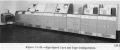
And before that it was AUTODIN, a message switching network we used for classified traffic and data transfers. https://jproc.ca/crypto/autodin.html
1763335603141.png

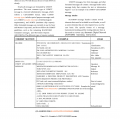
The OP will likely be trying to recreate an old internet.

https://www.rfc-editor.org/ien/ien101.pdf
AUTODIN FTP

1763334384018.png
 

Ya’akov

Joined Jan 27, 2019
10,226
I had a pretty good connection.

#N glacier
#S ALR 486/33, SCO Unix 3.2
#O private
#C Harold C. Nevis
#E h...@glacier.rain.com
#T +1 503 7759240
#P 3445 SE Carlton; Portland, OR 97202
#L 45 33 N / 122 36 W City
#U reed
#W glacier!hcn (Harold C. Nevis); Sun May 23 01:40:09 PDT 1993
#W Tim Rosmus <tro...@nwnexus.com>; Mon Mar 10 14:18:16 PST 1997
#W (PNW Region UUCP Map maintainer)
#R A free public access system
#
glacier = glacier.rain.com
glacier m2xenix(DIRECT), busker(DIRECT), qiclab(DIRECT),
percival(DIRECT), bucket(DIRECT), sma2(DIRECT)

And before that it was AUTODIN, a message switching network we used for classified traffic and data transfers. https://jproc.ca/crypto/autodin.html
View attachment 358987

The OP will likely be trying to recreate an old internet.

https://www.rfc-editor.org/ien/ien101.pdf
AUTODIN FTP

View attachment 358985
You didn't use bang routing?
 

nsaspook

Joined Aug 27, 2009
16,249
Top