Creating split phase 120V from 120V with transformer, safety concerns?

Let's try again:

L1 and L2 - We know what these are.
Ground - I'll define it as the third prong of an outlet. It only carries fault currents. It's an ersatz reference.
Earth - The reference, the ground rod
neutral - Carries current, for 240 V split phase, carries the difference 120 phase currents.

The house needs only one reference. Earth. So, ground goes to earth and neutral goes to earth at only one place.
The telephone protector goes to earth, the copper water lines go to earth, the cable TV goes to earth.
Earth is the reference.

You add a subppanel in an attached section of the house. The sub-panel (main lug) ets modified so the ground neutral bond is removed.
Extra ground lugs are added.

Neutral, ground, L1 and L2 are totaly separate wires. There is no connecton to neutral/ground/earth in thqt sub-panel. Those connections occur at the main panel only.

if you have an external generator, bring it into the system LIKE a sub-panel feed. Separate neutrals, separate grounds, NO EARTH.
Earth will connect to ground/neutral at the MAIN Breaker panel. Everyone is happy, ONE REFERENCE.

Lets connect the water pipes to earth and the CATV to earth like its supposed to be.

Now, lets do some wierd wiring. Three daisy chained outlets to a single breaker, one on each floor. Let's let lightning strike the third floor outlet.

So, anthing connected to floor 2 and floor 1, gets an elevated ground and may have problems. It will raise the potential of thet ground rod. BUT who cares. All other wiring in the house references that reference and those circuits would not be affected. Even the CATV reference would not get affected.

Two grounds, one at the generator and one at the ground rod. Your asking for trouble.

How do I hook up an orange receptacle? https://spyrkaelectric.com/heres-what-you-need-to-know-about-an-isolated-ground-receptacle/

Hospitals mess whatever you learned totally up: https://www.ecmweb.com/bonding-amp-grounding/primary-care-electrician
 

Thread Starter

MrSoftware

Joined Oct 29, 2013
2,273
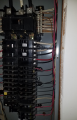
At first glance, it appears I might have shared neutrals in the walls. As clumsy as I am, I didn't want to go poking around moving wires in a live panel to try to follow them, but from reading the code I believe black is hot on one leg, red is hot on the other leg and white is neutral for 120v. The mix of black and red makes me think that some circuits are sharing neutrals. Someone who is more versed in home wiring please chime in if I've likely got it wrong. See the image below.

As for the generator ground/neutral. The generator sitting there itself is floating. It has a grounding lug on it that is supposed to be externally connected to a ground when the generator is used to power stand alone loads. But when it's connected to the house this lug is left floating, so its only route to earth is through the patch cable to the main panel. The only ground/neutral/earth connection is in the house main panel.


upload_2019-9-9_9-1-4.png
 

MisterBill2

Joined Jan 23, 2018
27,683
Black and red share a neutral in 240 volt circuits and also in feeding ceiling fan light fixtures. Also, some kitchen work outlets have two circuits to allow the use of two heating appliances, and in those cases the currents in the neutral cancel each other.
 

MaxHeadRoom

Joined Jul 18, 2013
30,693
Re shared neutral outlets for kitchens, see post #24.
I have a service supply transformer sitting on the edge of my property.
The C.T. of the transformer is earth grounded at the transformer, it is also re-referenced to GND in my service panel.
Max.
 
There is a couple of unusual connection. The fourth wire down on the right is black. Then there is a big fat white wire.

If that top horizontal thing is a main breaker? It doesn't look very good.

The whites on the dual breakers should probably be "taped" red at both ends.

neutrals and grounds will connect to the same bus. so it's technically OK. Me being OCD, I'd like to see whites and grounds on different bars.

Where is the earth? My house uses the copper water pipe. Could also be a burried ground rod.

Here http://www.nooutage.com/interlock_kits.htm#What does a typical installation look like? is a company that makes a panel interlock kit. The backfeed breaker is usually close to the main breaker, but cannot be on at the same time. That's recommended.

What's NOT RECOMENDED is to backfeed via the dryer outlet If you don't have one already install a generator input plug on the house and the interlock kit.

and this: https://www.electricgeneratorsdirec...ipping-a-Generator-With-a-Bonded-Neutral.html


See this
too.
 
Last edited:

Lo_volt

Joined Apr 3, 2014
373
One thing that needs to be said because someone will always try it and it always ends in tragedy.

NEVER, EVER RUN A GENERATOR INSIDE YOUR HOUSE!!!!

Generators create a lot of carbon monoxide, a poisonous gas, which will fill your house far too quickly.

If you are afraid of someone stealing your generator, buy a chain and padlock when you buy the generator and chain it to something outside the house.
 

Thread Starter

MrSoftware

Joined Oct 29, 2013
2,273
I wouldn't run it in the garage at all unless the big door is wide open, and even then only for a few minutes. CO can still puddle up and you can't smell it, and the wind may pull it from the garage into the house.
 

Reloadron

Joined Jan 15, 2015
7,892
And if you run it in the garage, open an outside door at least a foot or two for ventilation, otherwise the gas could seep into the house.
That would be my back up to my back up scenario and it's a detached garage. :) Comes down to it I will run my little generator in the garage with the door opened. My back up I rely on is sitting outside the house and is natural gas fired. More than once up here in NE Ohio with cold winters we read about people who have died running a generator on gasoline indoors. They are right there with running a kerosene heater indoors with no ventilation.
Ron
 

Thread Starter

MrSoftware

Joined Oct 29, 2013
2,273
I had a crazy old man neighbor who had some rats in his attic. To kill them he put a generator in his house and let it run while they left. They returned some hours later, the rats were dead and they opened some windows. He and the family went back inside too soon and they all ended up in the hospital with CO poisoning. Luckily they all lived. That guy was a special character, everyone in the neighborhood knew him and no one was surprised.
 

cmartinez

Joined Jan 17, 2007
8,788
I had a crazy old man neighbor who had some rats in his attic. To kill them he put a generator in his house and let it run while they left. They returned some hours later, the rats were dead and they opened some windows. He and the family went back inside too soon and they all ended up in the hospital with CO poisoning. Luckily they all lived. That guy was a special character, everyone in the neighborhood knew him and no one was surprised.
Worst thing is that CO poisoning can leave latent problems that manifest themselves as a series of health crises later in life.
 

Thread Starter

MrSoftware

Joined Oct 29, 2013
2,273
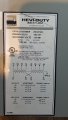
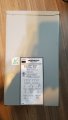
I've got a neutral/ground question. I picked up one of these transformers on ebay, Hevi-Duty HS12F3AS (download data sheet from this page). This thing is definitely industrial, it's rated 3kVA and my generator is rated 2.8kVA so I'm OK there. I'm wiring it for 120v in, 240/120v out so that I can run both branches in my house. Can someone familiar with house wiring codes please double check me on the ground + neutral bonding part?

The generator has a 3-wire cable (120v), the house has a 4-wire cable (240v). I will not connect the generator or transformer to "earth", but will connect their grounds to the ground lead from the house. I will not bond the ground to the neutral at the transformer, these are bonded only in the house electrical panel. Is this correct?

1604260798271.png
 

Attachments

MaxHeadRoom

Joined Jul 18, 2013
30,693
Is the generator the sole supply? or is it optional alternative to a regular service supplier?
NFPA70 & 79 allow you to re-reference a neutral of an isolated supply, IOW if the transformer has a C.T. then this would be bonded to the house ground system.
But anything else depends on the first question.
Max.
 

Thread Starter

MrSoftware

Joined Oct 29, 2013
2,273
This is a backup generator connection, the house is normally connected to power company service. When the generator is connected, the house is disconnected from the city service via the mains breaker. It's a standard electrical box, so the ground and neutral are bonded inside the main electrical box. The generator connects directly to the main electrical box through a breaker switch inside the main electrical box. An interlock will ensure the mains and generator breakers cannot be on at the same time. @nsaspook from that article it sounds like the main goal is for ground and neutral to be bonded at some point so that a ground fault will still trip a breaker, which makes good sense, and that it should be done at the location where the earth connection is. In my case that would be the main house electrical box.
 

MisterBill2

Joined Jan 23, 2018
27,683
Because the transformer provides a totally adequate isolation betyween primary and secondary there is no reason to ground the generator. If the generator has the ability to provide 240 volts then you could gain a bit of efficiency by using that instead.
As for grounding, on the house side just connect to the neutral and the lines, since the transformer secondary has no ground connection of its own to lead to a shock hazard.
 
For stand-alaone operation of a generator there is usually a ground-neutral bond.

For use with whole house, that bond should be broken and the N and ground run separately to the house.

With a transformer, you have to create a neutral ground bond.
It would probably make sense to connect the generator ground to the house ground and the neutral of the transformer to the neutral of the house. Everyone should be happy. If the transformer is in a metal box, that metal box should connect to the house ground.
 
Last edited:

Thread Starter

MrSoftware

Joined Oct 29, 2013
2,273
For stand-alaone operation of a generator there is usually a ground-neutral bond.

For use with whole house, that bond should be broken and the N and ground run separately to the house.

With a transformer, you have to create a neutral ground bond.
It would probably make sense to connect the generator ground to the house ground and the neutral of the transformer to the neutral of the house. Everyone should be happy. If the transformer is in a metal box, that metal box should connect to the house ground.
Agreed. The remaining question is, should the transformer neutral be tied to the house, generator and transformer ground at the transformer?
 

MisterBill2

Joined Jan 23, 2018
27,683
Agreed. The remaining question is, should the transformer neutral be tied to the house, generator and transformer ground at the transformer?
What possible safety benefit can be gained by tying the generator frame ground, or the isolated generator neutral, to the house side of the isolation transformer's secondary ground???
Please explain the means by which that increases any safety. The transformer isolates the generator line and neutral connections from any ground reference. If the generator neutral is not connected to the generator frame, how is there a shock hazard on the generator side, except for connection to both sides of the generator output.
 
Top