Corrosion prevention suggestions please

Thread Starter

Tonyr1084

Joined Sep 24, 2015
9,744
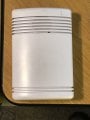
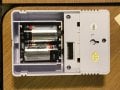
I have a wireless doorbell. In fact, I have two of them. Same exact types, bought at the same time. The ONLY difference is that one is by the swamp cooler (swamp cooler is an evaporative cooler that uses water evaporation to reduce heat, used for cooling the house). The problem I've been having with this one unit (by the cooler) is that the battery terminals seem to develop corrosion frequently. I have to clean them at least twice a year and there's no sign of leakage on any of the batteries I've ever put in the unit.

What would you recommend as a way of reducing or eliminating the effects of the moisture that is causing this corrosion? At present the doorbell won't chime - due to corrosion.
 

EM Fields

Joined Jun 8, 2016
583
I have a wireless doorbell. In fact, I have two of them. Same exact types, bought at the same time. The ONLY difference is that one is by the swamp cooler (swamp cooler is an evaporative cooler that uses water evaporation to reduce heat, used for cooling the house). The problem I've been having with this one unit (by the cooler) is that the battery terminals seem to develop corrosion frequently. I have to clean them at least twice a year and there's no sign of leakage on any of the batteries I've ever put in the unit.

What would you recommend as a way of reducing or eliminating the effects of the moisture that is causing this corrosion? At present the doorbell won't chime - due to corrosion.
WD-40?
 

Thread Starter

Tonyr1084

Joined Sep 24, 2015
9,744
Also having difficulty removing the corrosion that is there now. I'm using Eveready Energizers, Alkaline type batteries. Any suggestions for that? I know you can use baking soda for acid but what do I use for alkaloids?
 

Dodgydave

Joined Jun 22, 2012
11,395
Any suggestions for that? I know you can use baking soda for acid but what do I use for alkaloids?
I think Vinegar was suggested.

Corrosion is caused by "different" metals and an electrolyte. The severity of the corrosion can be predicted. You could gold plate the contacts which isn't going to be worth it.

My guess is that your having condensation which is providing the electrolyte. Look up "dew point". The surface temp is the battery terionals. the RH and air temp is the other variables.

You have desiccant, drainage, change the temperature, sealing. Maybe you could put the battery pack "elsewhere".

I know, not the prettyist thing in the world, but it could work. Use a watertight enclosure with a clear lid such as https://www.polycase.com/ml-series Maybe put some sort of ICON/Picture/color on it that blocks the actually battery and just shows the battery contacts through the LID. Mount battery holders inside. I presume "D cells".

Vaseline, just about any grease, but di-electric grease is made for the application and I think you would have to be rather generous with the application.
 

kyleh04

Joined Jun 18, 2017
54
Another option is to look at solutions used in the marine industry. My favorite is made by Boeing and is called T-9. Boeshield T-9 Waterproof Lubrication 12 oz aerosol https://www.amazon.com/dp/B001447PEK/ref=cm_sw_r_cp_apa_iElEzbT9DTP3G

It holds up really well in corrosive saltwater environments, so it should work well for you.

A more powerful prevention is lanocote. Lanocote Corrosion Control 4 Oz. https://www.amazon.com/dp/B0000AY4TI/ref=cm_sw_r_cp_apa_IFlEzbT845JWR

I use that on my plugs for my trolling motor on the front of my boat. It constantly is hit with saltwater. I used to go through a plug every couple of months, now using lanocote it lasts a year or so.
 

ian field

Joined Oct 27, 2012
6,536
Hadn't considered WD-40. Wondering if a good lithium grease would provide more protection. Any opinion on that?
There are certainly marine grades of lithium grease - but I find grease too messy for that sort of thing. silicon grease would be better anyway.

I've used candle wax while field testing a prototype TAC module for a motorcycle. Obviously its flammable, but your application is less risky than mine was. Its easy to remove if a prototype needs modification.

Altar candles are the most wax for the least money.

You can also get silicon sprays from car accessory stores and some discount stores.
 

Thread Starter

Tonyr1084

Joined Sep 24, 2015
9,744
Vasaline grease or other non conductive waterproof gel will prevent rust...as for removing it: Baking soda and a battery will remove the rust, the tank is Anode and the rusty item is Cathode….

https://www.google.co.uk/url?sa=t&source=web&rct=j&url=http://www.instructables.com/id/Electrolytic-Rust-Removal-aka-Magic/?amp_page=true&ved=0ahUKEwifhJXIn6fVAhWFZFAKHTPED48QFggdMAA&usg=AFQjCNHXcrcEc23KO7DbVePRjKpR2-s42A&ampcf=1
The bucket idea is a bit big for what I want to do. The chime is relatively cheap. I'd likely spend more time and money building this than I would just buying a new unit. And right now the unit is non-functional, even though I managed to clear the corrosion and check battery voltage at the board: 2.6 VDC (two C cells).

Maybe you could put the battery pack "elsewhere".

I know, not the prettyist thing in the world, but it could work. Use a watertight enclosure with a clear lid such as https://www.polycase.com/ml-series Maybe put some sort of ICON/Picture/color on it that blocks the actually battery and just shows the battery contacts through the LID. Mount battery holders inside. I presume "D cells".

Vaseline, just about any grease, but di-electric grease is made for the application and I think you would have to be rather generous with the application.
Vaseline sounds like a cheap home remedy I may just use on a new unit. The thought of moving the chime to a different location is definitely worth considering. But the chime is where it is because the original house wired unit was there. There's a hole in the wall where the low voltage (18 volt) wires come out. Maybe even purchase two units the same as the existing one and put one further down the hallway so that if in the bedroom I can still here the chime, while another can be in the kitchen, both locations away from direct contact with the chimes.

Another option is to look at solutions used in the marine industry. My favorite is made by Boeing and is called T-9. Boeshield T-9 Waterproof Lubrication 12 oz aerosol https://www.amazon.com/dp/B001447PEK/ref=cm_sw_r_cp_apa_iElEzbT9DTP3G

It holds up really well in corrosive saltwater environments, so it should work well for you.

A more powerful prevention is lanocote. Lanocote Corrosion Control 4 Oz. https://www.amazon.com/dp/B0000AY4TI/ref=cm_sw_r_cp_apa_IFlEzbT845JWR
Sounds like something I may look into getting at a later date. Since I don't spend time on the water (at present) going to the boat store (35 miles away) isn't going to be as simple a solution as buying a new unit or two. Still, thanks for the good advice.

Now, someone posted while I was typing. Let me see what they posted:
 
Last edited:

Thread Starter

Tonyr1084

Joined Sep 24, 2015
9,744
I've considered candle wax but thought it would act like an insulator. Besides, where the contact is made is where the corrosion takes place the most.

Don't know why the quote didn't insert. Ian Fields suggested it as one alternative.

Keep in mind, this is just a 3 volt chime. It's cheap and highly replaceable. I just don't like throwing things away simply because of dirty terminals. Yet, investing a thousand dollars (exaggerated) to fix a $9.00 item seems counter intuitive. But I'm grateful for all input. Thanks all.
 

Thread Starter

Tonyr1084

Joined Sep 24, 2015
9,744
What do you guys think: I have 18 VAC at the chime that is otherwise not being used. How about a rectifier and a buck converter to drop the voltage to 3.2 volts DC and never have to put batteries in it again? I could hard wire it to the PCB.
 

Stuntman

Joined Mar 28, 2011
222
I have not seen anyone mention true dielectric grease, which is meant for exactly this kind of thing. If the battery and such does not need to be serviced regularly, you could try using a conformal coating that can be removed with mild solvents when battery needs replaced.
 

ian field

Joined Oct 27, 2012
6,536
I've considered candle wax but thought it would act like an insulator. Besides, where the contact is made is where the corrosion takes place the most.

Don't know why the quote didn't insert. Ian Fields suggested it as one alternative.

Keep in mind, this is just a 3 volt chime. It's cheap and highly replaceable. I just don't like throwing things away simply because of dirty terminals. Yet, investing a thousand dollars (exaggerated) to fix a $9.00 item seems counter intuitive. But I'm grateful for all input. Thanks all.
Stick some PVC tape over the contacts and pour the molten wax over it. peel the tape off for clean contacts.

You only need a wax film to prevent corrosion, but I'd warm the board up first if you're not immersing it.
 

Thread Starter

Tonyr1084

Joined Sep 24, 2015
9,744
Like I said, it's cheap. And despite it having power it's not working. I'm going to throw two new batteries in it just to be sure, but at this point I think it's worth replacing.

[edit] New batteries and still nothing. Time for a new unit. Still, the suggestions for protecting the batteries from further corrosion are well worth the time. Still wondering if anyone has any suggestions or thoughts on using a Buck Converter.

image1 5.JPG image1 4.JPG
 

ian field

Joined Oct 27, 2012
6,536
Like I said, it's cheap. And despite it having power it's not working. I'm going to throw two new batteries in it just to be sure, but at this point I think it's worth replacing.

[edit] New batteries and still nothing. Time for a new unit. Still, the suggestions for protecting the batteries from further corrosion are well worth the time. Still wondering if anyone has any suggestions or thoughts on using a Buck Converter.

View attachment 131681 View attachment 131682
Last time I repaired the button sender for one like that, I could only find an 8GHz power transistor from a mobile phone...........there were complaints!!!
 

Thread Starter

Tonyr1084

Joined Sep 24, 2015
9,744
@ian field I have two units and two doorbell buttons. The front button rings both chimes as a "Ding - Dong" while the side button rings both as just a single "Ding". The downstairs unit works from both buttons and the upstairs unit does not work from either button. So it's not the sender it's the dinger/donger. Maybe messing with the failed unit may be worth an evening downstairs during a pouring rainstorm, troubleshooting it and possibly fixing it. I DID find a lifted trace on the non-functional dinger. I bridged it to the connection it was supposed to be connected to thinking maybe there's a small crack I'm not seeing. Even with the bridge there's still no Ding or Dong.

Geez, this conversation is getting a little dingy. NO?
 

ian field

Joined Oct 27, 2012
6,536
When I was working in the hot beverage industry, we used dielectric grease to keep connectors free from moisture.
NYOGEL760G
Had a wrinkled tube of that from a company that serviced old resistance boxes - did my best to make out the brand from the flaked paint, but no hits in any searches.

Its great for wiping contacts - but hardly any resistance to weather.
 
There's a hole in the wall where the low voltage (18 volt) wires come out.
Usually the problem is no power nearby. Even a wall wart in a remote location will work, but the Buck will likely "fit" in the battery compartment.

What do you guys think: I have 18 VAC at the chime that is otherwise not being used. How about a rectifier and a buck converter to drop the voltage to 3.2 volts DC and never have to put batteries in it again? I could hard wire it to the PCB.
ebay versions are cheap.

I have not seen anyone mention true dielectric grease, which is meant for exactly this kind of thing. If the battery and such does not need to be serviced regularly, you could try using a conformal coating that can be removed with mild solvents when battery needs replaced.
I mentioned the dielectric grease. I've NEVER used it. Vaseline works fine for me. Used it for 50 years on light bubs (aquarium, outdoor, indoors - primarily bathroom and car.

I had to buy a tube of this https://tom-pac.com/tp-2557-and-tp-2598-bearing-gel/ stuff based on it's properties. it's too expensive for a door bell.

--

I have a doorbell problem that I haven't been able to get too yet, The wireless ones are just plain flakey. I did modify a DXS security alarm transmitter with low battery supervision and heartbeat, but haven't installed it.

It's more trouble on the other end and I have uses for the 7 extra channels.
 
Top