Coronavirus?!

Status
Not open for further replies.

djsfantasi

Joined Apr 11, 2010
9,237
I’m sick of posts touting herd immunity. It doesn’t apply to this virus. Look at Sweden’s statistics. If herd immuni

Herd immunity does NOT apply to coronavirus. There are examples of people infected who soon come down with the virus again
My personal belief is that the effective Coronavirus Re has increased or is being underestimated. R0 was estimated to be 2.2 to 2.7 but several studies show the upper end today to be multiples of that to at least the 6 range for actual transmission when numbers are rising. Quarantine, masks, social distancing and contact tracing of positive testing individuals will be ineffective at the higher levels while increasing the percentage needed for herd immunity. So far deaths and serious illness have been falling percentage-wise so gains in contagiousness are at the cost of severity.

https://www.the-scientist.com/features/why-r0-is-problematic-for-predicting-covid-19-spread-67690

Nothing has changed in Sweden. I’ve stated repeatedly that the approach of herd immunity is flawed. Here in the US, there are several recorded cases of patients that recovered from COVID19 getting infected multiple times.

If you read bs, you’re gonna believe bs. Sweden made a mistake, is a poor example of coronavirus response and is going to pay in many deaths.
 

nsaspook

Joined Aug 27, 2009
16,330
I’m sick of posts touting herd immunity. It doesn’t apply to this virus. Look at Sweden’s statistics. If herd immuni

Herd immunity does NOT apply to coronavirus. There are examples of people infected who soon come down with the virus again


Nothing has changed in Sweden. I’ve stated repeatedly that the approach of herd immunity is flawed. Here in the US, there are several recorded cases of patients that recovered from COVID19 getting infected multiple times.

If you read bs, you’re gonna believe bs. Sweden made a mistake, is a poor example of coronavirus response and is going to pay in many deaths.
If Herd immunity does NOT apply to coronavirus then a vaccine won't work, PERIOD. For the hope of saving people from death and sickness you should pray Herd immunity DOES apply to coronavirus.
https://www.mayoclinic.org/diseases...th/herd-immunity-and-coronavirus/art-20486808
How is herd immunity achieved?

There are two paths to herd immunity for COVID-19 — vaccines and infection.

Vaccines
A vaccine for the virus that causes COVID-19 would be an ideal approach to achieving herd immunity. Vaccines create immunity without causing illness or resulting complications. Herd immunity makes it possible to protect the population from a disease, including those who can't be vaccinated, such as newborns or those who have compromised immune systems. Using the concept of herd immunity, vaccines have successfully controlled deadly contagious diseases such as smallpox, polio, diphtheria, rubella and many others.


Reaching herd immunity through vaccination sometimes has drawbacks, though. Protection from some vaccines can wane over time, requiring revaccination. Sometimes people don't get all of the shots that they need to be completely protected from a disease.

In addition, some people may object to vaccines because of religious objections, fears about the possible risks or skepticism about the benefits. People who object to vaccines often live in the same neighborhoods or attend the same religious services or schools. If the proportion of vaccinated people in a community falls below the herd immunity threshold, exposure to a contagious disease could result in the disease quickly spreading. Measles has recently resurged in several parts of the world with relatively low vaccination rates, including the United States. Opposition to vaccines can pose a real challenge to herd immunity.
People getting reinfected in VERY SMALL numbers was always expected. It's not great revelation it's happening or any surprise to anyone.

https://www.nytimes.com/2020/10/13/health/coronavirus-reinfection.html
This variability is entirely expected, experts said, and has been observed in patients with diseases like measles and malaria.
“You’ll never have the distribution of anything with millions of people where you don’t have some very severe rare cases happening at the fringe,” said Dr. Michael Mina, a pediatric immunologist at the Harvard T.H. Chan School of Public Health.
 
Last edited:

nsaspook

Joined Aug 27, 2009
16,330
https://medicalxpress.com/news/2020-10-heterogeneous-populations-herd-immunity-quicker.html

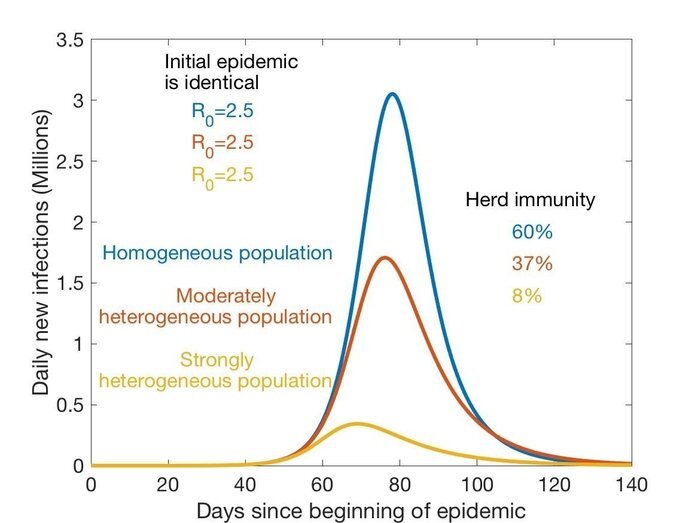
Heterogeneous populations develop herd immunity quicker
A team led by Frank Jülicher from the Max Planck Institute for the Physics of Complex Systems has been investigating the influence of this heterogeneity on the spread of an epidemic. When individuals differ in their susceptibility to an infection, it is primarily the most susceptible who become infected first. This leads to a rapid increase in infection numbers at the beginning of an epidemic. However, this highly susceptible portion of the population soon becomes immune or dies. Therefore, in the uninfected population, the average susceptibility to the virus decreases. This slows the infection rate of the epidemic, and thus the threshold for herd immunity can be lower than previously assumed. A heterogeneous population can thus achieve herd immunity even when only a minority of people are immune. In contrast, in a homogeneous population, herd immunity can only be achieved once a majority is immune.
https://www.nature.com/articles/s41577-020-00451-5

COVID-19 herd immunity: where are we?
For countries in the Northern hemisphere, the coming autumn and winter seasons will be challenging with the likely intensification of viral circulation, as has recently been observed with the return of the cold season in the Southern hemisphere. At this stage, only non-pharmaceutical interventions, such as social distancing, patient isolation, face masks and hand hygiene, have proven effective in controlling the circulation of the virus and should therefore be strictly enforced. Potential antiviral drugs that reduce viral loads and thereby decrease transmission, or therapeutics that prevent complications and deaths, may become significant for epidemic control in the coming months. This is until vaccines become available, which will allow us to reach herd immunity in the safest possible way.

Evidence for and level of herd immunity against SARS-CoV-2 infection: the ten-community study
Abstract
Background: Qatar experienced a large severe acute respiratory syndrome coronavirus 2 (SARS-CoV-2) epidemic that disproportionately affected the craft and manual workers (CMWs) who constitute 60% of the population. This study aimed to investigate level of immunity in communities within this population as well as infection exposure required to achieve herd immunity. Methods: Anti-SARS-CoV-2 seropositivity was assessed in ten CMW communities between June 21 and September 9, 2020. PCR positivity, infection positivity (antibody and/or PCR positive), and infection severity rate were also estimated. Associations with anti-SARS-CoV-2 positivity were investigated using regression analyses. Results: Study included 4,970 CMWs who were mostly men (95.0%) and <40 years of age (71.5%). Seropositivity ranged from 54.9% (95% CI: 50.2-59.4%) to 83.8% (95% CI: 79.1-87.7%) in the different CMW communities. Pooled mean seropositivity across all communities was 66.1% (95% CI: 61.5-70.6%). PCR positivity ranged from 0.0% to 10.5% (95% CI: 7.4-14.8%) in the different CMW communities. Pooled mean PCR positivity was 3.9% (95% CI: 1.6-6.9%). Median cycle threshold (Ct) value was 34.0 (range: 15.8-37.4). The majority (79.5%) of PCR-positive individuals had Ct value >30 indicative of earlier rather than recent infection. Infection positivity (antibody and/or PCR positive) ranged from 62.5% (95% CI: 58.3-66.7%) to 83.8% (95% CI: 79.1-87.7%) in the different CMW communities. Pooled mean infection positivity was 69.5% (95% CI: 62.8-75.9%). Only five infections were ever severe and one was ever critical, an infection severity rate of 0.2% (95% CI: 0.1-0.4%). Conclusions: Based on an extended range of epidemiological measures, active infection is rare in these communities with limited if any sustainable infection transmission for clusters to occur. At least some CMW communities in Qatar have reached or nearly reached herd immunity for SARS-CoV-2 infection at a proportion of ever infection of 65-70%.
https://www.medrxiv.org/content/10.1101/2020.09.24.20200543v2.full.pdf
 
Last edited:

nsaspook

Joined Aug 27, 2009
16,330
And I'm beginning to think that Re for the CV19 is non-linear... does that make sense?
What's believed by some is the virus has adapted/mutated to select a class of infected that are super-spreaders. Most people that are infected spread it to very few but this super-spreader class of infected pass it to dozens while the host remains asymptomatic.

https://royalsocietypublishing.org/doi/10.1098/rsos.200786

We concluded that the range of R0 is 4.7–11.4, which is considerably higher than most early estimates. We conjecture that these early estimates were obtained for the first phase of the epidemic in which super-spreading events were absent.

Abstract
The basic reproduction number R0 of the coronavirus disease 2019 has been estimated to range between 2 and 4. Here, we used an SEIR model that properly accounts for the distribution of the latent period and, based on empirical estimates of the doubling time in the near-exponential phases of epidemic progression in China, Italy, Spain, France, UK, Germany, Switzerland and New York State, we estimated that R0 lies in the range 4.7–11.4. We explained this discrepancy by performing stochastic simulations of model dynamics in a population with a small proportion of super-spreaders. The simulations revealed two-phase dynamics, in which an initial phase of relatively slow epidemic progression diverts to a faster phase upon appearance of infectious super-spreaders. Early estimates obtained for this initial phase may suggest lower R0.
 

bogosort

Joined Sep 24, 2011
696
And I'm beginning to think that Re for the CV19 is non-linear... does that make sense?
Both R (effective) and R0 (basic) are just numbers -- scaling factors -- and so can't be characterized as linear or nonlinear. The actual dynamics of infection are certainly nonlinear, and so your general idea is valid. As the susceptible population responds to the growing or decreasing number of infections -- e.g., by going into or out of quarantine -- the reproduction rates will vary accordingly, which is why it's not particularly meaningful to attempt to characterize the progress of a pandemic by a few simple numbers.
 

cmartinez

Joined Jan 17, 2007
8,768
Please allow me to clarify my question. I'm thinking that perhaps the potential for people already infected with CV19 to infect other people varies widely from one individual to the next. And not only because of personal habits and such. I've heard first hand of cases in which the mother and the son get infected, but not the husband. And I don't mean asymptomatic, I mean that the husband came out negative in all tests during the family's convalescence and subsequent quarantine.

Perhaps this variance in infection potential is common to all viruses, but I'm thinking that CV19's potential is much more variable than normal.
 

nsaspook

Joined Aug 27, 2009
16,330
Please allow me to clarify my question. I'm thinking that perhaps the potential for people already infected with CV19 to infect other people varies widely from one individual to the next. And not only because of personal habits and such. I've heard first hand of cases in which the mother and the son get infected, but not the husband. And I don't mean asymptomatic, I mean that the husband came out negative in all tests during the family's convalescence and subsequent quarantine.

Perhaps this variance in infection potential is common to all viruses, but I'm thinking that CV19's potential is much more variable than normal.
Looks like the smarts guys already have something for that.

https://www.theatlantic.com/health/archive/2020/09/k-overlooked-variable-driving-pandemic/616548/
This Overlooked Variable Is the Key to the Pandemic

https://statisticallyinsignificant.blog/what-is-the-number-k/

However, when studying real outbreaks, people started noticing that this is often not the case. Instead, many primary cases lead to very few if any secondary cases, so that for most people
Z=0
. In contrast, some individuals manage to spread the disease to many secondary cases, so that the corresponding values of
Z
are large. How could we still keep the picture underlying the Poisson distribution of individual events popping up over time, but account for much larger variability?

Lloyd-Smith and others proposed that
v
– which is the ‘individual’ reproduction number, i.e. the number of secondary cases this primary case produces – is itself a random variable,
V
, i.e. it varies from a person to a person (in probability theory we use capital letters for random variables and small letters for ordinary numbers). They proposed that
v
is distributed according to a gamma distribution with mean R and dispersion parameter K,
 
Last edited:

402DF855

Joined Feb 9, 2013
271
My 79 yo mother informed us she has Covid19 on Tuesday, had symptoms from four days prior. She is healthy otherwise and so far the symptoms are quite mild, but we are trying not to panic. Here in the upper midwest ICUs are about 98% occupied. I'm quite disgusted with our leaders from federal level through state and local. In April I would understand not having capacity, but what have they been doing since then?

We (her 3 children) have been trying to protect her since the pandemic started, but she lives in a small rural town where they have been quite lax about wearing masks and such. I told her that at least now after she gets well we can plan Thanksgiving together.
 

cmartinez

Joined Jan 17, 2007
8,768
My 79 yo mother informed us she has Covid19 on Tuesday, had symptoms from four days prior. She is healthy otherwise and so far the symptoms are quite mild, but we are trying not to panic. Here in the upper midwest ICUs are about 98% occupied. I'm quite disgusted with our leaders from federal level through state and local. In April I would understand not having capacity, but what have they been doing since then?

We (her 3 children) have been trying to protect her since the pandemic started, but she lives in a small rural town where they have been quite lax about wearing masks and such. I told her that at least now after she gets well we can plan Thanksgiving together.
I'm glad to hear that her outlook is a good one. I hope she gets better soon and tests negative after that. Stay safe.
 

nsaspook

Joined Aug 27, 2009
16,330
My 79 yo mother informed us she has Covid19 on Tuesday, had symptoms from four days prior. She is healthy otherwise and so far the symptoms are quite mild, but we are trying not to panic. Here in the upper midwest ICUs are about 98% occupied. I'm quite disgusted with our leaders from federal level through state and local. In April I would understand not having capacity, but what have they been doing since then?

We (her 3 children) have been trying to protect her since the pandemic started, but she lives in a small rural town where they have been quite lax about wearing masks and such. I told her that at least now after she gets well we can plan Thanksgiving together.
I hope she recovers quickly. I fear for my mom in Texas but my sister is a Nurse practitioner looking out for her. ICU occupation numbers in the high range are normal because empties waste resources.
"It is completely normal for us to have ICU capacities that run in the 80s and 90s," Methodist Hospital CEO Dr. Marc Boom said. "That's how all hospitals operate."

What's important is having extra surge capacity to reconfigure and staff to add capacity as needed. Extra doctors and nurses are really the limiting factor at this stage.

Places like El Paso are in real trouble.
https://covid-19.tacc.utexas.edu/texas-projections/
 
Last edited:

402DF855

Joined Feb 9, 2013
271
Mom's small town hospital won't admit Covid patients but with doctor approval will provide ambulance to the larger city. But her doctor said we have to find a hospital to take her if she worsens. Currently in ND there are about 9200 active cases, 230 hospitalized, and about 20 available beds, but cases are surging. Hopefully you are right, they can add capacity as needed.

I was a bit surprised that the doctor only prescribed vitamin D, C, and zinc. I guess they'll add drugs if she worsens.
 
Last edited:

justtrying

Joined Mar 9, 2011
439
Mom's small town hospital won't admit Covid patients but with doctor approval will provide ambulance to the larger city. But her doctor said we have to find a hospital to take her if she worsens. Currently in ND there are about 9200 active cases, 230 hospitalized, and about 20 available beds, but cases are surging. Hopefully you are right, they can add capacity as needed.

I was a bit surprised that the doctor only prescribed vitamin D, C, and zinc. I guess they'll add drugs if she worsens.
For low level symptoms you want to boost your immune system and vitamin C and zinc are exactly that. Vitamin D plays a role in immune system that is complicated and I think it is important to avoid deficiency if possible. I am not sure if "boosting" it once you are deficient works. Most of us are deficient in vitamin D...

All the best.
 

nsaspook

Joined Aug 27, 2009
16,330
Big grain of salt here.
https://www.berlingske.dk/nyheder/e...es-new-covid-mutation-in-humans-is-denmark-in


https://www.bloombergquint.com/onweb/denmark-to-cull-all-mink-over-covid-19-concerns-tv2-says
The mutation of the virus that’s now been identified in Denmark “can have serious negative consequences for the global handling of the pandemic,” Frederiksen said. There are 12 known cases in which humans have contracted the new form of the virus from mink, she said.
Species jumps are never good.

https://www.newscientist.com/articl...ronavirus-strain-circulating-in-farmed-minks/
What sort of mutant?

We don’t know for sure. There is no scientific publication about it. According to the newspaper report, the Danish State Serum Institute says the virus is sufficiently different from other circulating strains to mean that a vaccine may not work against it, though there is no information on the Institute’s website and it has not yet responded to New Scientist’s requests for comment. Up to now all circulating strains are thought to be similar enough that a single vaccine will immunise against all of them.

The newspaper also said that the 12 infected people “have been found to have an impaired reaction to antibodies.” It is not clear what this means. It could be a mistranslation of “antibody response”, which could mean that the 12 individuals are producing previously unseen antibodies. That would strengthen the claim that the mutant virus may evade a vaccine.
...
Francois Balloux, a professor of genetics at University College London (UCL), took to Twitter to describe the report as “highly problematic”. He said his colleague Lucy van Dorp at UCL has already documented numerous coronavirus mutants arising repeatedly in mink, none of which are concerning for humans. The claim that this strain may be resistant to a vaccine is “idiotic”, he said. Such mutations might emerge in humans once we have a vaccine but won’t appear in mink, he said.
 

nsaspook

Joined Aug 27, 2009
16,330
https://www.uk-cic.org/news/cellula...found-six-months-non-hospitalised-individuals
Cellular (T cell) immunity against SARS-CoV-2 is likely to be present within most adults six months after primary infection, a new pre-print on bioRxiv suggests. The research from the UK Coronavirus Immunology Consortium (UK-CIC), Public Health England and Manchester University NHS Foundation Trust demonstrates robust T cell responses to SARS-CoV-2 virus peptides at this timepoint in all participants following asymptomatic or mild/moderate COVID-19 infection.
“To our knowledge, our study is the first in the world to show robust cellular immunity remains at six months after infection in individuals who experienced either mild/moderate or asymptomatic COVID-19. Interestingly, we found that cellular immunity is stronger at this time point in those people who had symptomatic infection compared with asymptomatic cases. We now need more research to find out if symptomatic individuals are better protected against reinfection in the future.
https://www.biorxiv.org/content/10.1101/2020.11.01.362319v1
Robust SARS-CoV-2-specific T-cell immunity is maintained at 6 months following primary infection
Abstract
The immune response to SARS-CoV-2 is critical in both controlling primary infection and preventing re-infection. However, there is concern that immune responses following natural infection may not be sustained and that this may predispose to recurrent infection. We analysed the magnitude and phenotype of the SARS-CoV-2 cellular immune response in 100 donors at six months following primary infection and related this to the profile of antibody level against spike, nucleoprotein and RBD over the previous six months. T-cell immune responses to SARS-CoV-2 were present by ELISPOT and/or ICS analysis in all donors and are characterised by predominant CD4+ T cell responses with strong IL-2 cytokine expression. Median T-cell responses were 50% higher in donors who had experienced an initial symptomatic infection indicating that the severity of primary infection establishes a ‘setpoint’ for cellular immunity that lasts for at least 6 months. The T-cell responses to both spike and nucleoprotein/membrane proteins were strongly correlated with the peak antibody level against each protein. The rate of decline in antibody level varied between individuals and higher levels of nucleoprotein-specific T cells were associated with preservation of NP-specific antibody level although no such correlation was observed in relation to spike-specific responses. In conclusion, our data are reassuring that functional SARS-CoV-2-specific T-cell responses are retained at six months following infection although the magnitude of this response is related to the clinical features of primary infection.
 

nsaspook

Joined Aug 27, 2009
16,330
Doctors are getting better at treating Covid19:

https://www.livescience.com/covid-19-death-rates-falling-treatments.html

Dexamethasone and remsdesivir cited as beneficial treatments.
Treatments have undoubtedly gotten better. But the authors of the New York City study specifically mention that public health measures not only led to the plummeting hospitalization rates – 1,724 in March vs. 134 in August – but might have helped lower death rates too.

My own research proposes that social distancing and face coverings may reduce how much virus people are exposed to, overall leading to less severe cases of COVID–19. It is important to continue to follow public health measures to help us get through the pandemic. This will slow the spread of the virus and help keep people healthier until a safe and effective vaccine is widely available.
This is IMO more important for the long run as things ramp up again to the point some exposure to the virus becomes the norm. Improve your immune system if possible, wear effective filtering masks to reduce the viral load you will get because IMO, you will be exposed to the virus no matter how safe you think you are or closely you follow health measures if this trend continues.

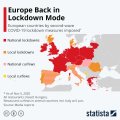
This might be the US in a few months as we try to suppress SARS-CoV-2 infections to low levels without a vaccine. Controlled transmission in younger people for immunity from natural infection (vs vaccine-induced immunity) is a bad, risky method on its own but there are no good alternatives that don't depend on massive periodic lockdowns to are doomed to failure too without a safe and effective vaccine for most of the worlds population. Successful vaccines aim to recreate the same immunity found from a natural infection so the optimal path to Herd immunity should combine natural and vaccine immunity for the quickest exit from the the current pandemic because there will be a substantial level of the population that can't be vaccinated because of medical conditions, can't be because current vaccine's haven't been tested or approved for those under 18 or won't (the right to be left alone) because of beliefs that conflict with vaccination.
23330.jpeg
https://www.statista.com/chart/23330/coronavirus-restrictions-europe-map/
 

justtrying

Joined Mar 9, 2011
439
This is IMO more important for the long run as things ramp up again to the point some exposure to the virus becomes the norm. Improve your immune system if possible, wear effective filtering masks to reduce the viral load you will get because IMO, you will be exposed to the virus no matter how safe you think you are or closely you follow health measures if this trend continues.

This might be the US in a few months as we try to suppress SARS-CoV-2 infections to low levels without a vaccine. Controlled transmission in younger people for immunity from natural infection (vs vaccine-induced immunity) is a bad, risky method on its own but there are no good alternatives that don't depend on massive periodic lockdowns to are doomed to failure too without a safe and effective vaccine for most of the worlds population. Successful vaccines aim to recreate the same immunity found from a natural infection so the optimal path to Herd immunity should combine natural and vaccine immunity for the quickest exit from the the current pandemic because there will be a substantial level of the population that can't be vaccinated because of medical conditions, can't be because current vaccine's haven't been tested or approved for those under 18 or won't (the right to be left alone) because of beliefs that conflict with vaccination.
View attachment 221607
https://www.statista.com/chart/23330/coronavirus-restrictions-europe-map/
In my opinion everyone needs to start viewing this as becoming another flu that will most likely be endemic. The virus is clearly very adaptive and is unlikely to die out. High mutation rate does mean a functional vaccine is highly unlikely. So has anyone heard from the experts how they are planning to move forward given those 2 points hold true (highly likely)? I have not. The mantra i have heard is repeated lockdowns until vaccine is discovered. This is given that in my province more people (young people) die of overdose every month than from COVID. How is that justifiable?

Get busy living or get busy dying...
 

nsaspook

Joined Aug 27, 2009
16,330
In my opinion everyone needs to start viewing this as becoming another flu that will most likely be endemic. The virus is clearly very adaptive and is unlikely to die out. High mutation rate does mean a functional vaccine is highly unlikely. So has anyone heard from the experts how they are planning to move forward given those 2 points hold true (highly likely)? I have not. The mantra i have heard is repeated lockdowns until vaccine is discovered. This is given that in my province more people (young people) die of overdose every month than from COVID. How is that justifiable?

Get busy living or get busy dying...
Yes, we will and should start viewing this as another (much more dangerous) flu as an exit strategy from current restrictions.

Medical science is working hard but IMO we can expect a low (50% to 60%) effectiveness, limited availability vaccine next year that might last 6 months between doses. The logical thing is to identify and vaccinate the potential CV super-spreaders that are normally young and asymptomatic.
https://www.ncbi.nlm.nih.gov/pmc/articles/PMC4209160/
There is widespread recognition that interventions targeting “superspreaders” are more effective at containing epidemics than strategies aimed at the broader population. However, little attention has been devoted to determining optimal levels of coverage for targeted vaccination strategies, given the nonlinear relationship between program scale and the costs and benefits of identifying and successfully administering vaccination to potential superspreaders.
Costs
Vaccinating superspreaders incurs search costs and vaccination costs. Benefits (equivalently, cost savings) result from infections, hospitalizations, and deaths averted. To provide a MB function directly comparable to the marginal search cost function, we subtract known per person costs of vaccination from cost savings associated with health benefits resulting from additional vaccinations. Thus, measurable costs and benefits are captured within MB = (cost savings - vaccination costs), which informs decision makers specifically about their willingness to pay for the search costs of a targeted vaccination program.
https://medicalxpress.com/news/2020-09-covid-vaccines-prioritize-superspreaders.html
Very few of the COVID-19 superspreaders are elderly. It is the younger people who have a much greater propensity to resume social lives at schools and in other venues.

Among the young are a subset of highly social people with wide circles of friends who become the most fertile ground for the spread of COVID-19. These young people also have a much lower risk of death or even severe symptoms, which also means they are more likely to infect others.
These are the people that must have immunity by any means possible to exit the current restrictions, that includes natural infection if you don't have an effective vaccine.
 
Status
Not open for further replies.
Top