Convert alternator to 56v?

Status
Not open for further replies.

Thread Starter

Iqinsanity

Joined Oct 6, 2019
42
Well we are learning all these idiosyncrasies on that 48 V alternator if and when you ever do get to use it you will find it runs hot, and when all our parts come in I will update you on how it works.
Not that we need it but if you should ever wanna get rid of yours let me know
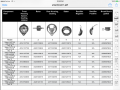
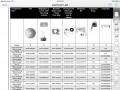
But as I said before if you pull up lease neville technical manual on the 48/56v alternator there is definitely three parts that have have different part numbers
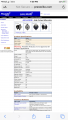
as far as I’m aware the only difference between the 4417jb and 4420jb is the regulator. The website also says they are the same besides regulator. I’m confused. What has a different part number?
 

Outhome

Joined Aug 27, 2020
17
There's two different rotor numbers one for the 48 V and a different one for the 56v
They are the same rotor numbers for the 2500 series alternator and for the 56 is a 2800 series alternator.
The capacitor that inside also has a different number on the 48 V to the 56v
I can't seem to attach a PDF file to this forum or I would send you the total breakdown from Leece
Neville
 

Attachments

Outhome

Joined Aug 27, 2020
17
Yeah I've seen that same Page for leece Neville
That's where I started about a month and a half ago
And the moment we put that voltage regulator on
And it didn't kick 56v instantly, worked damn hard just to see 49
And got extremely warm while It was still on the test bench
That's when I started to take a deep as possible look into it
I will know next week it's a different rotor makes a difference
I don't know about the capacitor I've had two different
Engineers from Leece neville tell me conflicting things
One sent me an entire schematic drawing of the capacitor told me if I can't find one this is how you make one the other told me they didn't use it on a 56v and yet it showing and listed
But I am 100% positive of the heavier rotors on a higher amp value in other applications
I am also 100% sure that there's no way I could use this alternator with just switching the voltage regulator it got way too hot in a very short period of time
 

Attachments

Thread Starter

Iqinsanity

Joined Oct 6, 2019
42
It worked in 48v operation normally?
a regulator is just a really fast on off switch that senses input. Voltage is just the result of the average of the on and off time. As in the field coil just stays on longer to get higher voltage.

If it was me I wouldn’t waste any time on that alternator until I checked all circuits for resistance and shorts. Also make sure the diodes are working properly.
 

Outhome

Joined Aug 27, 2020
17
Yes it worked 48 V fine, which we both know will not charge a 48 V battery bank when I first found this alternator on eBay and while I was waiting for the guy to ship it that's when I ran across that one document you had and I got all excited boy I remember back then how hard could it be to find a voltage regulator to make the switch and I'm good to go ......it's been quite the argouis journey to get what I need and where I wanna be and I know that I am not done yet however reasonably pretty sure switching the rotors Will help and also removing the 48v limiter capacitor even if I don't put another one back in . Who knows lucky for me I'm not totally desperate on having it finished instantly and I can tell you for sure I cannot afford the other 56v options of alternators that are out there.
In that category i could only find three, balmar-4600.00 some out fit over in Iowa makes one for 1800
And there's one on eBay for 750 I think it's out of Taiwan..oh and over in England on their eBay they had a 400 amp 48 V/56v alternator that they said was made special for NASA that one was only $2700 in a couple hundred dollar shipping but what a hell of an alternator
What's stings even harder both of those other alternators needed an external voltage regulator they say that's proprietary ranging from 350-$700 let's face it this 48 V alternator From John Deere was the way to go. And the cool part about it get to learn quite a damn bit along the way when you get to be my age learning may be fun A hunt is always a challenge the remembering part is practically impossible
 

Thread Starter

Iqinsanity

Joined Oct 6, 2019
42
I still think your alternator has some issue or the regulator is faulty. What kind of load is on it on the test bench? And is it getting up to speed fully?

It costs more money but there’s always plans B and C. Use a 12v alternator and a dc to dc charger. Or use the alternator as 48v to power an inverter then a charger like for a golf cart.

I wish it wasn’t so difficult to run mine but I’m sure the storage unit place would get extremely mad if I ran a diesel motor with no exhaust for any period of time. Also I can’t even start it because it had a starter plate that I threw away when I bought a bellhousing... which is 2000 miles away at a friends house. Living in places where I can’t have things shipped while out of town for long periods of time is a pain for sure.

This issue you’re having I kind of anticipated that’s why i got the bellhousing for the yanmar. While 56v is preferred for charging batteries and running an inverter without having to rev the motor, Just throwing an 1800rpm generator head on the motor is the simple thing to do. So I planned on both. Options lol
 

Outhome

Joined Aug 27, 2020
17
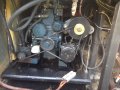
My set up is I'm running a three cylinder Kabota 905 which at one time was the generator system on a double eagle sleeper cab , I pulled the small 12 V alternator off of it and put on a large 12v 7900 load handler backed by a sterling electronics specialized voltage regulator. Most always every inverter I've ever used had its own battery charging capability. On top of my bus project I put 10 325 W solar panels as my primary daytime charging system, they just don't keep up with a 48 V system and do a deep charge on the batteries. they would work perfectly for 24 V system however that's not what I have at the moment. So that leaves me with several options ... but I always like back up concepts hence my chasing down a 48 V alternator thinking it would be a simple fix just in case the charging system went out on my inverter and since it's a cheaper Chinese one I have to believe that that is a weak link. At the moment I plan on pulling the air-conditioning pump off the generator and mounting the second alternator there and concern myself with an air conditioning pump later next spring. And since I have found an electric air conditioning pump which are becoming more common now with all of the electric cars that's probably the way I'll go....thatIMG_5763.JPG whole sector is another story for another time
 

Outhome

Joined Aug 27, 2020
17
I will be since the 12v alternator will be constantly charging the house battery the bus starter batteries and the generator starter battery but I still need to hook up different solenoid's or battery isolators so not to overcharge the generator starter battery and be able to separate and segregate the other 12 V group batteries. and at the moment I can't take a picture of the 48v for the simple reason it's over an electrical shop right now waiting on parts
 

Outhome

Joined Aug 27, 2020
17
When I'm using the welder out at the bus I will take the 12 V assembly and charge to the 6 V batteries one set at a time for 30 minutes I have Anderson plugs set up to where I have 4-12 V assembly so to speak and one good heavy battery charger so when the generator fires up one of the four groups get a good solid 12 V charge from the battery charger full-time and the other three groups get interchanged with my big long jumper cable if that makes any sense to you
 

Outhome

Joined Aug 27, 2020
17
Yes it absolutely was both when I first tried it on my generator and definitely when we had it on the machine bench testing bench down at the shop
 

Thread Starter

Iqinsanity

Joined Oct 6, 2019
42
Later today I’ll post my ohm readings and we will see if you get the same numbers. I’m 6 hours from the storage unit right now though.
 
Status
Not open for further replies.
Top