And the input offset of most opamps swamps the voltage feedback.Getting 1nA current with active devices is problematic.
Even a small MOSFET, for example, will have an OFF leakage current of a few hundred nA.
And the input offset of most opamps swamps the voltage feedback.Getting 1nA current with active devices is problematic.
Even a small MOSFET, for example, will have an OFF leakage current of a few hundred nA.
Coz i need a circuit whose current remains constant for load from 1Mohm to 10Mohm, so that circuit will be independent of load for certain range of load resistance.So why won't a 1 GΩ resistor in series with a 1.5 V battery and your load suffice?

But you just said:Coz i need a circuit whose current remains constant for load from 1Mohm to 10Mohm, so that circuit will be independent of load for certain range of load resistance.
Now you are saying that it can't vary even by even as little as 14 pA.I am trying to build a circuit that can give me a low current of 1nA even i can go high upto 2 to 4 nA. My load will be between 1Mohm to 10Mohm and for that range of load the variation of current cannot be grater than 1nA.
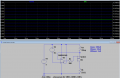
Is the simulation model taking into account the drain-source leakage current?I stepped RL from 1meg to 10meg in 1meg steps. The current is 999.9468nA in all cases. (green trace) The voltage starts out at 0.0999volts and ends at 0.999 volts. (blue trace)
Not shown, I stepped V2 from 0.1V to 0.01V in 0.01v steps.
View attachment 337073
I cannot find a real P-MOSFET that works with that little current!
So what's the problem with using a 10G ohm resistor with a 10V source as I proposed in post #20?Coz i need a circuit whose current remains constant for load from 1Mohm to 10Mohm, so that circuit will be independent of load for certain range of load resistance.
A very very high voltage source and a resistor makes a constant current source.So what's the problem with using a 10G ohm resistor with a 10V source as I proposed in post #20?
Doesn't have to be that high at all if the current is small. If you want 1% regulation, then the source voltage needs to be about 100x the max voltage across the load.A very very high voltage source and a resistor makes a constant current source.
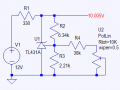
I made a constant current source without an output transistor. I need some time to play with it.

So what about using a 10G ohm resistor as I proposed in post #20.Coz i need a circuit whose current remains constant for load from 1Mohm to 10Mohm, so that circuit will be independent of load for certain range of load resistance.
What problem, specifically? Getting 1 nA of current in a load that varies between 1 MΩ and 10 MΩ? Or some other aspect of the discussion?I've been fighting this problem for literally years, and i'm now following this thread because of it.
There are things I do not understand yet. Are you going to measure the voltage across the load?Coz i need
There are op-amps that could make a buffer so measuring the voltage will not load thing down much. I am using a 0.1pA input current amp. I have used fA buffers.The challenge to the second is having any calibrated measuring system with an adequate input resistance to avoid changing the voltage being measured.
Two serious challenges!!!
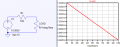
Current source 1 nA ±0.05%, as @crutschow suggested:So what about using a 10G ohm resistor as I proposed in post #20.
______
How do you figure ±0.05%???Current source 1 nA ±0.05%, as @crutschow suggested:
View attachment 337200______View attachment 337214
Glass glazed resistor 10 GΩ, $3.79 for 2 pcs:
https://aliexpress.ru/item/10050059...w.productlist.search_results.6.54013f373sUFL5
You should understand that ±0.05% is current deviationHow do you figure ±0.05%???
The resistors you link don't even give a tolerance, but I would be surprised if they are even 1% resistors.