Facebook
 Google
 GitHub
 Linkedin
Hi Folks...
I'm hoping someone can clear my confusion about floating voltages and what appears to be stray/parasitic side-effects. Included are very simple diagrams/images that represent the environment and data.
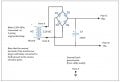
It's a simple 10:1 transformer, full bridge rectifier and storage capacitor. As you can see, everything on the right side of the transformer is floating which is my desired configuration. Various points in the circuit are labeled. Point "E" is a connection to Earth ground from a grounding point on the wall outlet.
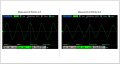
Please see the waveforms when measuring from point E (ground) to various other points in the circuit. I strongly suspect these waveforms are due to parasitic effects from the transformer. If different transformers are used, the waveforms remain similar but with different amplitudes. I've looked at various circuit models for transformers and understand the concepts of leakage capacitance, leakage inductance and mutual capacitances between the windings. I'm having a hard time getting my head wrapped-around which of those side-effects are causing the observed waveforms. Can anyone describe the source and path that leads to this? The second part to this question... how to eliminate those side-effects while still maintaining a floating voltage?
BTW: There's not a lot of power in that signal. It's easily shunted to ground by placing a 1uF cap across points C-E or D-E.
Your thoughts / help is greatly appreciated.
Regards
Ray

I'm hoping someone can clear my confusion about floating voltages and what appears to be stray/parasitic side-effects. Included are very simple diagrams/images that represent the environment and data.
It's a simple 10:1 transformer, full bridge rectifier and storage capacitor. As you can see, everything on the right side of the transformer is floating which is my desired configuration. Various points in the circuit are labeled. Point "E" is a connection to Earth ground from a grounding point on the wall outlet.
Please see the waveforms when measuring from point E (ground) to various other points in the circuit. I strongly suspect these waveforms are due to parasitic effects from the transformer. If different transformers are used, the waveforms remain similar but with different amplitudes. I've looked at various circuit models for transformers and understand the concepts of leakage capacitance, leakage inductance and mutual capacitances between the windings. I'm having a hard time getting my head wrapped-around which of those side-effects are causing the observed waveforms. Can anyone describe the source and path that leads to this? The second part to this question... how to eliminate those side-effects while still maintaining a floating voltage?
BTW: There's not a lot of power in that signal. It's easily shunted to ground by placing a 1uF cap across points C-E or D-E.
Your thoughts / help is greatly appreciated.
Regards
Ray


 .
.