Facebook
 Google
 GitHub
 Linkedin
Hi:
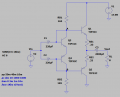
I am trying to understand the dc current flow in a Class AB Comlementary-Symmetry amplifier circuit.
See attachments.
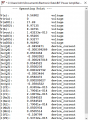
At 50.55mA of dc bias current flows into point A and splits three ways. 322.79uA flows to the Q3 base, 205.03uA flows into
the Q1 base and 50.02mA flows into the Q3 collector. I want to understand why the current splits in these proportions and
how you would calculate mathematically how the current will split.
The same situation applies to point B. -49.95mA flows into point B from the Q4 collector, -247.02uA flows into point B from the
Q2 base, -399.29uA flows into point B from the Q4 base, and then 50.59mA flows from point B to ground.
Thanks,
David
I am trying to understand the dc current flow in a Class AB Comlementary-Symmetry amplifier circuit.
See attachments.
At 50.55mA of dc bias current flows into point A and splits three ways. 322.79uA flows to the Q3 base, 205.03uA flows into
the Q1 base and 50.02mA flows into the Q3 collector. I want to understand why the current splits in these proportions and
how you would calculate mathematically how the current will split.
The same situation applies to point B. -49.95mA flows into point B from the Q4 collector, -247.02uA flows into point B from the
Q2 base, -399.29uA flows into point B from the Q4 base, and then 50.59mA flows from point B to ground.
Thanks,
David
Attachments
-
 20.4 KB Views: 20
 -
 22.7 KB Views: 15
 -
2.7 KB Views: 3