clarifcation of capacitor values

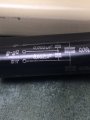
4 capacitors in single case.

  • Poll choices?

    Votes: 0 0.0%
  • Confused

    Votes: 0 0.0%

  • Total voters
    0

Thread Starter

tinkerman

Joined Jul 22, 2012
151
4 capacitors in one case from Swiss sewing machine. Labeled 2x .002 mf, 1x .06 mf, 1x .02 mf. The values differ from measured. I get 2 nf, 60 nf, 20 nf. Did they use a different marking system?
 

Attachments

Reloadron

Joined Jan 15, 2015
7,891
What I see in your image reflects uF (micro Farad). Using .002 uF as an example that would be 2 nF (nano-Farad) micro or u being negative sixth and nano or n being negative nineth power of ten. .001 uF = 1 nF = 1000 pF, .06 uF = 60 nF = 60,000 pF and .02 uF = 20 nF = 20000 pF.

So above we have Micro-Farad, nano-Farad and pico=Farad conversions.

Ron
 

Thread Starter

tinkerman

Joined Jul 22, 2012
151
What I see in your image reflects uF (micro Farad). Using .002 uF as an example that would be 2 nF (nano-Farad) micro or u being negative sixth and nano or n being negative nineth power of ten. .001 uF = 1 nF = 1000 pF, .06 uF = 60 nF = 60,000 pF and .02 uF = 20 nF = 20000 pF.

So above we have Micro-Farad, nano-Farad and pico=Farad conversions.

Ron
Thank you. Thought I was on the right track. What puzzled is the sizes. Those are very small capacitors. Mind you the technology 45-50 years ago was quite different. There have been a number of failures. Couldn’t they be replaced with modern types that are much more durable?
 

WBahn

Joined Mar 31, 2012
32,874
4 capacitors in one case from Swiss sewing machine. Labeled 2x .002 mf, 1x .06 mf, 1x .02 mf. The values differ from measured. I get 2 nf, 60 nf, 20 nf. Did they use a different marking system?
Where do you see them labeled as mf?

The picture you show has them labeled μF. It is common to see μF labeled as uF or as mmF (milli-milli Farad). I have seen mF in old, old diagrams where it meant microfarad, but that's pretty rare.

1 nF = 0.001 μF, so 2 nF = 0.002 μF, 20 nF = 0.02 μF, and 60 nF = 0.06 μF
 

WBahn

Joined Mar 31, 2012
32,874
Thank you. Thought I was on the right track. What puzzled is the sizes. Those are very small capacitors. Mind you the technology 45-50 years ago was quite different. There have been a number of failures. Couldn’t they be replaced with modern types that are much more durable?
Probably. You want to use the same type and a voltage rating at least as great as a minimum. Depending on just what these things are doing in the circuit, other parameters may also be important such as temperature coefficient, leakage current, ESR, self-resonant frequency, and others. It's also possible that they are very non-critical and anything that is within a factor of two or perhaps even ten will work. The devil's in the details.
 

Thread Starter

tinkerman

Joined Jul 22, 2012
151
Where do you see them labeled as mf?

The picture you show has them labeled μF. It is common to see μF labeled as uF or as mmF (milli-milli Farad). I have seen mF in old, old diagrams where it meant microfarad, but that's pretty rare.

1 nF = 0.001 μF, so 2 nF = 0.002 μF, 20 nF = 0.02 μF, and 60 nF = 0.06 μF
 

bertus

Joined Apr 5, 2008
22,928
Hello,

Looking at the arrangement of the capacitors, they are used for RFI/EMI suppression on the mains.
You will need class X and Y capacitors for them:

Class X and Class Y capacitors
Many safety regulations mandate that Class X or Class Y capacitors must be used whenever a "fail-to-short-circuit" could put humans in danger, to guarantee galvanic isolation even when the capacitor fails.

Lightning strikes and other sources cause high voltage surges in mains power. Safety capacitors protect humans and devices from high voltage surges by shunting the surge energy to ground.[30]

In particular, safety regulations mandate a particular arrangement of Class X and Class Y mains filtering capacitors. [31]

In principle, any dielectric could be used to build Class X and Class Y capacitors; perhaps by including an internal fuse to improve safety.[32][33][34][35] In practice, capacitors that meet Class X and Class Y specifications are typically ceramic RFI/EMI suppression capacitors or plastic film RFI/EMI suppression capacitors.

This comes from the wiki about capacitors:
https://en.wikipedia.org/wiki/Capacitor_types

Bertus
 
Top