Facebook
 Google
 GitHub
 Linkedin
Here's my opinion on this matter:If I understand the comments correctly, are the leading suggestions that it may be a faulty connection on the driver / or an open circuit (if the latter how can I check and test for this)?
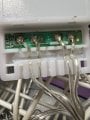
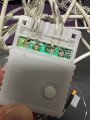
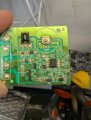
1) Possibly mis-wired. You DID say you had a "Professional" do some work on it. For my money the "Professional" was anything BUT a "Pro". What makes me come to this opinion is the solder job. If he were truly a pro he would have never left solder joints looking like that. So my #1 choice is it's mis-wired.
2) Could be a bad solder joint. Again, it's the way solder looks. I've looked at solder joints by the hundreds of thousands per year. I know a good joint when I see one; and I know a bad one just as quickly. I once had an interview which included looking at a mother board. I was told they knew where every reject was on the board. My job in the interview was to find them. I looked at that board three times over but couldn't find anything I would have rejected. When my interviewer came to see how I was doing and I told him "I've looked at this board three times and can't find any rejects." I got the job on the spot. He told me that every interviewee before me found things they would reject for. The point of the test was to see if I truly knew the standards by which nearly all electronic assembly is held to. So I know solder.
3) Possible open circuit somewhere. One way to test for this is to flex the wire everywhere possible. If you have only one broken wire when you flex it you'll see the string of lights light up. If not - then there's just two possibilities; A) dead controller. B) possible multiple breaks in the wiring. Multiple meaning two or more.
The only way to see if you have ANY broken wires is to test continuity from end to end. You should get less than 5 ohms. If you get a low resistance then you have a good wire. If it's broken anywhere, even in multiple places you'll never get continuity. And I'm not talking about checking for continuity from the + to the -. You'll be reading through all the components. However, if you DO test that way and the wiring is not the issue then you'll get a high resistance. Hundreds of ohms to a few thousand ohms. But if you get "OL" then it's likely an open circuit.
Quick overview of what people call an electrical issue: Some call it a "Short", others may call the same issue "Open". A circuit is a circle. There is continuous flow all the way around the circuit. If you break the circle (or circuit) you don't get any flow at all. A short is like a smaller circle inside the bigger circle. In other words it's a shortcut from starting point to the ending point. If you need me to draw a picture just ask.