Celsius versus Fahrenheit

Thread Starter

crutschow

Joined Mar 14, 2008
38,659
i solved that years ago by a little bit of cheating... bought identical thermostat, hacked it, then hacked the original as well. both were showing few degrees higher. i wanted second unit in case she claims that original is broken (and she did) so i casually pulled out brand new unit, unpacked and replaced it in front of her. ;)
Wouldn't work in my case.
We have a digital clock by the bed that also displays the ambient room temperature.
 

cmartinez

Joined Jan 17, 2007
8,828
A few years ago I bought a wheelchair accessible Honda Odyssey for my 27 year old daughter ... We had to import it from Texas because the company that makes them does not have a representative here, and the companies that do make them here are no match for the quality offered in the US.

Anyway, I was pleasantly surprised to see that changing its speed and distance units was as easy as going through a few clicks in a screen menu, and that's a feature that I use often. This because I have to travel to Texas at least every three months or so, and I no longer have to do conversions from miles to kilometers in my head whenever I visit my northernly neighbors.

BUT ... changing the air conditioning units from Fahrenheit to Celsius turned out to be an entirely different thing ... At first I thought that it was going to be as easy as selecting an option in a different menu. But after exploring all of the options in the screen interface, I simply could not find a solution.

And finally, after some Googling, I found a guy who posted that the easiest (and only) way to change the reported temperature from °F to °C was to remove the freaking dashboard, dislodge some obscure circuit, and change a couple of SMT resistors to a given value so as to force the computer into making a different temperature calculation ... and by the way, even though said hack was guaranteed to work, changing the temperature units symbol from °F to °C was simply not possible ...

That, is what I call lousy, lazy and mediocre engineering ...
 

Ian0

Joined Aug 7, 2020
13,211
Hi W,
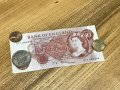
I also grew up with Fahrenheit, but changed to Celsius for physics reasons, now I'm stuck with it. I also grew up with £.S.D.
I used to use lathes which had thousandths of an inch dials, and had to read drawings in MMs.

On the back of school exercise books were chains and furlong tables.

I'm glad it's more simple now!
C.
From my collection:
IMG_1406.jpeg
what about volume measure?
minim, fluid ounce, gill, pint, quart, gallon, peck, bushel, load?
 
The consensus seems to be that, whichever temperature scale you grew up with is the one that seems the best.
I can live with that (and I'm glad I grew up with Fahrenheit). :)
Habit is the point. When visiting England for the first time (1969), the old system with pounds, shillings, and pennies was in force. Local people seemed quite at ease with it, in spite of the perceived (by me) complexity.
 
changing the temperature units symbol from °F to °C was simply not possible ...
My grandfather, who was an A/C distributor, told me a simple hack which one can simply do in your brain to convert from F to C easily.

Take the Farenheit temperature, let's say as an example 94 degrees F.
Sustract 32, becomes 62
Divide by 2, becomes 31
Add 10% (actually 11% but 10 is close enough) becomes 34.1 C, which is a close enough answer. The actual temperature conversion is 34.4C.

To go from C to F, you go backwards. let's say 21C
Substact 10% becomes 19
Multiply by 2, becomes 38.
Add 32 becomes 70F, which is a close enough answer to the actual 69.8 F.
 
From my collection:
View attachment 370355
what about volume measure?
minim, fluid ounce, gill, pint, quart, gallon, peck, bushel, load?
As you know a UK pint ins 20 floz, here in the US we can get a 16 floz pint or a 22 floz pint, so I like asking for a "large pint of" whatever when I go to a bar.

But these two floz units are (slightly) different volumes (why o why?) the US being a bit greater volume.
 
After having read this thread (quite entertaining), I've determined one thing: This debate could be worse.
We could be talking about oilfield units.

Also, for those interested, a brief (sarcastic and admittedly biased) history of Imperial units.

Ironically, I don't think he discusses temperature in this video. Both scales were produced around the same time (1724 for F, 1742 for C), though Fahrenheit made all sorts of bizarre decisions in the creation of his scale (and some math errors to make marking the thermometer easier). Interestingly, the Romer scale (1702) - which is what Fahrenheit based his scale off of initially before breaking the math - is much more akin to the Celsius scale than Fahrenheit. In the short of it, Fahrenheit is not made to scale 0-100 "for relative human temperatures," as some claim (though I don't recall if said claim was made here), but made "because it's a lot easier to mark off intervals on a thermometer between freezing point of brine, water, and the human body temperature" (it's a happy coincidence that it does conveniently align, more-or-less, to human comfort scales).

The scale we use today is the modified Fahrenheit scale (adopted in 1776 to the Royal Society by Cavendish, which perhaps contributes in a way to why we US citizens use Fahrenheit?), which corrects all the scaling, offsets, and intervals.

Newton also had a temperature scale, by the way, and it's one year older than the Romer (it's an incredibly bizarre scale, but bases 0 at the "freezing point of water in winter air.")

With all that said...I'm fairly certain the "Fahrenheit vs Celsius" debate is nothing compared to the "how do we measure volume" debate can of worms a few of you just opened....
.
.
.
On the plus side, at least no one's debating the short vs long billion.
 

WBahn

Joined Mar 31, 2012
33,062
As you know a UK pint ins 20 floz, here in the US we can get a 16 floz pint or a 22 floz pint, so I like asking for a "large pint of" whatever when I go to a bar.

But these two floz units are (slightly) different volumes (why o why?) the US being a bit greater volume.
Purely historical. Many of the customary units were developed locally for trade in that local area, but used the same names because of word-of-mouth spreading widely over time. There was no widespread standardization and, as things began to be standardized, it was done using definitions that could be implemented locally, such How much is a barrel? How much is a bushel? Depended not only on where you were, but what you were measuring. The first standardized definition of the inch, back in 1324, was the length of three barleycorns that were dry, round, full, and taken from the middle of the ear, placed end-to-end. This gave an easy to use reference that was readily available across England and was more than close enough for practical use.

As wider standardization efforts began, people that had developed long-standing reference sizes for volumes in various commodities, independent of other commodities, were resistant to changing (that's one thing that certainly hasn't changed), so the did what standards have done almost continuously and brought their units into agreement with the standards by making the smallest change possible, which is why a U.S. gallon is defined 231 cubic inches as opposed to something like 200 cubic inches or even 230 cubit inches.
 
As you know a UK pint ins 20 floz, here in the US we can get a 16 floz pint or a 22 floz pint, so I like asking for a "large pint of" whatever when I go to a bar.

But these two floz units are (slightly) different volumes (why o why?) the US being a bit greater volume.
And there is also the Texas floz which is bigger than the US floz because everything is bigger in Texas. :)
 

WBahn

Joined Mar 31, 2012
33,062
On the plus side, at least no one's debating the short vs long billion.
Oh, let's start!

This is one that causes all kinds of confusion and misunderstanding across not only specific groups that need to work with both, but with the general public. I can't imagine what people that use the long billion and trillion imagine when they hear that the U.S. budget deficit this year along will be over $2 trillion dollars and they interpret it as being a million times the insanely large amount that it actually is.
 

Thread Starter

crutschow

Joined Mar 14, 2008
38,659
Well, all these measurement digressions are interesting but, getting back to the subject of this thread, the consensus seems to be that whatever temperature scale you used most in you life is the one you prefer/think-is-the-best, regardless of any particular advantage or disadvantage one scale may have compared to the others.
That's basically what I was interested in learning.

So I'll stick with my Fahrenheit scale that has a nice 0 to 100 degree span for the human comfort/discomfort range with a 1°F increment being about the change a human can detect, and is a nice increment for a house thermostat setting change.
The rest of the world can/will keep using the Celsius scale, which I think is very well suited to scientific/technical uses, but which has none of those attributes. :D

But feel welcome to continue on with your measurement unit comparisons, which is also interesting.
 
Top