Facebook
 Google
 GitHub
 Linkedin

I have a curiosity about using the Celsius temperature scale versus Fahrenheit.
I know the USA is likely considered somewhat backwards for still using the Fahrenheit temperature scale for non-technical uses, (most science/technical functions use Celsius) but I find the scale more relatable to human comfort for ambient temperature readings.
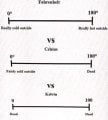
0°F is really cold and 100°F is uncomfortably hot with 70°F being in the comfortable indoor range.
And 1°F is a good adjustment increment for an indoor thermostat.
I would suppose you get used to the Celsius temperature values for those arbitrary comfort levels, but it seems less intuitive.
Also I believe Celsius home thermostats use 0.5°C setting increments as a 1°C jump is likely too coarse.
I'm interested in thoughts on this from those in the rest of the world who use Celsius for ambient temperature readings.
On a side note, I also find the gallon a handy unit for liquid measure such as gasoline and milk.
I could live with kilometers instead of miles though, even though the word has too many syllables.
I know the USA is likely considered somewhat backwards for still using the Fahrenheit temperature scale for non-technical uses, (most science/technical functions use Celsius) but I find the scale more relatable to human comfort for ambient temperature readings.
0°F is really cold and 100°F is uncomfortably hot with 70°F being in the comfortable indoor range.
And 1°F is a good adjustment increment for an indoor thermostat.
I would suppose you get used to the Celsius temperature values for those arbitrary comfort levels, but it seems less intuitive.
Also I believe Celsius home thermostats use 0.5°C setting increments as a 1°C jump is likely too coarse.
I'm interested in thoughts on this from those in the rest of the world who use Celsius for ambient temperature readings.
On a side note, I also find the gallon a handy unit for liquid measure such as gasoline and milk.
I could live with kilometers instead of miles though, even though the word has too many syllables.
Last edited: