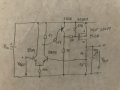
Cant figure this circuit out

dl324

Joined Mar 30, 2015
18,337
In LTSpice can I see initial how it calculating everything?
No. You still need to understand how things work, without relying on a simulator, so you can check the results.

LTspice will operate a transistor at excessively large currents and not tell you that you've exceeded the safe operating parameters. If a simulator says a circuit works, or doesn't work, it's up to the user to determine if the results are realistic. I've simulated too many circuits in LTspice that the program said wouldn't work; but they did. The simulator between my ears has fewer glitches. And no, I'm not going to spend more time learning how to make the simulator work.
 

k1ng 1337

Joined Sep 11, 2020
1,038
No. You still need to understand how things work, without relying on a simulator, so you can check the results.

LTspice will operate a transistor at excessively large currents and not tell you that you've exceeded the safe operating parameters. If a simulator says a circuit works, or doesn't work, it's up to the user to determine if the results are realistic. I've simulated too many circuits in LTspice that the program said wouldn't work; but they did. The simulator between my ears has fewer glitches. And no, I'm not going to spend more time learning how to make the simulator work.
This begs this question: How much time did you spend learning how to make the simulator work? This got me thinking because this is separate from just tinkering. I mostly tinker.
 

Thread Starter

hhsting

Joined Apr 25, 2024
395
I suggest you return to your original two questions. For this I can show you a method to derive an equation from a array of voltage / current values.

It starts by getting the simulation set up with real world components. Try several TL431 models as well as many BJTs. Take advantage of the spice directive feature which allows you to program your own model from scratch.

Next run one or more types of simulation (transient, ac, etc.) and save the output as raw data to a text file. It's most obvious to plot voltage / current but you can plot anything (voltage / voltage or current / temp etc.).

Once the data is in a raw format, use ChatGPT or a similar tool to "find a pattern or equation" in the data. Tell it to output the result as a graph or in algebraic form. This method works surprisingly well for basic data-sets and you can get a long way with it. Of course you should be learning Kirchoffs laws as well but this allows you to derive independent equations based on arbitrary data.
How do I save output as raw data? It wont let me simulate at all
 

Thread Starter

hhsting

Joined Apr 25, 2024
395
How did you apply Ohm's law to reach that result?
I didnt i just did kvl. Can you explain it a bit please? Also please explain a bit of how you can get current and voltage thru each resistor and eqch transistor emitter, collector base? Please I ran simulation in LTsoice but i still cant understand how to get the values
 

Ian0

Joined Aug 7, 2020
13,132
i just did kvl.
Does the answer you got make any sense? As you know the value of the resistance, you can easily work out the current that must be flowing through it. Does that figure make sense?
Also please explain a bit of how you can get current and voltage thru each resistor and eqch transistor emitter, collector base?
First you need a general idea of where the current is going.
The worst transistor you are using is the power transistor which has a gain of 40, so its base current is a fortieth of the collector current or 2.5%. All other control signals will be much less, so for your first look at the circuit, ignore all the control currents and look where the input and output power goes.
Then you can approximate the control currents.
Don't forget that SPICE doesn't perform any checking that you have asked the right question. It just gives the answer to the question you asked. If you asked the wrong question, you will have the wrong answer.
 

Thread Starter

hhsting

Joined Apr 25, 2024
395
Does the answer you got make any sense? As you know the value of the resistance, you can easily work out the current that must be flowing through it. Does that figure make sense?

First you need a general idea of where the current is going.
The worst transistor you are using is the power transistor which has a gain of 40, so its base current is a fortieth of the collector current or 2.5%. All other control signals will be much less, so for your first look at the circuit, ignore all the control currents and look where the input and output power goes.
Then you can approximate the control currents.
Don't forget that SPICE doesn't perform any checking that you have asked the right question. It just gives the answer to the question you asked. If you asked the wrong question, you will have the wrong answer.
Ok so then current thru R5 would be 0.7/1.5 = 0.467A.
If what you say concentrate on where power goes then it would go thru Q2? If it does then 0.467A is collector thru Q2? Then base of Q2 would see 0.467/40=0.011A?

if not then can you please let me know?
 

dl324

Joined Mar 30, 2015
18,337
If what you say concentrate on where power goes then it would go thru Q2? If it does then 0.467A is collector thru Q2? Then base of Q2 would see 0.467/40=0.011A?
You seem preoccupied with beta. It isn't a fixed number. It changes with current, collector-emitter voltage, and temperature.
 

Thread Starter

hhsting

Joined Apr 25, 2024
395
You seem preoccupied with beta. It isn't a fixed number. It changes with current, collector-emitter voltage, and temperature.
Well then if i am not doing it right then please let me know how i can analyze all currents thru resistors capacitors post #43 circuit.
 
The circuit in post #43 is not suitable for your purpose since the NPN (Q2) will always drop about 0.8V from Vcc.
You need a PNP or P-channel in high-side.
Also, why do you need a current limiting function the Q1 provides?
 

Thread Starter

hhsting

Joined Apr 25, 2024
395
The circuit in post #43 is not suitable for your purpose since the NPN (Q2) will always drop about 0.8V from Vcc.
You need a PNP or P-channel in high-side.
Also, why do you need a current limiting function the Q1 provides?
Which circuit would be suitable then? I am just trying to figure out how to derive and analyze resistor transistor emitter collector base current and voltages. I dont need current limiter though
 

k1ng 1337

Joined Sep 11, 2020
1,038
How do I save output as raw data? It wont let me simulate at all
Post the simulation file you made. I get the impression you are a bit scatterbrained. If that's the case, I'll point out there are no shortcuts to understanding this stuff. It takes time and it's often difficult. Take it slow.
 

Danko

Joined Nov 22, 2017
2,169
https://en.wikipedia.org/wiki/Voltage_regulator
Transistor regulator
In the simplest case a common base amplifier is used with the base of the regulating transistor connected directly to the voltage reference:

A simple transistor regulator will provide a relatively constant output voltage Uout for changes in the voltage Uin of the power source and for changes in load RL, provided that Uin exceeds Uout by a sufficient margin and that the power handling capacity of the transistor is not exceeded.

The output voltage of the stabilizer is equal to the Zener diode voltage minus the base–emitter voltage of the transistor, UZ − UBE, where UBE is usually about 0.7 V for a silicon transistor, depending on the load current. If the output voltage drops for any external reason, such as an increase in the current drawn by the load (causing an increase in the collector–emitter voltage to observe KVL), the transistor's base–emitter voltage (UBE) increases, turning the transistor on further and delivering more current to increase the load voltage again.

Rv provides a bias current for both the Zener diode and the transistor. The current in the diode is minimal when the load current is maximal. The circuit designer must choose a minimum voltage that can be tolerated across Rv, bearing in mind that the higher this voltage requirement is, the higher the required input voltage Uin, and hence the lower the efficiency of the regulator. On the other hand, lower values of Rv lead to higher power dissipation in the diode and to inferior regulator characteristics.

Rv is given by
1717978227902.png
where
min VR is the minimum voltage to be maintained across Rv,
min ID is the minimum current to be maintained through the Zener diode,
max IL is the maximum design load current,
hFE is the forward current gain of the transistor (IC/IB).
 
Last edited:
oh boy! How exact does this circuit work? Detail analysis please
The P-ch works in linear region. Once the Vout/2 (given by two 1k-s on output) is more than Vref the 2n3906 opens and starts closing the P-ch, i.e. it keeps the output regulated.
On other hand the same, if Vout/2 is less than Vref the 2n3906 closes and lets open the P-ch, also keeps output regulated.

So the formula Vout vs. Vref is:

Vout = 2 * Vref

The pair of two 2n3904 -s is a comparator.

The 6v8 zener only protects the gate agains overvoltage since this P-ch has 8V Vgs allowed only.

The P-ch has to be mounted on heatsink.
 
Last edited:

Thread Starter

hhsting

Joined Apr 25, 2024
395
The P-ch works in linear region. Once the Vout/2 (given by two 1k-s on output) is more than Vref the 2n3906 opens and starts closing the P-ch, i.e. it keeps the output regulated.
On other hand the same, if Vout/2 is less than Vref the 2n3906 closes and lets open the P-ch, also keeps output regulated.

So the formula Vout vs. Vref is:

Vout = 2 * Vref

The pair of two 2n3904 -s is a comparator.

The 6v8 zener only protects the gate agains overvoltage since this P-ch has 8V Vgs allowed only.

The P-ch has to be mounted on heatsink.
I dont have fixed vref. Where exactly I can get vref? Can I get fixed vref from resistor plus zener diode in series? Would that not create same problem as when load is connected the current is drawn away from zener diode this alot of fluctuation for voltage?
 

dl324

Joined Mar 30, 2015
18,337
oh boy! How exact does this circuit work? Detail analysis please
I think you'll be disappointed with the performance of a discrete differential amplifier using a couple of random transistors. Back in the day, we used matched transistors.

I recently breadboarded one to see if it was worth the bother of not using an opamp. I was disappointed. To get the bias currents low enough, I had to use Darlingtons on the input and still had to operate them at very low current.
 
I think you'll be disappointed with the performance of a discrete differential amplifier using a couple of random transistors. Back in the day, we used matched transistors.

I recently breadboarded one to see if it was worth the bother of not using an opamp. I was disappointed. To get the bias currents low enough, I had to use Darlingtons on the input and still had to operate them at very low current.
When a pair comes from one batch (these days) I’m getting about 5mV accuracy.
 
Top