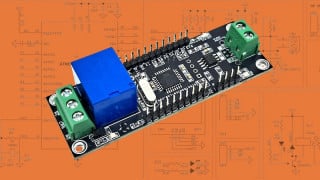
Output voltage: 3Vdc to 7Vdc. Output voltage not exceeding supply voltage of course. So if its 4vdc supply voltage then ouput voltage 3vdc to 4vdc. If supply is 3bdc then output voltage is 3vdc. If supply voltage is 7vdc then output voltage 3vdc to 7vdc. Etc etc
Output current: 100mA to 7A. The output current should not exceed output voltage. Meaning if vout is 3V max output is 3A. 4V out then output is 4A. 7V max output is 7A. Etc etc
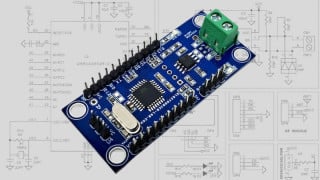
Output voltage: 3.3vdc to 7Vdc. Output voltage not exceeding supply voltage of course. So if its 4vdc supply voltage then ouput voltage 3vdc to 4vdc. If supply is 3bdc then output voltage is 3vdc. If supply voltage is 7vdc then output voltage 3vdc to 7vdc. Etc etc
Output current: 100mA to 7A. The output current should not exceed output voltage. Meaning if vout is 3V max output is 3A. 4V out then output is 4A. 7V max output is 7A. Etc etc
But you are still aiming for a dropout voltage of zero. That circuit doesn't do zero drop-out.
You can replace the transistor with a MOSFET. It will then need no gate current, so the output current is only limited by the MOSFET itself.
However, the minimum dropout is equivalent to Vgs of the MOSFET for the output current required, and that is going to be higher than it is for a bipolar transistor.
I'm going to try. The immutable rule of DC-DC power conversion schemes is the following:
Output power will always be less than input power. Sometimes it will be a great deal less.
Power, measured in watts, is voltage times current, and for DC-DC conversion this quantity is easily calculated. The ratio of output power available to input power available is the efficiency and that quantity will always be less than one for any real system.
Go back to your specifications and tell me which ones satisfy the criteria and which one do not. Going forward, apply this test to all future specifications to avoid the opprobrium being heaped on your person by those in the know.
Example: Suppose I want a 12 VDC output from a 3 VDC source and the output power required is 12 watts. In other words, the output current should be a maximum of 1 Ampere. For purposes of illustration, we pick a target efficiency of 88%. In practice we might be able to do better, but we might also end up doing worse for a variety of reasons.
Question: What is the required input power and input current for this DC-DC conversion scheme?
Answers:
(a) 12 watts / 88% ≈ 13.6 watts of required input power
(b) 13.6 watts / 3 VDC ≈ 4.5 Amperes of required input current
If the required input power is not available for some reason, most DC-DC conversion schemes will adapt by changing either the output voltage or the output current or both. This is a useful piece of information when debugging DC-DC converters that are not behaving as expected.
If you haven't already, try simulating the circuit in LTspice. Provided the circuit you supplied will reach steady state, use the voltage and current values found in spice to build your own equations. I use this method to confirm equations or to help fill in the blanks when things don't make sense. Spice is a powerful calculator if you know how to use it and it's well worth the time investment. I can provide an example if you'd like.
If you haven't already, try simulating the circuit in LTspice. Provided the circuit you supplied will reach steady state, use the voltage and current values found in spice to build your own equations. I use this method to confirm equations or to help fill in the blanks when things don't make sense. Spice is a powerful calculator if you know how to use it and it's well worth the time investment. I can provide an example if you'd like.
Well . . . it's not going to work if the Hfe is too low, and it's not going to work if the voltage drop is too high.
Because it's not a high-current low-drop-out regulator circuit, and nothing will make it so.
Well . . . it's not going to work if the Hfe is too low, and it's not going to work if the voltage drop is too high.
Because it's not a high-current low-drop-out regulator circuit, and nothing will make it so.
You wanted 3V out from 3V in. That's not going to happen with an ordinary bipolar transistor either. Your circuit needs about 3V dropout voltage to work satisfactorily, and then it would work with bipolar, darlington or MOSFET (though with an ordinary bipolar transistor the output current will be restricted)
You wanted 3V out from 3V in. That's not going to happen with an ordinary bipolar transistor either. Your circuit needs about 3V dropout voltage to work satisfactorily, and then it would work with bipolar, darlington or MOSFET (though with an ordinary bipolar transistor the output current will be restricted)

 Facebook
 Google
 GitHub
 Linkedin