Building the impedance measurement circuit

Thread Starter

zainiii

Joined Jul 26, 2024
39
Dear Members,
I hope you are all doing well.
I am a PhD student and completely new to circuit design. I need a compact-sized circuit and prefer not to use an impedance analyzer due to its bulkiness. I am looking to build a circuit capable of automatically measuring the impedance of a sensor in the range of 1MΩ to 30MΩ. However, I am unsure how to approach this task, especially with the various methods available for impedance measurement. I’m not certain which method would be most suitable for automatic measurement in my case. There are different impedance measurement modules, but none seem to have the capability to measure impedance automatically within this range. My sensor’s equivalent circuit is a resistor in parallel with a capacitor.
Could someone guide me through the procedure to build the circuit design? Specifically, I would like to know which components I should purchase to begin building the circuit. If there are any tutorials or resources that you could recommend, that would be very helpful as well.
So far, I have only completed the integration of a DDS (Direct Digital Synthesis) with an Arduino to generate a signal with a frequency of 1 kHz and an amplitude of 500mV, which meets my signal requirements. However, I am uncertain about how to proceed with the remaining circuit design.

Your help in this matter would be greatly appreciated.
 

LowQCab

Joined Nov 6, 2012
5,101
Please provide the Spec-Sheet of your Sensor and explain how, and why,
You are proposing to measure it in the manner You have chosen.
.
.
.
 

sparky 1

Joined Nov 3, 2018
1,218
A simplistic and intuitive approach is limited to very simple application, Otherwise impedance can easily become obscure .
The hardware approach with a Tiny VNA can be accurate when the VNA is operated meticulously by careful calibration and
good SMA connections and adequate experience. I see a need for more precision and lot more RG136 between components
is being used because the time it takes to match impedance became prohibitive for a professional use of time.

The right variant impedance equation can differ for a given application, after that the numbers will do the work. The tried and true
math skill cannot be overlooked. The proof that the VNA testing can be relied on when little documentation exists for the specific DUT, we cannot stop and develop test for everything. The quantitative advantage is after setting up the equation correctly the numbers tell you that the VNA must be fairly close. With the objective of being within specs there can be a noticeable increase in output sometimes just a silly capacitor.

I try to remember this general explanation about impedance because which direction do I need to go, Should I increase or decrease the impedance?

"When the peak-to-peak voltage (Vpp) of an open amplifier drops to half its original value upon connecting a load, the output impedance of the amplifier is equal to the impedance of the load. This is because the voltage divider formed by the amplifier’s output impedance and the load impedance results in the observed voltage drop."
 
Last edited:

ronsimpson

Joined Oct 7, 2019
4,648
I have two VNA that are built for 50 ohms impedance. (driving coax cables and antennas) They do a really good job measuring 5 through 500 ohms and 0.5 to 5k is on OK measurement, etc. What I am saying is that 30,000,000 ohms is not reachable the way they are. I think I could make an adapter so 1,000,000 ohms is the center of measurements.

I think your capacitance is very small. We will probably have to make the input to the VNA very low capacitance and very high resistance.

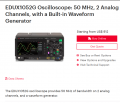
Some of Keysight's scopes include a signal generator. (ARB generator) Someone makes a "laptop computer scope" that has a signal generator built in. Example: The signal generator can sweep from 100 to 10khz while the scope outputs a display of volts or db or impedance. These scopes have a VNA function built in. You will need a real good FET probe and an adapter on the signal generator.

I really need to know more information.
-------------------------------------
I have been using a $40,000 scope so my opinion is collared. I used this scope for a week, early prototype, not all the functions working. It has a built-in signal generator and does impedance verses frequency measurements. It is a student version. I know Keysight has this feature on some scopes. There are other scope companies that have the hardware, but I think they don't have the software to do it.
1723334656036.png
 

Thread Starter

zainiii

Joined Jul 26, 2024
39
Please provide the Spec-Sheet of your Sensor and explain how, and why,
You are proposing to measure it in the manner You have chosen.
.
.
.
Dear Sir,

Thank you very much for your reply.

I have a microfluidic sensor with a channel inside it. At the bottom of the channel, there are interdigitated electrodes to which I need to apply a 500mV signal and measure the impedance.

Initially, when I apply the antibody, the impedance reaches 8MΩ. After some time, when I introduce the sample, the impedance increases to 28MΩ. I would like to build a circuit that can automatically measure the impedance when I apply the antibody and sample to the sensor. The range of impedance should be from 1MΩ to 30MΩ.

If you have any further questions, please let me know.
 

Thread Starter

zainiii

Joined Jul 26, 2024
39
I have two VNA that are built for 50 ohms impedance. (driving coax cables and antennas) They do a really good job measuring 5 through 500 ohms and 0.5 to 5k is on OK measurement, etc. What I am saying is that 30,000,000 ohms is not reachable the way they are. I think I could make an adapter so 1,000,000 ohms is the center of measurements.

I think your capacitance is very small. We will probably have to make the input to the VNA very low capacitance and very high resistance.

Some of Keysight's scopes include a signal generator. (ARB generator) Someone makes a "laptop computer scope" that has a signal generator built in. Example: The signal generator can sweep from 100 to 10khz while the scope outputs a display of volts or db or impedance. These scopes have a VNA function built in. You will need a real good FET probe and an adapter on the signal generator.

I really need to know more information.
-------------------------------------
I have been using a $40,000 scope so my opinion is collared. I used this scope for a week, early prototype, not all the functions working. It has a built-in signal generator and does impedance verses frequency measurements. It is a student version. I know Keysight has this feature on some scopes. There are other scope companies that have the hardware, but I think they don't have the software to do it.
View attachment 329006
Dear Sir


Thank you very much for the reply.

My goal in building this circuit is to avoid using a large impedance analyzer. I want to create a very compact circuit capable of measuring impedance from 1MΩ to 30MΩ.

You are right; the sensor has very small capacitance, but I haven't measured it yet. I will make sure to measure it now.

I don't want to sweep the frequency; instead, I will take measurements at two different frequencies at different intervals: one at 100Hz and the other at 1kHz.

I have already built a circuit to generate the signal using the DDS 9851. The remaining part I need to build is the circuit to measure the impedance
 

ronsimpson

Joined Oct 7, 2019
4,648
I need to apply a 500mV signal and measure the impedance.
Do you need to hold the voltage at 500mV during the test? (100hz and 1khz)
I ask because an ohm meter will put a current out and measure the voltage across the unknown resistor.
I think we need to hold the voltage at 500mVac and measure the current.
I think 500mV rms with no dc offset.
Give me a minute to think.
 

ronsimpson

Joined Oct 7, 2019
4,648
Input is the 500mV signal. 707mV pk, 1.414Vp-p
U1 puts the input signal across the sensor.
R1 is a current meter. U2 is a buffer. U3 reads the voltage across R1 and moves it to ground reference.
Thinking........
If Rsensor=1M then the output = 500mV.
If Rsensor=10M then the output = 50mV.
If Rsensor=20M then the output = 25mV.
1723403445791.png
The circuit has problems. U1 & U2 need to be special parts.
I now see several better ways. OK for a first try. Is this what you want?
 

LowQCab

Joined Nov 6, 2012
5,101
Some of the confusion in this thread is because of the misleading use of the term "Impedance".

This project needs to measure "Resistance" not "Impedance",
as there is only insignificant Capacitance or Reactance that will affect the measurement.
.
.
.
 

Thread Starter

zainiii

Joined Jul 26, 2024
39
Some of the confusion in this thread is because of the misleading use of the term "Impedance".

This project needs to measure "Resistance" not "Impedance",
as there is only insignificant Capacitance or Reactance that will affect the measurement.
.
.
.
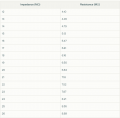
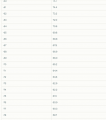
Dear Sir,Thank you very much for your reply.In my sensor, the resistance is in parallel with the capacitor. I am going to attach pictures of my impedance results when I connected the impedance analyzer to my sensor. In the results, I checked different frequencies, but for my circuit, I will use only the frequencies of 100Hz and 1kHz. This is important information.
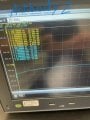
  1. During antibody flow in the channel: The phase angle is -72° and impedance is 11MΩ. (Picture attached)
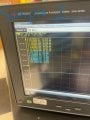
  2. When the sample flows inside the channel: The phase angle is -70° and impedance is 25MΩ. (Picture attached)
I have attached pictures of the impedance analyzer readings for both the antibody and sample flow. I performed calculations for these values. The capacitance remains in the pF range, whereas the resistance varies from 5 to 10MΩ. Dear Sir, I have also consulted books for capacitance calculation and spoken with a person who conducts this experiment very frequently. I have attached the calculation link as well. This was simple, so I attached two AI links. It has also been observed that there is no significant difference in angle and Resistance value at 100Hz and 1kHz frequencies, so I did calculations for just 1kHz.If there is any problem with my calculations, please let me know. However, my sensor does include capacitance, as evidenced by the negative phase angle.
https://chatgpt.com/c/ccf306d1-b554-4859-b96c-9b78f55f97ab
https://claude.ai/chat/f24c6265-2f66-4d52-b7e1-70b50f12bc63
 

Attachments

Thread Starter

zainiii

Joined Jul 26, 2024
39
Do you need to hold the voltage at 500mV during the test? (100hz and 1khz)
I ask because an ohm meter will put a current out and measure the voltage across the unknown resistor.
I think we need to hold the voltage at 500mVac and measure the current.
I think 500mV rms with no dc offset.
Give me a minute to think.
Dear Sir.
I will maintain the 500mV rms constant for both the frequency ranges.
You are right Sir, 500mV rms with no dc offset.
 

Thread Starter

zainiii

Joined Jul 26, 2024
39
Input is the 500mV signal. 707mV pk, 1.414Vp-p
U1 puts the input signal across the sensor.
R1 is a current meter. U2 is a buffer. U3 reads the voltage across R1 and moves it to ground reference.
Thinking........
If Rsensor=1M then the output = 500mV.
If Rsensor=10M then the output = 50mV.
If Rsensor=20M then the output = 25mV.
View attachment 329070
The circuit has problems. U1 & U2 need to be special parts.
I now see several better ways. OK for a first try. Is this what you want?
Dear Sir
Thanks a lot for your effort, highly appreciated.
Now i have attracted the pictures of impedance analyzer with reading along with did the calculation of capacitance values and the R values , now you will get the better idea about my sensor.
The excitation voltage 500mV remain constant
 

Thread Starter

zainiii

Joined Jul 26, 2024
39
Some of the confusion in this thread is because of the misleading use of the term "Impedance".

This project needs to measure "Resistance" not "Impedance",
as there is only insignificant Capacitance or Reactance that will affect the measurement.
.
.
.
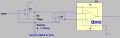
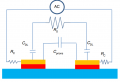
I think the role of capacitance is quite significant , i am going to attach the equivalent circuit diagram of my sensor as well.
I also consult with my lab mates, and they said the role of capacitance is important. But i didn't know the calculation i performed about finding the capacitance value is correct or not.
 

Attachments

LowQCab

Joined Nov 6, 2012
5,101
But, here is my point .........

"" It has also been observed that there is no significant difference in
angle and Resistance value at 100Hz and 1kHz frequencies, so I did calculations for just 1kHz. ""


This means that if your measurements are not critically "time-dependent",
( as in milliseconds vs X-amount of change ),
the small amount of Capacitance will make no noticeable difference in the measurements obtained.
.
.
.
 

ronsimpson

Joined Oct 7, 2019
4,648
Looking at the picture in post #17, I think we are trying to measure RS but cannot with an ohm meter because of Capacitors Cdl.

I noticed more than 2:1 change in readings. I think a +/=10% reading is good. We do not need to make 1% readings.
 

Thread Starter

zainiii

Joined Jul 26, 2024
39
But, here is my point .........

"" It has also been observed that there is no significant difference in
angle and Resistance value at 100Hz and 1kHz frequencies, so I did calculations for just 1kHz. ""


This means that if your measurements are not critically "time-dependent",
( as in milliseconds vs X-amount of change ),
the small amount of Capacitance will make no noticeable difference in the measurements obtained.
.
.
.
You are right sir, Actually i did the calculation for all the phase angles that i got at 100Hz and 1Khz , and find the corresponding capacitance, i realize there is not a big difference of capacitance at 100Hz and 1khz. It give the change of capacitance in 0.2 to 0.4 pF, as the phase angle showed by the impedance analyzer is -70 and -72. Pictures are attached below, i have provided the data to tool and it gave me the results, the formulas used by AI tool are correct.
impedance analyzer result is attached in the previous comments
one picture for impedacne and R relationship in a sensor.
second for impedance and capacitance relationship
 

Attachments

Top