Facebook
 Google
 GitHub
 Linkedin
Hi to everyone,
I am new to these forums. I am embarking on a rather big project. Yes a tube/valve tester. Recently I fixed an old vintage radio and I started looking into building my own tube tester. I came across some interesting projects, valveheaven, utracer, and sussex testers. Ebay was full of testers, vintage testers are rather expensive. One of the things I dislike about most of these testers, is that the contain way too many selector switches. Most of the new projects do not have a display. The closest thing is utracer with a PC Based GUI. I am surprised no one has made a rather nice looking tester that looks similar to an oscilloscope. Well maybe because tubes are not that popular nowadays.
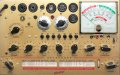
I am still working on the specs, but some of the biggest differences is that I want a microcontroller to do most of the heavy work. I want to have a color display to show the curve traces, and other info as well all in one display. And I want the microcontroller to re-route the selector switches also, instead of having multiple manual selector switches. I also do not want to have tons of built-in tube sockets, but just one line of header pins where you can connect any number of adapters with your desired tube socket, this for simplicity of course. Also on the display you could save your most used tubes for quick testing, and well the software is my speciality so I will write a whole separate design document for that alone.
The idea is simple the operator will place the tube, select the model on the display and go to town with the testing. That is indeed if the model of the tube already exists in the library, if not you could easily create a test parameter file too, and even have custom testing parameters.
Anyways sorry for the long explanation, my question is about what do you guys think are some possible scenarios to replace the selector switches since I want the microcontroller to do this as well, so for example if you pick X model the microcontroller will align the socket pins with the corresponding wire, i.e. cathode voltage to PIN2, grid voltage to PIN5, heater PIN7 and PIN8, etc.
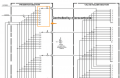
The picture below from sussex tube tester shows how one would normally arrange the selector switches, I have seen other projects use patch cables too. I thought about creating a pcb with X positions, and to add relays for however positions a switch could have, then drive the relay from a microcontroller via i2c protocol. Then I would just create X amount of pcb's based on how many selector switches I need.
Voltage ranges are 0-350VDC, 200mA. There won't be any fast switching once the tube model is set. Could there be another way perhaps with transistors, or something I can't even think of?
Thanks in advance!
I am new to these forums. I am embarking on a rather big project. Yes a tube/valve tester. Recently I fixed an old vintage radio and I started looking into building my own tube tester. I came across some interesting projects, valveheaven, utracer, and sussex testers. Ebay was full of testers, vintage testers are rather expensive. One of the things I dislike about most of these testers, is that the contain way too many selector switches. Most of the new projects do not have a display. The closest thing is utracer with a PC Based GUI. I am surprised no one has made a rather nice looking tester that looks similar to an oscilloscope. Well maybe because tubes are not that popular nowadays.
I am still working on the specs, but some of the biggest differences is that I want a microcontroller to do most of the heavy work. I want to have a color display to show the curve traces, and other info as well all in one display. And I want the microcontroller to re-route the selector switches also, instead of having multiple manual selector switches. I also do not want to have tons of built-in tube sockets, but just one line of header pins where you can connect any number of adapters with your desired tube socket, this for simplicity of course. Also on the display you could save your most used tubes for quick testing, and well the software is my speciality so I will write a whole separate design document for that alone.
The idea is simple the operator will place the tube, select the model on the display and go to town with the testing. That is indeed if the model of the tube already exists in the library, if not you could easily create a test parameter file too, and even have custom testing parameters.
Anyways sorry for the long explanation, my question is about what do you guys think are some possible scenarios to replace the selector switches since I want the microcontroller to do this as well, so for example if you pick X model the microcontroller will align the socket pins with the corresponding wire, i.e. cathode voltage to PIN2, grid voltage to PIN5, heater PIN7 and PIN8, etc.
The picture below from sussex tube tester shows how one would normally arrange the selector switches, I have seen other projects use patch cables too. I thought about creating a pcb with X positions, and to add relays for however positions a switch could have, then drive the relay from a microcontroller via i2c protocol. Then I would just create X amount of pcb's based on how many selector switches I need.
Voltage ranges are 0-350VDC, 200mA. There won't be any fast switching once the tube model is set. Could there be another way perhaps with transistors, or something I can't even think of?
Thanks in advance!