Facebook
 Google
 GitHub
 Linkedin
Hi All,
I am an electronics student doing a HNC course. I also work for a measurement company, we measure strain and a variety of material properties.
Our equipment can output a strain signal that is either digital (USB or simply a multi-bit digital signal).
However we need to be able to interface with material test machines. Some of these have a port into which an Extensometer is plugged into. These have Wheatsone bridges in them that generate varying voltage signals of a few mVs. This signal is always scaled by another factor: the exiciation voltage. This is a signal generated by the test machine.
My boss has tasked me with building a circuit that can replicate the function of the Wheatsone bridge, but using the signal from our equipment as the strain signal.
It is very important that it is a linear
I have a few ideas so far as to how this can be achived:
Thanks for any help.
Neil
I am an electronics student doing a HNC course. I also work for a measurement company, we measure strain and a variety of material properties.
Our equipment can output a strain signal that is either digital (USB or simply a multi-bit digital signal).
However we need to be able to interface with material test machines. Some of these have a port into which an Extensometer is plugged into. These have Wheatsone bridges in them that generate varying voltage signals of a few mVs. This signal is always scaled by another factor: the exiciation voltage. This is a signal generated by the test machine.
My boss has tasked me with building a circuit that can replicate the function of the Wheatsone bridge, but using the signal from our equipment as the strain signal.
It is very important that it is a linear
I have a few ideas so far as to how this can be achived:
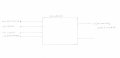
- Convert to digital and use a microprocessor/controller
- Using digital resistors in the form of a bridge but use some circuit to control them.
- Using FETs as voltage controlled resistors.
- Using analogue multipliers to multiply the signals.
Thanks for any help.
Neil
Attachments
-
 62.7 KB Views: 12