Build fails?? HELP

Thread Starter

Icanmakeit67

Joined Sep 23, 2018
210
Hello everybody, to start I am not an engineer. I am a serious hobbies since I retired five years ago. I’ve engaged in a new project which is designed by a I’ll assume engineer/maker. It’s a multi ability say/skill project. There’s 3-D printing there’s electronics there’s mechanical assembly That sort of thing. I have all the mechanical parts built it accelerates in four different places, quadrants if you will around a circle track, ball bearings, using coils and a sensor made up of a photo diode and an IR LED. I have the circuit. I’ve built the circuit on Vero board/strip board many times now. Once on typical single holes protoboard making solder traces. I’ve been successful once in it operating correctly and I’ve used that board as a test. All four coils and sensor combination, call it an assembly if you will, work fine using that board and it’s the circuit that comes with the project. I have built that board in several, call it sizes for different ideas on how it should fit in, but the circuit is identical whether the new/next board is slightly bigger or slightly smaller or slightly more compact or as the test circuit boart that works every time is a little spread out, but the circuit is identical with that provided. When all the failed copies are powered no matter which one I try, usually the MOSFET turns on immediately even though nothing blocks the sensor assembly. Often times maybe 50% power up takes out the mosfet and essentially acts as if the sensor module or assembly isn’t even there. I apply power and it just turns on the Mosfet. Now when I have a failure, I use my test board and that module or that assembly coil and sensor are always fine so I’m enclosing the address of the project on YouTube. I’m enclosing pictures of the circuit design. I’m enclosing the board that works every time and I’m enclosing pictures of the variations for different boards that have all failed. And FYI, I have exchanged components -different manufacturers just in case I’ve had some bad resistors or something, but doesn’t make any difference what components I use I get the same result. I need some input ideas. I’ve left a message for the maker, but I haven’t gotten any word back. Please help. Following will be address of the YouTube project with the circuit diagram. Pictures of the board that works every time, front and back and all the boards I’ve made front and back that failed over and over again I’m totally frustrated. Any help would be appreciated. Thank you.

PS, the part of the board that works every time has no resistors for the LEDs should I want to test a sensor module by itself that has resistors on board for the IR LED and Photo Diode.


Project address:


Project circuit:


https://drive.google.com/file/d/1y6X0Kupui4NTpuenb7b4P1Kyc_cU0geg/view?usp=drivesdk


My board that works every time:


https://drive.google.com/file/d/1wX4xJ7PlLtJ83IwCyg2ZB05oBBjWmvNL/view?usp=drivesdk


https://drive.google.com/file/d/1vEu8l_9Qj0tspkCn8NarbEKV6MeR5_Yq/view?usp=drivesdk


All fails:


https://drive.google.com/file/d/143gj2LTrymLLOlzxCtf1hyurc0MX6v9n/view?usp=drivesdk


https://drive.google.com/file/d/1PmQjZAkgm6F5LHBwLfFMHeFFU23mu1Lq/view?usp=drivesdk


Some data:


https://drive.google.com/file/d/1T0nVYhWr10Lr_ETK4FmIvXkQ6qAqxq0k/view?usp=drivesdk


Thanks for any ideas!!
 

nsaspook

Joined Aug 27, 2009
16,249
I get access denied for all of your google drive links.

Looking at the video, what is the voltmeter indicating. Is that a shunt for a current measurement shown as a circuit wire?
 

Thread Starter

Icanmakeit67

Joined Sep 23, 2018
210
I get access denied for all of your google drive links.

Looking at the video, what is the voltmeter indicating. Is that a shunt for a current measurement shown as a circuit wire?
Let me change access setting fo the pics. I just made the drive. The meter is just battery voltage.
 

nsaspook

Joined Aug 27, 2009
16,249
Let me change access setting fo the pics. I just made the drive. The meter is just battery voltage.
Thanks.

It's misdrawn (the meter) on the schematic then, as one end should be connected to GND and the other connected to +24 if you want read the circuit J1 input voltage after SW1.
 

Thread Starter

Icanmakeit67

Joined Sep 23, 2018
210
Thanks.

It's misdrawn (the meter) on the schematic then, as one end should be connected to GND and the other connected to +24 if you want read the circuit J1 input voltage after SW1.
You should now see pictures.

clear on meter error but I’m not using it so just the section of the circuit that senses and controls the coil and LEDs that show the coil/mosfet has been triggered
 

nsaspook

Joined Aug 27, 2009
16,249
You should now see pictures.

clear on meter error but I’m not using it so just the section of the circuit that senses and controls the coil and LEDs that show the coil/mosfet has been triggered
My typical question where I see circuits like this are, where the hell are your energy buffer/bypass/decoupling capacitors? :mad: Is there some sort of conspiracy of bad circuit design today? :eek:

https://www.capacitorconnect.com/what-are-the-differences-between-bypass-and-decoupling-capacitors/

Each driven coil circuit creates AC energy pulses on the common DC power bus that can badly affect the other driven coil circuits. I'm not surprised at all you are burning parts like mad.
 
Last edited:

Thread Starter

Icanmakeit67

Joined Sep 23, 2018
210
My typical question where I see circuits like this are, where the hell are your energy buffer/bypass/decoupling capacitors? :mad: Is there some sort of conspiracy of bad circuit design today? :eek:

https://www.capacitorconnect.com/what-are-the-differences-between-bypass-and-decoupling-capacitors/

Each driven coil circuit creates AC energy pulses on the common DC power bus that can badly affect the other driven coil circuits. I'm not surprised at all you are burning parts like mad.
So….im not totally sure but looking at the article from your link makes me think a cap is needed across each coil?
I want to understand your idea
 

nsaspook

Joined Aug 27, 2009
16,249
So….im not totally sure but looking at the article from your link makes me think a cap is needed across each coil?
I want to understand your idea
NOT across the coil, from the +24 vdv connection (as close as possible to the coil lead connection ) to the GND pin 3 on your power MOSFET. A 10uf @ at least 50vdc (I still like electrolytics/tantalum for this) and a 0.1uf at the same voltage in parallel.
RANT mode on
Does anyone actually study circuit theory and building circuits before just copying bad design after bad design from the Internet from some random video? I guess not as this seems to be the normal thing today.
Doing, without knowing. Maybe, it's because more people are building circuits (not really, they are using black-box functional packages in a paint by number style) using modules instead of discrete components. Most of the modules have the proper decouplers internally so they work and people don't know when and why they are needed on a perf or breadboard design.
RANT mode off

Not jumping on you, the rant is about this problem in general.


It's not my idea, this the way proper circuits have been built since the beginning of tube electronics, a hundred years ago. Most of the time, it's just pure random luck circuits work without them, as you are finding out.

https://en.wikipedia.org/wiki/Decoupling_capacitor

From Wikipedia, the free encyclopedia

This article is about the use of capacitors to filter undesired noise from power supplies. For the use of capacitors to allow AC signals to pass while blocking DC offsets, see coupling capacitor.
"Bypass capacitor" redirects here. For class-Y safety capacitors, see Line-bypass capacitor.
LM7805 5V linear voltage regulator with 2 decoupling capacitorsCapacitor packages: SMD ceramic at top left; SMD tantalum at bottom left; through-holetantalum at top right; through-hole electrolytic at bottom right. Major scale divisions are cm.
In electronics, a decoupling capacitor is a capacitor used to decouple (i.e. prevent electrical energy from transferring to) one part of a circuit from another. Noise caused by other circuit elements is shunted through the capacitor, reducing its effect on the rest of the circuit. For higher frequencies, an alternative name is bypass capacitor as it is used to bypass the power supply or other high-impedance component of a circuit.
Discussion
Active devices of an electronic system (e.g. transistors, integrated circuits, vacuum tubes) are connected to their power supplies through conductors with finite resistance and inductance. If the current drawn by an active device changes, the voltage drop from the power supply to the device will also change due to these impedances. If several active devices share a common path to the power supply, changes in the current drawn by one element may produce voltage changes large enough to affect the operation of others – voltage spikes or ground bounce, for example – so the change of state of one device is coupled to others through the common impedance to the power supply. A decoupling capacitor provides a bypass path for transient currents, instead of flowing through the common impedance.[1]
The decoupling capacitor works as the device’s local energy storage. The capacitor is placed between the power line and the ground to the circuit the current is to be provided.
 
Last edited:

MisterBill2

Joined Jan 23, 2018
27,159
ESPECIALLY the LM78xx regulators will oscillate very well if those capacitors are not properly installed. Been there and done that and I can testify that it is true. AND the data sheet is very specific about asserting that it must be done, also.
The oscillation in my instance was near 20 megahertz, and it cause a large number of incorrect operations. So it could be so simple as an oscillating regulator.
 

Thread Starter

Icanmakeit67

Joined Sep 23, 2018
210
NOT across the coil, from the +24 vdv connection (as close as possible to the coil lead connection ) to the GND pin 3 on your power MOSFET. A 10uf @ at least 50vdc (I still like electrolytics/tantalum for this) and a 0.1uf at the same voltage in parallel.
RANT mode on
Does anyone actually study circuit theory and building circuits before just copying bad design after bad design from the Internet from some random video? I guess not as this seems to be the normal thing today.
Doing, without knowing. Maybe, it's because more people are building circuits (not really, they are using black-box functional packages in a paint by number style) using modules instead of discrete components. Most of the modules have the proper decouplers internally so they work and people don't when and why they are needed on a perf or breadboard design.
RANT mode off

Not jumping on you, the rant is about this problem in general.


It's not my idea, this the way proper circuits have been built since the beginning of tube electronics, a hundred years ago. Most of the time, it's just pure random luck circuits work without them, as you are finding out.

https://en.wikipedia.org/wiki/Decoupling_capacitor

From Wikipedia, the free encyclopedia

This article is about the use of capacitors to filter undesired noise from power supplies. For the use of capacitors to allow AC signals to pass while blocking DC offsets, see coupling capacitor.
"Bypass capacitor" redirects here. For class-Y safety capacitors, see Line-bypass capacitor.
LM7805 5V linear voltage regulator with 2 decoupling capacitorsCapacitor packages: SMD ceramic at top left; SMD tantalum at bottom left; through-holetantalum at top right; through-hole electrolytic at bottom right. Major scale divisions are cm.
In electronics, a decoupling capacitor is a capacitor used to decouple (i.e. prevent electrical energy from transferring to) one part of a circuit from another. Noise caused by other circuit elements is shunted through the capacitor, reducing its effect on the rest of the circuit. For higher frequencies, an alternative name is bypass capacitor as it is used to bypass the power supply or other high-impedance component of a circuit.
Discussion
Active devices of an electronic system (e.g. transistors, integrated circuits, vacuum tubes) are connected to their power supplies through conductors with finite resistance and inductance. If the current drawn by an active device changes, the voltage drop from the power supply to the device will also change due to these impedances. If several active devices share a common path to the power supply, changes in the current drawn by one element may produce voltage changes large enough to affect the operation of others – voltage spikes or ground bounce, for example – so the change of state of one device is coupled to others through the common impedance to the power supply. A decoupling capacitor provides a bypass path for transient currents, instead of flowing through the common impedance.[1]
The decoupling capacitor works as the device’s local energy storage. The capacitor is placed between the power line and the ground to the circuit the current is to be provided.
Thank You. I’ll give it a try tomorrow when I get back into my shop. I can always get honest help here and info for the future
 

MrChips

Joined Oct 2, 2009
34,626
A 3-terminal linear voltage regulator is an analog servo feedback control system. If the output is too low, it will try to make it higher. If the output is too high, it will try to lower it. Without a capacitor to slow down the response, it may oscillate at a very high frequency.
 

MisterBill2

Joined Jan 23, 2018
27,159
An additional explanation to the description in post#11 is that the nearby bypass capacitors reduce the feedback caused by the external connection's impedance. That impedance is not always obvious to most folks, but it is real.
 

Thread Starter

Icanmakeit67

Joined Sep 23, 2018
210
Thank You. I’ll give it a try tomorrow when I get back into my shop. I can always get honest help here and info for the future
Gave it a fair try on a couple different board versions. Identicle circuit but parts not located the same nessassarily but nothing different happened. Blew a couple mosfets. Tried without coil plugged in. I have LEDs in parallel to coil to see if the mosfet triggers. I tried again, led was on when powered showing mosfet was conducting/on. Doesn’t blow mosfet of no coil. Capacitors did nothing….was hopeful
 

nsaspook

Joined Aug 27, 2009
16,249
Gave it a fair try on a couple different board versions. Identicle circuit but parts not located the same nessassarily but nothing different happened. Blew a couple mosfets. Tried without coil plugged in. I have LEDs in parallel to coil to see if the mosfet triggers. I tried again, led was on when powered showing mosfet was conducting/on. Doesn’t blow mosfet of no coil. Capacitors did nothing….was hopeful
Keep them in there and find the other circuit issues.
Is it blowing the MOSFETs with no coils plug in? What happens when you run it in single coil mode?
Post pictures of the capacitor modifications to the boards.

They do something that will keep it working when you find the other problems with the circuit. You said you had one board that worked. What is different about that one?

1743905524983.png1743905674921.png
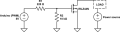
Check your gate bias voltage with no ball (photo transistor on) to be sure the MOSFET is not too much conducting. That 10K resistor from the photo transistor to the MOSFET gate might be too high of a resistance.

A typical 5vdc drive circuit.
1743906009858.png
 
Last edited:

MisterBill2

Joined Jan 23, 2018
27,159
Going back to the circuit shown in that link in post #1, consider that we NEVER SEE the actual circuit that the TS IS ACTUALLY building. Note that I do not trust on-line postings as far as I could throw them. AND I am not able to evaluate most assemblies from even a very good photograph.
What I DO SEE is four resistors and a light beam interrupter scheme that must function perfectly to make the system work. Consider that the mosfet must be kept in the cutoff condition until the light beam is broken, at which time it must be biased into saturation until the light beam is restored. That means that all three resistors connected to the gate circuit must be the correct value, AND that the fourth resistor setting the LED current must provide enough current to make the LED bright enough to hold the photo transistor saturated. It also means that the beam alignment must be perfect or the coil current will be switched on constantly.
So the very first steps will be to verify that the photo-transistor is pulling the gate drive voltage low so that the mosfet is cut off with the light beam not broken.
The circuit is quite simple but the functions are actually very critical and every bit must be perfect for it to function correctly.
 
Last edited:

nsaspook

Joined Aug 27, 2009
16,249
Going back to the circuit shown in that link in post #1, consider that we NEVER SEE the actual circuit that the TS IS ACTUALLY building. Note that I do not trust on-line postings as far as I could throw them. AND I am not able to evaluate most assemblies from even a very good photograph.
We can only ask.

It looks like his gate threshold voltage (voltage where the MOSFET just barely starts to turn on) is all screwed if he's blowing them just turning of the power.
 

MisterBill2

Joined Jan 23, 2018
27,159
We can only ask.

It looks like his gate threshold voltage (voltage where the MOSFET just barely starts to turn on) is all screwed if he's blowing them just turning of the power.
That would certainly do it, but with that much supply power, even completely saturated would probably cause overheating in a short time.
 

Thread Starter

Icanmakeit67

Joined Sep 23, 2018
210
Keep them in there and find the other circuit issues.
Is it blowing the MOSFETs with no coils plug in? What happens when you run it in single coil mode?
Post pictures of the capacitor modifications to the boards.

They do something that will keep it working when you find the other problems with the circuit. You said you had one board that worked. What is different about that one?

View attachment 346252View attachment 346253
Check your gate bias voltage with no ball (photo transistor on) to be sure the MOSFET is not too much conducting. That 10K resistor from the photo transistor to the MOSFET gate might be too high of a resistance.

A typical 5vdc drive circuit.
View attachment 346254
It’s crazy! These various boards are all the identical circuit. Same components. I experimented with size of board not a lot but saving space would be nice. The trouble is in the IR/Photo diode/mosfet sensor assembly/ is the problem. Bit works on a breadboard but not when soldered up on a board. Frustrating
 

nsaspook

Joined Aug 27, 2009
16,249
It’s crazy! These various boards are all the identical circuit. Same components. I experimented with size of board not a lot but saving space would be nice. The trouble is in the IR/Photo diode/mosfet sensor assembly/ is the problem. Bit works on a breadboard but not when soldered up on a board. Frustrating
Weil, what about my requests?
 

Thread Starter

Icanmakeit67

Joined Sep 23, 2018
210
We can only ask.

It looks like his gate threshold voltage (voltage where the MOSFET just barely starts to turn on) is all screwed if he's blowing them just turning of the power.
Just for the record if you look at the circuit design, I have used the exact components and structured the circuit exactly as drawn. I have built the circuit on a PC board which I happen to favor Vero/strip board. It’s easy and I’ve built hundreds of circuits on that type board with very very little problems ever. If you do the math using the component values in the schematic it works out the sensor Mosfet module has a 2.5 V when the photo diode and IRLED see each other and there’s no interruption it’s not conducting the MOSFET is not conducting. When it’s interrupted. The voltage goes up to 12 V and it’s conducting. It’s doing exactly what it’s supposed to do but you apply it in a real sense to a printed circuit board and it doesn’t work now even that in a sense isn’t true because I have one board that works and I didn’t mention that I have bread boarded it which I did first and it works perfectly on a bread board. There’s something else going on. It has something that’s interrupting it. I’ve changed components when it’s done this to me. I’ve changed brands. I’ve changed manufacturers use different Mosfets used different resistors used different diode/IR led sets and it’s not changing the affect at all. I can use these components On and I did this a second time, bread board they all worked, why they don’t work on a PC board is just beyond me anyway that’s my two cents, thanks.
 
Top