Facebook
 Google
 GitHub
 Linkedin
I am experiencing a challenge with the design of a DCDC Boost converter that is intended for gasoline direct injection control.
This DCDC converter is configured to generate 65V from a 12V supply, utilizing the NXP PT2001 controller (the MC33816 is quite similar, as the PT2001 manual is currently under NDA).
The controller is set up with a voltage control hysteresis ranging from 65V to 64V. The current flowing through the inductor is maintained between 2-5A (the MOSFET gate toggles on and off) when the voltage drops below 64V. Once the voltage reaches 65V, the control loop pauses until the voltage falls below 64V again.
While the DCDC converter operates effectively under low load conditions, a problem arises under high load scenarios (such as high RPM in the engine, which increases fuel injection within the same timeframe). During these instances, it appears that the MOSFET begins to close very slowly. I have included a picture of the circuit, along with a graph showing the gradual decrease in current as measured at the shunt resistor (10mOhm), and the gate voltage at that moment, measured between the gate resistor (2.2 ohm) and the gate.
Any insights or explanations regarding this phenomenon would be greatly appreciated!
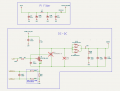
Schematic of circuit (both of the MOSFET has been tested separately with same result)

Voltage at shunt resistor during slow closing/decrease of current
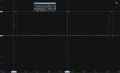
Gate voltage during slow close of MOSFET
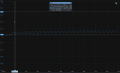
Voltage at shunt resistor during normal/correct operation
This DCDC converter is configured to generate 65V from a 12V supply, utilizing the NXP PT2001 controller (the MC33816 is quite similar, as the PT2001 manual is currently under NDA).
The controller is set up with a voltage control hysteresis ranging from 65V to 64V. The current flowing through the inductor is maintained between 2-5A (the MOSFET gate toggles on and off) when the voltage drops below 64V. Once the voltage reaches 65V, the control loop pauses until the voltage falls below 64V again.
While the DCDC converter operates effectively under low load conditions, a problem arises under high load scenarios (such as high RPM in the engine, which increases fuel injection within the same timeframe). During these instances, it appears that the MOSFET begins to close very slowly. I have included a picture of the circuit, along with a graph showing the gradual decrease in current as measured at the shunt resistor (10mOhm), and the gate voltage at that moment, measured between the gate resistor (2.2 ohm) and the gate.
Any insights or explanations regarding this phenomenon would be greatly appreciated!
Schematic of circuit (both of the MOSFET has been tested separately with same result)
Voltage at shunt resistor during slow closing/decrease of current
Gate voltage during slow close of MOSFET
Voltage at shunt resistor during normal/correct operation