Facebook
 Google
 GitHub
 Linkedin

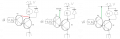
Hello im building a circuit with that works as a switch, my load requires a current of 300mA, and its an inductive load so i selected a diode that Is placed in parallel to It.
I have searched for BJTs and selected the most common one, which Is 2N2222 that can deliver almost 1A so its more than fine.
for the designing part i read that in saturation region u usually select a Beta gain of 10, since the one shown in datasheet are shown but they consider the BJT working as amplifier.
So now here the calculations i made:
If i have 5V driving the base then what u will have Is 5-0.7/RB=30mA, which means RB = 143 Ohm ( I also have seen on datasheet that he can handle that current at the base )
Is like that correct? Now if i consider that im driving this transistor from a mcu there are considerations to make?
Secondly i selected the diode , the one i chose is 1N4148, which has a reverse voltage of 75V ( supply voltage is at 12V so in kinda far from such voltage )
Thanks for the help ( im kinda a newbie, so sorry in case its too simple for ya, i gotta start from somewhere)
I have searched for BJTs and selected the most common one, which Is 2N2222 that can deliver almost 1A so its more than fine.
for the designing part i read that in saturation region u usually select a Beta gain of 10, since the one shown in datasheet are shown but they consider the BJT working as amplifier.
So now here the calculations i made:
If i have 5V driving the base then what u will have Is 5-0.7/RB=30mA, which means RB = 143 Ohm ( I also have seen on datasheet that he can handle that current at the base )
Is like that correct? Now if i consider that im driving this transistor from a mcu there are considerations to make?
Secondly i selected the diode , the one i chose is 1N4148, which has a reverse voltage of 75V ( supply voltage is at 12V so in kinda far from such voltage )
Thanks for the help ( im kinda a newbie, so sorry in case its too simple for ya, i gotta start from somewhere)
Attachments
-
321.7 KB Views: 15