To quickly turn off the solinoid after activating it, both low-side mosfets can be activated (without activating high side). Works well for dynamic braking on motor controllers.
To quickly turn off the solinoid after activating it, both low-side mosfets can be activated (without activating high side). Works well for dynamic braking on motor controllers.
That works for motors which generate back-EMF from stored rotational energy, but not for a largely inductive load with stored inductive energy.
The fastest way to turn off a solenoid is not to short it (which is basically what a diode across it does) but use a zener or RC snubber across the coil that dissipates the inductive energy to rapidly stop the current.
Those DC ratings are for each channel, l298 is a dual h bridge, and it is made to work in bridged mode so can double the current. If the load is 3A, and if there is no much capacitance between the solenoid coil turns and in the circuit wires then there would not be an overshoot inrush current. I think it would handle well, only drawback is you must add external flywheel diodes.
@Sirbu Constantin
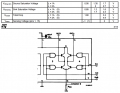
According to the datasheet of L298 on page 3, please check the third line, when the current is 1A then the voltage drop is 1.8V, so when the current is raising to 3A then the voltage drop could be 5.4V, and the V-solenoid = 12V - 5.4V = 6.6V, or just counts the Iout to 2A then the Vdrop also could be 3.6V and the V-solenoid = 12V - 3.6V = 8.4V.
When the output driver of L298 were used transistors and when it can provides 6A current, I still don't believe it can handle a 3A load very well, and how many piece of L298 that you need to used, if you have been used the 2N3055 in power supply then you will know why.
Yes, you are right, i didnt count for the voltage drop, i said it will handle the current 3A., even the datasheet says that on page 8 first line (This solution can drive until 3 Amps In DC operation and until 3.5 Amps of a repetitive peak current.), and i am talking about only one piece.
In a power supply you dissipate the excess voltage on the 2N3055 ofc they heat up, in this application we use the transistor as a switch, if you take the worst case scenario, 6v drop at 3A it would be 18W and Ptot is 25W at 75c so it will be safe, also have thermal protection.
But you are right about the voltage drop, if the user cant rise the Vs voltage to cover the drop then this wont work.
My real load is a solenoid, not a motor. The measured voltages in the previous post were with a DMM as the load. The measured resistance of the solenoid as 4 ohms, which at face value should require 3 amps at 12V, however it consistently actuates with a relay sourced by a 12V 200mA supply.
One option to reconsider for in such application is to use a common Power Op-Amp IC's for your H-Bridge. They work well as dedicated H-bridge devices plus give you a lot of other possible control options with minimal parts counts and costs.
The tried and true single channel LM1875 Power Op amp IC can easily handle 4 amps and costs a bit over $3.
Or the higher capacity dual channel LM3886 can handle 7 amps and cost ~$7.
Either way you go you will have more possible control and function plus built in protection modes options at a far less parts count and cost involved and you will know the circuit will actually work at the voltages and currents you are dealing with too.
One option to reconsider for in such application is to use a common Power Op-Amp IC's for your H-Bridge. They work well as dedicated H-bridge devices plus give you a lot of other possible control options with minimal parts counts and costs.
The tried and true single channel LM1875 Power Op amp IC can easily handle 4 amps and costs a bit over $3.
Or the higher capacity dual channel LM3886 can handle 7 amps and cost ~$7.
I doubt they will work well in a digital bridge to switch a solenoid since they likely can't go fully to the supply voltages at their outputs and will have a relatively slow switching speeds, causing poor efficiency.

 Facebook
 Google
 GitHub
 Linkedin