AT28C16 EEPROM with 5x7 led matrix Project

sarahMCML

Joined May 11, 2019
699
Ok... I try it. I changed R4 from 10k to 1k resistor. It does indeed stabilizing the circuit ! I press that clock button like 50 times to catch a count to 1 as it was so obvious before. But it is always counting to 2 every time. Yah, it's an improvement !
But it is counting only to 2 !
I have access to the good camera right now so here are some hirez shots:
this is the equivalent for the 7476 if you were curious: (made in Romania!) hahaha
(enlarge image and zoom in)
View attachment 278055
and this is the current breadboard cct:
The top IC is the 7473 FF. The 3rd IC on the bottom is the Not gate that is not connected. It remained there in case we need its ass.
You can see the 1k as well. The angle of the shot is a bit too vertical with some pins on the top so you must count the pins to figure out the placement.
Or...see the other shot from aside.
View attachment 278057 View attachment 278058 View attachment 278059
You can always tell me to make you a specific angle shot, and I will do it.
You have the flip flop clock connected to the QA output, not the anodes of the diodes, so move the lead down to pin 3 of the 7493. Also, remove the link between pins 2 and 3, and just link pin 2 to +5V. This will reduce both the capacitance and the current that the diode circuits will see, and make the inputs easier to drive!
 

Thread Starter

q12x

Joined Sep 25, 2015
2,227
Good eye my friend, I was stupid there.
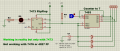
But I managed it to make it work ! Specifically for 7473 FF ! Read the note for C1 in the bottom of the image.
If I put less than 10pF, is not working. If I put more than 150'ish pF , is not working. So the safe zone is like I said there 10pF-100pF.
This probably adapt the input sensitivity of the FF to the rest of the circuit. Im very happy to see it work. It is counting to 7 indeed !
I told you it needs a capacitor "somewhere".
1665368932949.png
Also I managed to mess up the 7476 FF ,my romanian CDB476. I insert it backwards and the power supply raised up to my (limited) 1A for 3-5sec until I turn it off. I didnt see the key and Im tired of it. If before, 7476 was switching from 2 to 2, now is not doing anything, not switching at all. I tried the second FF in it and that also probably is messed up. Is just not working anymore.
I did put the 7476 FF separately on the board and put the button directly on it's clock and it is switching fine !!! That is odd. I was sure I fried the chip. Very weird ! But if I am inserting it into the circuit above... is not doing anything.
I am starting to believe like you, the chip is damaged or has unknown or tired properties. It appears for simple and direct command is behaving fine, like my direct button test. Also finger test !!! Hahaha.
Ive also test the 4027 FF and the same, not working. It is depending highly on the FF IC used ! Thats the lesson. Ive also put the button directly on it's clock and it is switching fine !!! Exactly the sme behavior like the 7476.
I believe a transistor is needed, to boost up the voltage perhaps? Hmmmm.
Oh boy... what an adventure.
Thank you very much for sticking with me so far and on this crazy road of curiosity. I learned a lot with you here. Thank you.
I will probably come back to this thread when the new FF's arrive from capital of covid of china. Hahahaha.
 
Last edited:

Thread Starter

q12x

Joined Sep 25, 2015
2,227
An interesting update:
I made multiple tests. I also put the osciloscope. It can read the 500ms from the button debounce circuit just fine. But absolutely nothing on the FF clock pin. I tried a lot of time sequence, from 1s to its minimum of 10us. Nothing. I believe this signal MAY be too fast even for my osciloscope to catch it. Thats interesting !!! And I have top of the game osciloscope. Oau.
And I am speaking from the point of view of both FF's. The one that is working with the 7473 and the one that is not working with a 4027.
 

sarahMCML

Joined May 11, 2019
699
An interesting update:
I made multiple tests. I also put the osciloscope. It can read the 500ms from the button debounce circuit just fine. But absolutely nothing on the FF clock pin. I tried a lot of time sequence, from 1s to its minimum of 10us. Nothing. I believe this signal MAY be too fast even for my osciloscope to catch it. Thats interesting !!! And I have top of the game osciloscope. Oau.
And I am speaking from the point of view of both FF's. The one that is working with the 7473 and the one that is not working with a 4027.
The reset pulse is far too fast for the old 7476 and 4027, as you can see from my earlier scope pics. Unfortunately, I don't have any LS or HC type JK flipflops in my stash to try with.
An easy work around to drive the 7476 or 4027 chips is to drive them from the output of the 7493 QC pin, which only goes high (or low) once every 7 counts.
 

Thread Starter

q12x

Joined Sep 25, 2015
2,227
The reset pulse is far too fast for the old 7476 and 4027, as you can see from my earlier scope pics.
In your past images, they are too blurry and I can not see the reset pulse. It is less than 10us? If yes then my osciloscope is as bad as I know it. But if its greater then my scope is extra bad. I expect to be less than 10us actually. I kind of trust my scope all these years.
 

sarahMCML

Joined May 11, 2019
699
In your past images, they are too blurry and I can not see the reset pulse. It is less than 10us? If yes then my osciloscope is as bad as I know it. But if its greater then my scope is extra bad. I expect to be less than 10us actually. I kind of trust my scope all these years.
It's the purple pulse in post #67, somewhere in the region of 40 ns if I remember correctly, waaaaay to fast for your scope to show. Not blurry at all!
 

Thread Starter

q12x

Joined Sep 25, 2015
2,227
It's the purple pulse in post #67, somewhere in the region of 40 ns if I remember correctly, waaaaay to fast for your scope to show. Not blurry at all!
The line is not blurry but every bit of text and number is washed out completely. And Icould not figure out the time from all that blur rainbow. But doesnt matter now; Thank you for telling me this little detail ! Also is a good practice to include the link to the post as well: like this: #67 I also notice that you actually written the time in that old post as 50ns, so you remember right.
 

sarahMCML

Joined May 11, 2019
699
The line is not blurry but every bit of text and number is washed out completely. And Icould not figure out the time from all that blur rainbow. But doesnt matter now; Thank you for telling me this little detail ! Also is a good practice to include the link to the post as well: like this: #67 I also notice that you actually written the time in that old post as 50ns, so you remember right.
I apologise for those photos, they were just taken with my pad as a quick reference to show the relative positions of the edges of the two waveforms, not their lengths. I should really have used the scopes in-built "save to USB stick" facility, and transferred the files over. The quality would have been much better!
 

Thread Starter

q12x

Joined Sep 25, 2015
2,227
No appologies needed, please. You are very kind. I was stating how I see it from my side.
When you make a photo, first of all check for glare if you pointing the camera on the glass screen of the device.
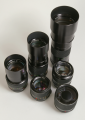
Second, I believe the camera made a focus on the waveform but it defocused the surrounding. That is because the lentil used. In old mechanical photo aparat, we could change the focal length of the lens by choosing different "teleobjective" as they were called at least here in my parts.
1665427171857.png
It is an entire phisics around choosing one, but after you have 'a couple' you start to FEEL the diference without the datasheet. Some are made specifically for closed distance photography, some for far away distance , like the long ones, and general purpose are the smaller ones that had no distortion over the diameter of the lens. I believe its a problem of physical lens category that you have there. I am not sure if its software that is creating the focus (and defocus all around) but it may very much be the case as well. The easiest method possible is to check the settings thoroughly pointing the device to the worse case scenario like you have there, that screen and its text. Text is awesome to calibrate any focal teleobjective. You may check the distance focus of the software settings, but also the photo mode, with friendly names like "Outside mode", "indoor mode", "face mode", blue eyes-red eyes mode", etc; and also color temperature where you obtain a more towards blue or orange image- that is called more cold or more warm in photography terminology. So check all these settings and you have a good chance to be lucky to correct some of its quality.
I know exactly how bad is to have an old photo device. Mine for example, the photo cell in it is just old style, before the HD 4k appeared. Mine is 1k or so and they probably struggled or lied reaching 2k resolution. 1K is exactly as in resistors, it means 1000 pixels per cm or inch = resolution.
On the other hand, if you have this awesome option to take the data through the USB port, please get used to do it. I wonder if my little hercules DSO138 is having some sort of usb port... but is so "shifty" hahaha he doesnt need one I guess. Haha. It would be cool if it had.
I am hunting for lower price, even used DSO (digital storage osciloscope) to get in my arsenal. But way less than 200USD. I am hunting routinely from time to time, like once in half a year to check if the prices got down. And I can tell you from 10 years or even more, they absolutely didnt. Not for osciloscopes. They frikin remained the same or the difference is negligible if they did. And Ialso have some preferences as well, not every crow that flies out there. It would have be nice if electronics would bring money... mmm. Eh well.
 

Thread Starter

q12x

Joined Sep 25, 2015
2,227
I was wondering what may be the difference between 7473 and the other 2 blackSheep that didnt worked: 7476 and 4027. In terms of clock speed reading. 7473 clock input is a bit lazy compared to the other 2? Thats the only conclusion I can draw, empirically of course. In other words, the blackSheeps are having way more faster input clock response and sensitivity to the signal than the more lazy 7473.
 

sarahMCML

Joined May 11, 2019
699
I was wondering what may be the difference between 7473 and the other 2 blackSheep that didnt worked: 7476 and 4027. In terms of clock speed reading. 7473 clock input is a bit lazy compared to the other 2? Thats the only conclusion I can draw, empirically of course. In other words, the blackSheeps are having way more faster input clock response and sensitivity to the signal than the more lazy 7473.
I thought you said you were using a 74HCT73? If so, this is able to respond to the very fast reset pulse produced by the 3 diode AND gate, whereas the older standard TTL 7476 and CD4027 are too slow! Any LS flipflop should respond properly as well, just like my 74LS74.
 

Thread Starter

q12x

Joined Sep 25, 2015
2,227
I thought you said you were using a 74HCT73?
Yes I am using this specific brand.
When I say 7473 I am generalizing for every possible brand that produced this chip, either is 74HCT73 or 74LS74. I got used to doing it for very ease comunication and also notation especially on very small areas like the labels on the chip itself, at least for the ones I tested with. So I started to see it has some benefits using this kind of shortcut. Also google is using it just fine in its search engine and truly works for it. Why not for me as well? So I adapted this shortcut into my vocabulary. I am sorry to confuse you. but when you hear me saying 7473 (or any other number for logic IC) it means some specific brand that I usually have and work with either being HCT or LS or even those CDB romanian made. (I dont have that many anyway).
If so, this is able to respond to the very fast reset pulse produced by the 3 diode AND gate, whereas the older standard TTL 7476 and CD4027 are too slow! Any LS flipflop should respond properly as well, just like my 74LS74.
Aha so is viceversa. Ok. The diodes I have are faster than the chips themselves? Ahaaa, dooly noted. I thought inversed, that the diodes are not fast enough. My mistake then. You are the math guy for sure, haha. Thank you !!!
- So the diference between these 3 chips is that the "older standard TTL 7476 and CD4027" are simply using older (as you said) technology. Thats the reason they are slower. I see... Now I start to get it, when Im faced with the problem. Very cool !!!
 
Last edited:

sarahMCML

Joined May 11, 2019
699
Yes I am using this specific brand.
When I say 7473 I am generalizing for every possible brand that produced this chip, either is 74HCT73 or 74LS74. I got used to doing it for very ease comunication and also notation especially on very small areas like the labels on the chip itself, at least for the ones I tested with. So I started to see it has some benefits using this kind of shortcut. Also google is using it just fine in its search engine and truly works for it. Why not for me as well? So I adapted this shortcut into my vocabulary. I am sorry to confuse you. but when you hear me saying 7473 (or any other number for logic IC) it means some specific brand that I usually have and work with either being HCT or LS or even those CDB romanian made. (I dont have that many anyway).

Aha so is viceversa. Ok. The diodes I have are faster than the chips themselves? Ahaaa, dooly noted. I thought inversed, that the diodes are not fast enough. My mistake then. You are the math guy for sure, haha. Thank you !!!
- So the diference between these 3 chips is that the "older standard TTL 7476 and CD4027" are simply using older (as you said) technology. Thats the reason they are slower. I see... Now I start to get it, when Im faced with the problem. Very cool !!!
No, it's that both the standard 7493 and 7476 or 4027 are slow. By the time the 7493 has detected the reset pulse and reacted, the 74HC73, being much faster has itself reacted and toggled its output. The standard chips don't notice!

For your own sake you really should get used to putting the full chip number in your communications as it helps everyone to get on the same page. If you check out the Wikipedia page about 74 Series I.C. families:

https://en.wikipedia.org/wiki/7400-series_integrated_circuits

you will see just how many different types there are. The same applies to the 4000 series.
 

Thread Starter

q12x

Joined Sep 25, 2015
2,227
Hmmm, so you are saying that all those letters in between the IC number, are designating the technology used, either being TTL, either CMOS and many other flavors as you pointed me to the wiki page. So it matters because is telling you the speed and quality of the chip... I am really trying to understand your point of view.
So this is a very bad habit, using such shortcut of the IC name like I just did. Correct?
 

sarahMCML

Joined May 11, 2019
699
Hmmm, so you are saying that all those letters in between the IC number, are designating the technology used, either being TTL, either CMOS and many other flavors as you pointed me to the wiki page. So it matters because is telling you the speed and quality of the chip... I am really trying to understand your point of view.
So this is a very bad habit, using such shortcut of the IC name like I just did. Correct?
It's an easy thing to overlook, but it truly does matter in determining chip timings.

A case in point was a Motorola MC6800 based home computer series of articles in a magazine in the late 70's? The designers used 4000 series chips in support of the 6800 series peripherals, and they were either lucky, or they selected them.
When the magazine's subscribers tried to build the machine, many of them didn't work, and the magazine had to publish modifications to the design and pcb's using 74LS chips instead. Their particular 4000 chips were too slow!
 

sarahMCML

Joined May 11, 2019
699
Hi Again,

I found a 74LS76 and tried that in the circuit. Strangely, it didn't work with the 10K pullup resistor in place, but did if I connected it to 0V. I'm guessing that the combined voltage drops from the not quite 0V outputs of the 7493, combined with the voltage drop across the diodes, adds up to enough to put one or both of the LS devices inputs into a dubious state. when i changed the diodes to BAT46 schottkys, it started working again!
Also, I didn't need the capacitor to ground that you found you needed.
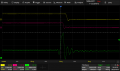
I've included another scope shot that you may find interesting, showing the reset pulse, etc.
1) The yellow trace shows the output of the 74LS76 as it turns on the LED.
2) The purple trace shows the negative going edge of QC at the 7 count.
3) The green trace is the interesting one and shows the reset pulse, which almost hits 2V positive, but barely last for 20ns! No wonder the older chips cannot react to it!Clock_pulse.png
 

Thread Starter

q12x

Joined Sep 25, 2015
2,227
....So this is a very bad habit, using such shortcut of the IC name like I just did. Correct?
It's an easy thing to overlook, but it truly does matter in determining chip timings.
I understand every person has it's ways of reacting and interpreting an answer. But to me, it matters the bluntness. A straight Yes or No is good enough for me. Also if the other party care to put a small explanation on why is a yes or no, that would be perfect.
So again, I am suspecting but not very sure yet, that "this is a very bad habit, using such shortcut of the IC name like I just did. Correct?" (It matters to me to retain what is important, when it comes from someone I trust.)
-
Excellent !!! and I am very happy you managed to figure out the USB data recovery from your DSO !!! Now... this is waay better indeed. Thank you and keep it this way from now on. I guess is a pain in the but to do it properly like this for you, but <do it anyway> is my strong advice. It will become easy with time.
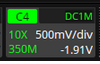
I believe the green line is 500ms/div I can read it from the screenshot down in the left corner. C4 is called. and you said: "which almost hits 2V positive" but I believe it is 1.5ish if we count the divisions.
Please correct me at any time on this next observation because I dont have an oscilloscope as fancy as yours. Yet...
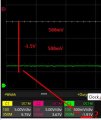
I really dont understand1665517666807.png what this -1.91V means. From what I know, that value is the offset of the active (green) line that is measured, compared with the (white) horizontal guide center line of the screen :
Screenshot_5.jpg
 

Thread Starter

q12x

Joined Sep 25, 2015
2,227
when i changed the diodes to BAT46 schottkys, it started working again!
Yes that is a very good test and observation and I was considering doing it the same but I got lost in other details and I forgot to change the diode types in my circuit. I thought for a brief moment about them. I used all the time 1N4148 and I know they are very fast, now after our last discution about them compared with the ICs, but not so much when I did the experiment some days before. This is VERY interesting indeed !
 

sarahMCML

Joined May 11, 2019
699
I understand every person has it's ways of reacting and interpreting an answer. But to me, it matters the bluntness. A straight Yes or No is good enough for me. Also if the other party care to put a small explanation on why is a yes or no, that would be perfect.
So again, I am suspecting but not very sure yet, that "this is a very bad habit, using such shortcut of the IC name like I just did. Correct?" (It matters to me to retain what is important, when it comes from someone I trust.)
-
Excellent !!! and I am very happy you managed to figure out the USB data recovery from your DSO !!! Now... this is waay better indeed. Thank you and keep it this way from now on. I guess is a pain in the but to do it properly like this for you, but <do it anyway> is my strong advice. It will become easy with time.
I believe the green line is 500ms/div I can read it from the screenshot down in the left corner. C4 is called. and you said: "which almost hits 2V positive" but I believe it is 1.5ish if we count the divisions.
Please correct me at any time on this next observation because I dont have an oscilloscope as fancy as yours. Yet...
I really dont understandView attachment 278196 what this -1.91V means. From what I know, that value is the offset of the active (green) line that is measured, compared with the (white) horizontal guide center line of the screen :
View attachment 278197
The base of the gree trace is offset about 0.5V above zero. The 0V point is shown by the little green "C4" pointer down on the left side just above the yellow "+Width" text. So the top of the pulse is nearly 2V!

I didn't use USB stick originally because I didn't have one to hand. Also, I haven't had that scope very long and had not yet used that save function.
 
Top