Arduino for digital potentiometer

nsaspook

Joined Aug 27, 2009
16,330
This equalizer is essential in order to drive my Bose901's, otherwise they sound flat.

My approach is twofold.
I would first "clone" the original eq with mechanical slide pots but make a provision on the board underneath the slides(or wherever there is room) for the digipots.
Once tested, I would remove the original slides and add the Arduino on a second level over the existing board.
However, noise is not something I had considered. Could this be a game stopper or can it be addressed by a newbi like me?
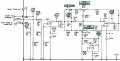
Here are both sides of the original board if that can help.
View attachment 343004

View attachment 343006
My comment was not about the need for equalization. It's very important. It was about the IMO lack of benefits of incorporating digital electronics in the mix.
I've got very fancy computerized room equalization on my Denon receiver but I've only used it (twice so far) when there are major room or speaker configuration changes.
PXL_20220205_020747655.jpg
https://forum.allaboutcircuits.com/threads/ht-old-home-theater-rebuild.183659/post-1689804
 

Thread Starter

Lejeep

Joined Feb 20, 2025
22
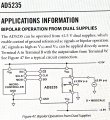
The circuit opamp supplies should work for that digipot I linked to but it only comes in three values 10k, 50k and 100k.
https://www.mouser.com/c/semiconductors/digital-potentiometer-ics/?series=AD7376

That means the filter component capacitors will need to be changed to have close to the same response.
My originals are 25K as you know.
By changing "filter caps" do you mean C305+C307 on the schematic(first post) or some other caps?
Notwithstanding which caps, do you mean I can use say a 50K digipot with different caps and get same results as using the 25K?
And would this affect the center tap?

One increment at a time only would be a bad user interface. I would assume the reason for digital control is to have pre-sets and much the equivalent user interface to turning a mechanical control, where you could go slow or fast with adjustments.
Not shure I am following here.
The original eq has like seven detents on both slides. Moving the slide one detent has a very noticeable effect on the sound. I would not see someone sliding say from first left detent all the way to the last right detent in one go. The resulting effect would be too much for no reason.
The idea would be to mimic the original response I get when I slide to the next detent, and if not satisfactory, go to the next one. One at a time.
Maybe I could also program the Arduino to go to next setting if I would hold the button for say a couple of seconds.
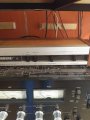
Here is the front view of the eq if that helps.
20250222_140614_HDR.jpg
 

nsaspook

Joined Aug 27, 2009
16,330
My originals are 25K as you know.
By changing "filter caps" do you mean C305+C307 on the schematic(first post) or some other caps?
Notwithstanding which caps, do you mean I can use say a 50K digipot with different caps and get same results as using the 25K?
And would this affect the center tap?


Not shure I am following here.
The original eq has like seven detents on both slides. Moving the slide one detent has a very noticeable effect on the sound. I would not see someone sliding say from first left detent all the way to the last right detent in one go. The resulting effect would be too much for no reason.
The idea would be to mimic the original response I get when I slide to the next detent, and if not satisfactory, go to the next one. One at a time.
Maybe I could also program the Arduino to go to next setting if I would hold the button for say a couple of seconds.
Here is the front view of the eq if that helps.
View attachment 343016
As far as matching the filter response of the original , you'd need to run a sim (or actual response measurements with test equipment) on the original circuit, then rerun sims with the new cap values with the selected digital pot to match the original response.

Your center tap might be simulated with two digital pots but I haven't put much though into the best way to make it work.
 

Thread Starter

Lejeep

Joined Feb 20, 2025
22
My comment was not about the need for equalization. It's very important. It was about the IMO lack of benefits of incorporating digital electronics in the mix.
I've got very fancy computerized room equalization on my Denon receiver but I've only used it (twice so far) when there are major room or speaker configuration changes.
View attachment 343015
https://forum.allaboutcircuits.com/threads/ht-old-home-theater-rebuild.183659/post-1689804
Wow! You went all out on this project.
And look at all those buttons hmmm.;)

What can I say, I am shallow...
Actually my idea is;
If I am to build this eq, I want it to match my amp style. The Bose eq is necessary, but the look is getting too old fashion for my taste, hence the modern numeric look of buttons and leds IMHO.
It would also be a great learning experience.

If you look at post#22 you will see the front of my amp. This is the look I want to go for.
 

Thread Starter

Lejeep

Joined Feb 20, 2025
22
As far as matching the filter response of the original , you'd need to run a sim (or actual response measurements with test equipment) on the original circuit, then rerun sims with the new cap values with the selected digital pot to match the original response.

Your center tap might be simulated with two digital pots but I haven't put much though into the best way to make it work.
Unfortunately I do not have the test equipment required for such a task. Also I don't have the necessary knowledge to do so.

Could I instead use a 25K digipot and modify the original circuit to attain the digipot required + and - voltages?
''schmitt trigger'' mentionned this one as an example.
1740256888335.jpeg
 

Thread Starter

Lejeep

Joined Feb 20, 2025
22
Update,
Unless I am mistaking, the 25K dual digipot I found are quite ''expensive'' for my taste.
I found THESE and at 50cad a pop, if I need two for the center tap replacement and one more for the non center tap, and an Arduino that is at least another 50cad, this would add around 200cad to my project.
And that is on top of the original BOM which is around 150cad.o_OSo unless someone can chime in and guide me to something more ''affordable'', this project might just not take off.
Any suggestions?
 

Thread Starter

Lejeep

Joined Feb 20, 2025
22
I might have found a workaround to the expensive digipots.
My original eq slide pots have seven distinct detents. So basically I am never usind the pots infinite values between 0 and 25K, but rather seven "preset" positions on the slide tracks.
Could I just build a board with a string of discrete resistors and use an Arduino(or something else) to command where to tap on this resistor string?
Position 1 would be "open", position 7 would be the full string giving 25K. Intermediate positions would have values evenly distributed.
ei: pos1=open, pos2=4K, pos3=8k, pos4=12K, pos5=16K and pos6=24K.
I don't need to get precisely 25K total since the tolerance is like 20%.
 

nsaspook

Joined Aug 27, 2009
16,330
I might have found a workaround to the expensive digipots.
My original eq slide pots have seven distinct detents. So basically I am never usind the pots infinite values between 0 and 25K, but rather seven "preset" positions on the slide tracks.
Could I just build a board with a string of discrete resistors and use an Arduino(or something else) to command where to tap on this resistor string?
Position 1 would be "open", position 7 would be the full string giving 25K. Intermediate positions would have values evenly distributed.
ei: pos1=open, pos2=4K, pos3=8k, pos4=12K, pos5=16K and pos6=24K.
I don't need to get precisely 25K total since the tolerance is like 20%.
I've seen old equipment that used small reed relay switches (with a coil activator) to select resistor tree taps.
https://standexelectronics.com/reed-relays/reed-switches-used-in-a-reed-relay-application/

https://www.littelfuse.com/products/relays-contactors-transformers/reed-relays
https://www.mouser.com/ProductDetail/Littelfuse/HE3321A0400?qs=X8LBAgEWIKIlXjI6UoOuAQ==

I would likely select one reed relay as NC (at the middle resistance tap) and the rest as NO so by default the wiper is connected on power up. You can then write a program to switch to the needed tap(s) while knowing that the middle resistance tap will need inverted logic (coil On to open vs coil ON to close) in the programming logic.
 
Last edited:

Thread Starter

Lejeep

Joined Feb 20, 2025
22
I've seen old equipment that used small reed relay switches (with a coil activator) to select resistor tree taps.
https://standexelectronics.com/reed-relays/reed-switches-used-in-a-reed-relay-application/

https://www.littelfuse.com/products/relays-contactors-transformers/reed-relays
https://www.mouser.com/ProductDetail/Littelfuse/HE3321A0400?qs=X8LBAgEWIKIlXjI6UoOuAQ==

I would likely select one reed relay as NC (at the middle resistance tap) and the rest as NO so by default the wiper is connected on power up. You can then write a program to switch to the needed tap(s) while knowing that the middle resistance tap will need inverted logic (coil On to open vs coil ON to close) in the programming logic.
Thank you for the links and for this encouraging idea!
Trying to understand this (new to me) device.
If I got it right, basically by pushing a button, the Arduino would command the next(up or down) reed relay to close to connect the tap to use in the resistor string.
I would need one relay for each tap.
One relay would control two taps, one for the left channel string and one for the right.
I would also need two more for the center tap.
I must be missing a lor of details, but am I in the right direction?
 

nsaspook

Joined Aug 27, 2009
16,330
Thank you for the links and for this encouraging idea!
Trying to understand this (new to me) device.
If I got it right, basically by pushing a button, the Arduino would command the next(up or down) reed relay to close to connect the tap to use in the resistor string.
I would need one relay for each tap.
One relay would control two taps, one for the left channel string and one for the right.
I would also need two more for the center tap.
I must be missing a lor of details, but am I in the right direction?
That's right but you won't need a relay for the center tap pot emulation as it's always connected to the same place in the circuit.. It's a messy solution but should work if all you need are a small number of discrete steps
 

Thread Starter

Lejeep

Joined Feb 20, 2025
22
That's right but you won't need a relay for the center tap pot emulation as it's always connected to the same place in the circuit.. It's a messy solution but should work if all you need are a small number of discrete steps
So I get how it would work for a 3 pin pot using NO relays.
I did some logic programming(Basic and Fortran) way back when, but I am still trying to understand how to solve the center tap with a NC one.
(schematic re-posted below)
I will try to draw how it would work, but would appreciate some of your expertise if you can.
Thanks
1735601074821.png
 

nsaspook

Joined Aug 27, 2009
16,330
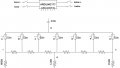
The center tap pot has a fixed tap that's always connected like the ends of the pot. The moving wiper is what needs to be switched to emulate the mechanical pot motion of the wiper across from one end to the other.

A quick and dirty example connection scheme. Not compete or checked.
 

Attachments

Thread Starter

Lejeep

Joined Feb 20, 2025
22
Man you are quick, thanks!:)
I have been studying your schematic and I think we are missing two NO relays at each ends to complete the circuit.
I don't think I'm too much out in left field with the mod I made to your schematic.(view below)

Also trying to select which Arduino would serve this application.
I found THIS ONE that might do the trick.

Any comments appreciated. Pretty good learning curve for me.


1740531699255.jpeg
 

nsaspook

Joined Aug 27, 2009
16,330
Man you are quick, thanks!:)
I have been studying your schematic and I think we are missing two NO relays at each ends to complete the circuit.
I don't think I'm too much out in left field with the mod I made to your schematic.(view below)

Also trying to select which Arduino would serve this application.
I found THIS ONE that might do the trick.

Any comments appreciated. Pretty good learning curve for me.


View attachment 343274

I just did what was sufficient for you to get the drift of what to do. It's your project.
 

Thread Starter

Lejeep

Joined Feb 20, 2025
22
I just did what was sufficient for you to get the drift of what to do. It's your project.
I think I misinterpreted the forums purpose.
I thought it was for exchanging AND learning.

Now I think the learning part is not the purpose of this site.

Sorry if I misinterpreted and thank you for getting me this far in my project.
 

schmitt trigger

Joined Jul 12, 2010
2,092
I can recommend EEVBLOG, EDABOARD, DIYAUDIO and ELECTRO-TECH-ONLINE.

There are several other electronic blogs, you may attempt to obtain additional support.
But no one is going to provide a fully completed and tested circuit.
 

panic mode

Joined Oct 10, 2011
5,002
do not confuse social media and online learning with formal training,

formal training means taking courses at an accredited institution and completing a degree. for a fast learner this takes 4 years and it is costly.

learning offered through forums and social media is very different. there are no strings attached and no expectations. you encounter busy people minding their own business and dropping in for few minutes to see if they can answer a question or two, or point you in the right direction.
but nobody is going to dedicate weeks, months or years of their life to guide someone through entire design process. learning online means you need to do most of the things yourself by relying on pointers shared by people who did spend the time and effort to learn it.

forum is like a caffe at the the busy train station or airport. people come and go. anyone there can offer a tip and point you in the right direction, and will happily do so for up to few minutes. but nobody is going to spend 8 hours (or 8 months) to give you a grand tour or do custom lecture about designing a custom engine from scratch. the amount of information you can receive is very limited, which is why anyone serious about doing things like this for living takes the formal training route.
 
Top