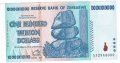
The best way to make a small fortune in Bitcoin & the stock market! Is to start off with a big fortune.
But seriously..
You should invest in exaggerations!
I hear it went up by a million percent last year. sorry you set yourself up!
That means all Bitcoin transactions are out in the open. The Bitcoin ledger can be viewed by anyone who is plugged into the blockchain.
“It is digital breadcrumbs,” said Kathryn Haun, a former federal prosecutor and investor at venture-capital firm Andreessen Horowitz. “There’s a trail law enforcement can follow rather nicely.”
Haun added that the speed with which the Justice Department seized most of the ransom was “groundbreaking” precisely because of the hackers’ use of cryptocurrency. In contrast, she said, getting records from banks often requires months or years of navigating paperwork and bureaucracy, especially when those banks are overseas.
Given the public nature of the ledger, cryptocurrency experts said, all law enforcement needed to do was figure out how to connect the criminals to a digital wallet, which stores the bitcoin. To do so, authorities likely focused on what is known as a “public key” and a “private key.”
...
“Cryptocurrency allows us to use these tools to trace funds and financial flows along the blockchain in ways that we could never do with cash,” said Ari Redbord, the head of legal affairs at TRM Labs, a blockchain intelligence company that sells its analytic software to law enforcement and banks. He was previously a senior adviser on financial intelligence and terrorism at the Treasury Department.
Several longtime cryptocurrency enthusiasts said the recovery of much of the Bitcoin ransom was a win for the legitimacy of digital currencies. That would help shift the image of Bitcoin as the playground of criminals, they said.
“The public is slowly being shown, in case after case, that Bitcoin is good for law enforcement and bad for crime — the opposite of what many historically believed,” said Hunter Horsley, chief executive of Bitwise Asset Management, a cryptocurrency investment company.
The Colonial "hackers" wanted the money to be found. They were probably kids messing around with DarkSide's tools hoping to make a quick buck. I'm sure they thought they hit the lotto when an accountant at Colonial clicked the link on their phising email. But they didn't anticipate that Colonial would shutdown the entire pipeline in response and cause a global news story. When they realized that they were in way over their heads, they transferred the ransom to a wallet hosted by a public exchange (Coinbase) in California. This is the equivalent of asking the ransom to be sent to a Bank of America account. So either they were extremely dumb (possible), or more likely they knew that the money would be recovered and they figured this would take some of the heat off. Had they actually wanted to keep it, they would have transferred it to a private wallet.
The Colonial "hackers" wanted the money to be found. They were probably kids messing around with DarkSide's tools hoping to make a quick buck. I'm sure they thought they hit the lotto when an accountant at Colonial clicked the link on their phising email. But they didn't anticipate that Colonial would shutdown the entire pipeline in response and cause a global news story. When they realized that they were in way over their heads, they transferred the ransom to a wallet hosted by a public exchange (Coinbase) in California. This is the equivalent of asking the ransom to be sent to a Bank of America account. So either they were extremely dumb (possible), or more likely they knew that the money would be recovered and they figured this would take some of the heat off. Had they actually wanted to keep it, they would have transferred it to a private wallet.
That's if you believe they were just kids. I think a bucket of crap was dumped on them from the Russian higher ups (who wanted to make this go away) and they gave up the private keys.
Court documents released in the Colonial Pipeline case say the FBI got in by using the encryption key linked to the Bitcoin account to which the ransom money was delivered. However, officials have not disclosed how they got that key.
That's if you believe they were just kids. I think a bucket of crap was dumped on them from the Russian higher ups (who wanted to make this go away) and they gave up the private keys.
I don't think they were state-level actors. No hammers used, well, that's too bad. If the exchange/bank/credit union keeps the private key then it's not very private or secure so I have a feeling the nice hackers were asked very nicely to transfer the Bitcoin to the exchange instead keeping it in a nice secure cold wallet. Everyone knows "If you do not hold the private keys, you do not own the BTC", so IMO it was given away for reasons other than gross incompetence.
I don't think they were state-level actors. No hammers used, well, that's too bad. If the exchange/bank/credit union keeps the private key then it's not very private or secure so I have a feeling the nice hackers were asked very nicely to transfer the Bitcoin to the exchange instead keeping it in a nice secure cold wallet. Everyone knows "If you do not hold the private keys, you do not own the BTC", so IMO it was given away for reasons other than gross incompetence.
The first link is paywalled; the second link seems to be an excerpt of the draft. Anyway, it's a good read. His premises are that Bitcoin is:
not maintenance free and so cannot be a store of value (it will eventually be worth zero)
too volatile to be a currency (BTC is not arbitrage-free)
not a viable hedge against inflation
I'm always excited to read an informed opinion of how bitcoin will fail, but Taleb's points -- at least what's available in the excercept -- seem particularly weak to me.
He argues that, unlike gold, bitcoin requires perpetual maintenance to hold its value, which virtually guarantees that it its future value will be zero. He calls this path dependence and invokes the principle of cumulative ruin: "if any non-dividend yielding asset has the tiniest probability of hitting an absorbing barrier, then its present value must be 0."
There are several problems with this line of reasoning, most notably that perpetual maintenance is required of any store of value. It's true that gold will retain its physical properties for eons without any maintenance, but to use it as a store of value one must provide perpetual custodial maintenance: the gold has to be kept somewhere safe, which requires work. Likewise, gold is worthless if it can't be traded, and so it requires organized exchanges to provide markets and set prices. Exchanges require work and perpetual maintenance. In short, everything humans value -- including the internet and the sum of all of our acquired knowledge -- requires perpetual maintenance. I'm baffled why Taleb would think bitcoin should be any different.
The volatility argument is truly valid -- BTC is not nearly stable enough to be a unit of account. But what Taleb doesn't address is that bitcoin is in its nascent development phase, where price discovery is the dominant force. It's entirely unreasonable to expect an entirely new financial model to replace the old system in just 10 years. The internet required more than 30 years to become fully entrenched and commoditized. Price discovery is a systems-level dynamic. It's unreasonable to expect bitcoin to perpetually remain volatile, especially with increasing institutional adoption and ever-growing market capitalization. Market dynamics will find its true value.
As for Taleb's claim that BTC is not a viable hedge against inflation, the excerpt doesn't include his argument, which I'd very curious to read. The fact that BTC is capped at 21 million units makes it hard to imagine how bitcoin is anything but anti-inflationary.
The first signs of trouble came in April, as Bitcoin was rocketing to a record. Africrypt Chief Operating Officer Ameer Cajee, the elder brother, informed clients that the company was the victim of a hack. He asked them not to report the incident to lawyers and authorities, as it would slow down the recovery process of the missing funds. Some skeptical investors roped in the law firm, Hanekom Attorneys, and a separate group started liquidation proceedings against Africrypt. “We were immediately suspicious as the announcement implored investors not to take legal action,” Hanekom Attorneys said in response to emailed questions. “Africrypt employees lost access to the back-end platforms seven days before the alleged hack.” The firm’s investigation found Africrypt’s pooled funds were transferred from its South African accounts and client wallets, and the coins went through tumblers and mixers — or to other large pools of bitcoin — to make them essentially untraceable.
While hundreds of thousands of investors were scrambling to find out what happened to funds they had invested in failed crypto scam Mirror Trading International (MTI), a far bigger crypto disappearing act was playing out without hardly anyone paying attention.
Africrypt, which reportedly counts several high profile South Africans and celebrities among its investors, was hacked on or about April 13.
A staggering $3.6 billion (roughly R54 billion) was swiped out of multiple wallets controlled by directors of the company in a matter of hours.
This is according to an analysis, conducted by Hanekom Attorneys, of blockchain transactions involving wallets controlled by Africrypt.
The ‘hack’ is deemed extremely suspicious by investigators, not least because the two founders of Africrypt – Raees and Ameer Cajee – reportedly disappeared to the UK within days of this happening.
Though the investigation is still ongoing with multiple regulatory authorities now looking into it, this may turn out to be one of the biggest financial scandals in SA’s history. Not quite Steinhoff-scale, but way larger than MTI.
Entrepreneurs are not known for their business minds. In fact, what sets an entrepreneur apart from a business-oriented thinker, is the will to make the lives of others easier with their solutions.
Ameer Cajee, the renowned South African investor who is immensely praised for revolutionizing banking in Africa with cryptocurrency, is one classic example of an entrepreneur who provides the impetus for change in their society. The Co-Founder and Chief Operating Officer of Africrypt, Cajee, a crypto expert, is on the quest to make transactions in the digital world easier, swifter, and safer.
Afircrypt, as an electronic, off-exchange digital liquid provider, functions by employing an electronic communications network. With a vision to connect banks, payments providers, corporates, Cajee laid the foundation of Africrypt in 2019.
Talking about his fascination for bitcoin and blockchain, Ameer Cajee revealed that he came across the crypto back in 2009 while watching the news with his brother and father. Since then, the crypto fanatic is head-over-heels for this e-money that can truly create immense economic opportunities for Africa. Inspired by the huge potential of cryptocurrency to change the fate of banking and make digital transactions smoother, Ameer Cajee opted to become a Bitcoin miner.
He then, alongside his brother, indulged in writing an algorithm to empower trading of the cryptocurrency market. Embarked on the journey as bitcoin miners, both brothers reached the top of their game, manifesting a full AI system targeted to facilitate the trading of cryptocurrencies as digital exchanges. It was at the moment that the crypto-geek decided to create a full-fledged cryptocurrency exchange and cryptocurrency bank that was wholly algorithm-driven and launched it as ‘Africrypt.’
It is not wrong to claim that Ameer Cajee is working to influence the daily lives of people by introducing them to the wonders of cryptocurrencies through his platform ‘Africrypt.’
Sure, bitcoin is only a current vessel for scammers and thieves because it's new, convenient and easy.
So you might as well stick to fiat as bitcoin provides no protection from crooks or any other of the Utopian dream threats it was supposed to eliminate.
So you might as well stick to fiat as bitcoin provides no protection from crooks or any other of the Utopian dream threats it was supposed to eliminate.
Investors are shaken after the co-founder of a multi-billion dollar cryptocurrency protocol was accused of being a serial scammer with a record of conviction and deportation, and the co-founder of a fraudulent Canadian exchange that imploded.
On Thursday, a Twitter user who goes by zachxbt.eth “with a track record of unmasking crypto scams and nefarious behavior,” according to CoinDesk, accused “Sifu,” a core member of the founding team behind the popular Avalanche-based Wonderland DeFi (or decentralized finance) protocol and its TIME token, of actually being Michael Patryn.
Patryn, who changed his legal name twice, was the co-founder of QuadrigaCX, a Canadian exchange that shut down after Patryn's partner Gerald Cotten suddenly died in India in 2018 while owing users around $190 million in crypto at the time’s exchange rate. Patryn and Cotten reportedly parted ways in 2016. Later, investigators determined that Cotten was operating QuadrigaCX as a Ponzi scheme near the end of its life.
These guys are like vampires, they keep coming back.
QuadrigaCX was a popular Canadian cryptocurrency exchange co-founded by Patryn, who reportedly left in 2016. In 2018, one of the co-founders, 30 year-old Gerald Cotten, died in India due to complications from Crohn’s Disease, according to court documents filed by his wife. According to her sworn affidavit at the time, Cotten was the only one in control of the exchange’s private keys, meaning his death locked up all the users’ funds. Cotten allegedly had them in “cold storage,” meaning they were stored on an encrypted hard drive or USB drive.
As it turned out, QuadrigaCX couldn't cover the demand for withdrawals when crypto prices crashed, and began operating as a simple Ponzi scheme, provincial regulators eventually determined. To make matters worse, Cotten was gambling users' money himself, with $115 million being attributed to Cotten's fraudulent trading, according to provincial regulators. Another $28 million was lost by Cotten on third-party crypto platforms, and only $46 million was recovered.

 Facebook
 Google
 GitHub
 Linkedin


 sorry you set yourself up!