Take a resistance reading between one lead of each winding with one lead of each other winding. Should all read out of range.InBetween the secondary windings, if any "leak", how to check?
Ok.Dear Pyrex,
Nice tip. No oscilloscope here....i'll buy one someday. Had a tube one that broke......I tested Power supply on it's OWN, with some loads attached, except for the -15V. I cannot say what ripple I have without an oscilo, I know, but I tested with multimeter and it's dead stuck right to the third decimal all the time. On the input there are 3x4700uF that's more than 14000uF, should be no ripple on the input, so I expect none on the output.
-------------------
When I initially tested the MIXER with my PSU, something very interesting happend though.
Please bare with me a minute
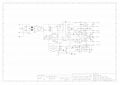
So I had my PSU board on my working table, with the toroidal transformer next to it, center tap connected to ground PSU, as in the schematic. The mixer was sitting on another small table, I hooked it's power inputs to my psu via some long wires, just for testing. Everything worked GREAT. NO hum no buzz, no hiss, no nothing, all voltages measured were JUST PERFECT. I was so happy.![]()
Baby-duck imprinted on PADS in the early 80's. Still use it.I could have done the schematic in Pads,

So between what two points did you connect this capacitor?I just added a 100nF cap on the analog GND connection and ,,,,yup.....al problems gone, just like magic.
I would not do that, unless you really need to, as switched-mode supplies are inherently more noisy.I am thinking now to modify the PSU to make the regulation in switched mode, for less thermal power loss.
Hi there,So between what two points did you connect this capacitor?
I would not do that, unless you really need to, as switched-mode supplies are inherently more noisy.