v out of U2 is 1.166v at 27°c and 1.300v at 6°c. Ive changed the 2.5v zener to a 2.7v zener and changed the resistor to 820R. Am i right in seeing 370R in your example?
kind regards
Hi S,
I don't see a 370R resistor.??
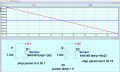
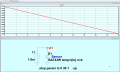
Did you notice I just varied the diode temperature over 0C > 30C.
E
Once you have recalibrated the project, post you lasted circuit vales and I will re-run.
just had a quick play around with the settings, with 2.4v zener, 220R resistor, R15 set to 1k91, R9 at 85k, R11 at 4k and R12 set to 21.2k, i get a v out of between 28.06mv at 6°c and 106.0mv at 27°c.
Now that i know you are able to simulate the diode temperature, its perhaps very relevant to know that the sensor is actually four diodes in series, BAT43 schottky.
Hi A,
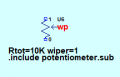
One resistor is in series with the pot, as per this sample image.
R10 is a fixed 1k5 and R11 is 2K pot set for 1k81
In certain cases, it easier and quicker to show a 'pot' setting value.
There are regular pots in LTSpice but as Steve is still learning LTS it makes sense to use the quick way.
Included a LTS regular pot symbol.
E
Hi A,
You know exactly what it means, it is clearly marked as 25K pot set for a value of the 19k6.
The TS clearly understands its meaning, as I am sure you do.
So please be a good chap and stop playing games.
E
1.300v at 6°c to 1.166 at at 27°c, which are tried and tested on circuit I built, so the total range would be 1.147v to 1.338, so a narrower range than what you have.
i took a leap of faith and built this circuit, but it does not work. in fact, the readings im getting from various parts of the circuit are often nothing like the simulation.
Is there anything i need to be aware of when using simulation software?
where would you like me to begin? no idea where to set the pots to as im now measuring other parts of the circuit, but i tried to it measuring voltages instead.
attached is the circuit with the simulated voltages in green and the actual voltages in red.
HI,
those readings were with the diode sensor at 19°c.
Of note, the sensor readings have changed now that ive built the whole circuit. At AM1 (measured between AM1 and VCC) they are 1.270v at 6°c and 1.183v at 19°c (cant test to 27 easily as the house is a lot cooler than earlier this week).
All im getting now is a fixed 40mv output which can barely be adjusted and isnt responding to temperature changes at all.
Hi,
You have to adjust your current source R19 100R to give the desired constant current through the diodes.
So the OA2 input is the required 1.27V
The values for the forward voltage drop across a diode from the datasheet is only the typical value.
Images of my circuit checks
E
BTW: I assume that the voltmeter VM2 in the actual circuit is not connected while you are testing???
Hi Steve,
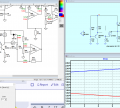
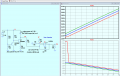
This shows the effect of varying R6. [ ka R19 ]
Note the instability at one setting of R19 CC, on Va, why did you choose that circuit design for U1 OPA.?
i needed the sensor to vary in voltage whilst working under a constant current, so i figured that i needed to output the difference between vcc and sensor cathode.
when i built a simple test circuit to test the probe i made, this worked perfectly fine.
im wondering if i have a faulty transistor?
I disconnected the link between OA4 output and OA2 +Input. initially on powerup OA4 output is around 1.5v and then after a minute shoots up to 2.5v and stays there regardless of sensor temperature. is this likely to be caused by driving this input from a constant current source?

 Facebook
 Google
 GitHub
 Linkedin