3 Chip Instrumentation Amplifier Common Reference Issue

Thread Starter

Danlar81

Joined Apr 19, 2019
87
Hi Eric,
Yes I saw the filters, and even though they are for this specific purpose, in the context of my assignment I think that is breaking the rules. I can only use what has been specified.

Based on my description with respect to the cable sizes and poor twist ratio, in your opinion could SCIN have a bearing on the values I am seeing?
 

Thread Starter

Danlar81

Joined Apr 19, 2019
87
Hi Eric,

I have just made another twisted cable using the drill method, and I'm about to wrap it in foil.

I'm sorry but I have mislead you. There is no ground/earth connection at the power supply, it is really zero volts. Circuit Lab does not work without it, but I am not simulating this circuit, it was force of habit to add it.
My circuit does not have any ground/earth connections. Zero volts is the common on the power supply.

So are you suggesting I remove the virtual earth from the shield at the transducer end and leave the shield floating? This means I will need to run a wire back to the power supply zero volts for it to work. This will need to be included in the shield.

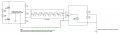
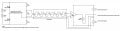
The circuit attached is reflective of the current wiring with ground/earth symbol removed identifying common connections.
 

Attachments

Thread Starter

Danlar81

Joined Apr 19, 2019
87
Hi again Eric,
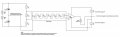
I have attached another circuit of how it was wired earlier today, which the shield was not connected at transducer end as you mention, but I did not have the zero reference cable from the sensor retuning to the power supply zero volt reference inside the foil, it was just on the breadboard.
Do you think this could be the cause of all my issues?
 

Attachments

Thread Starter

Danlar81

Joined Apr 19, 2019
87
Hi Audioguru,

Not doubting your comments, but I have to use the LM324 as it was specified. At the moment I just want to ensure my shield/earth connections are correct and if the noise is bad, well it's bad. But I am assuming my shielding connections are not quite right, as I would have expected better noise immunity with the homemade shielded twisted pair cable over just a twisted pair cable.
 

Thread Starter

Danlar81

Joined Apr 19, 2019
87
Hi Eric,

I have just made the new cable and run the zero volt reference from the transducer in the shield and connected to zero volts at the power supply. Everything seems a lot better in terms of the ambient noise that is detected.

I can't really explain why there is fluctuations when I am typing on the keyboard, or if I move my chair, and not all the time either, however the breadboard is only about 300mm away from my keyboard and no fluctuation has risen above 17mV.
I have seen the ambient noise measured as low as 4.1mV, but seems to hover around 6mV to 10mV when I am not typing. I would like to test it with my noise sources but it's too late now, so I will try that tomorrow.

I ended up getting about 2 turns every inch on the twisted pair, but it's not tight as a manufactured one would be, so I also have to accept when handling the cable and bending it to introduce triboelectric noise it may spike.

It would be good to have a premade one handy, just so I could use it as a reference.

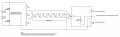
I have attached the circuit of how it is currently wired.
 

Attachments

ericgibbs

Joined Jan 29, 2010
21,452
Hi Dan,
Try this change to the circuit.
At what point are you measuring the posted noise levels?

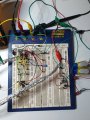
Can you post a photo-shot of the board layout?

E
 

Attachments

Thread Starter

Danlar81

Joined Apr 19, 2019
87
Hi Eric,

I have implemented the change as suggested. The reason I had the Zener diodes in there was just so I could maintain 3.5mV DC for the differential voltage, however it has only risen 0.001mV without them due to the batteries being a little flatter.

I am measuring the noise at the output of inverting buffer OA5.

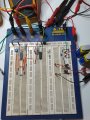
I have attached the photos.

The noise is much worse again now. Essentially back to where I was when I first posted this afternoon. If I move towards the breadboard the noise rises up to levels of 70 plus mV.
 

Attachments

Thread Starter

Danlar81

Joined Apr 19, 2019
87
Sorry I mean to say the differential voltage has risen 1mV.

Is it a problem to have the zero volt reference wire run in the shield with the twisted pair cables?

Also, the supply voltages and common are defined as follows,
Blk = -9VDC
Red = +9VDC
Yel = Common (Zero volts)
 
Last edited:

ericgibbs

Joined Jan 29, 2010
21,452
Is it a problem to have the zero volt reference wire run in the shield with the twisted pair cables?
Hi,
I would not have the Zero ref wire inside the shield, will look over your photo shots.
E
 

crutschow

Joined Mar 14, 2008
38,533
The noise is much worse again now. Essentially back to where I was when I first posted this afternoon. If I move towards the breadboard the noise rises up to levels of 70 plus mV.
A plug-in breadboard as you show, is quite suspectable to noise pickup due to the long interconnect wires.
If you can put the whole circuit inside a grounded metal box, the pickup should be greatly reduced.
 

ericgibbs

Joined Jan 29, 2010
21,452
Hi Dan,
With that very loose wiring layout, I would expect the high noise levels you are measuring.
The interconnections need to be shortened, tidied up and in a screened case.

E
 

Thread Starter

Danlar81

Joined Apr 19, 2019
87
Hi,
Yeah ok I don't have an issue if you believe this is expected based upon the layout.

But, what I cannot make sense of is why would this noise appear to be worse in the screened cable as opposed to the exposed twisted pair I tried earlier?
Even with this layout and the noise levels, I would have thought that the twisted pair and singular cores would have been much much higher?
What am I missing?
 

ericgibbs

Joined Jan 29, 2010
21,452
Hi,
With screens, it is important where they are connected to the circuit's common ground point.
Incorrect or poor grounding can create ground loops, which will induce noise voltages into the main signal lines.

You say 70mV at the final output, remember you set the overall gain to 1000.

E
 

Thread Starter

Danlar81

Joined Apr 19, 2019
87
Hi Eric,
Thanks for that, I will certainly have a look.

Well, as much as I did not want to, I re-wired the breadboard and begun all my testing from the start, however I was worth it as the noise values were fairly stable and not jumping all over the place.
I think I have learned a valuable lesson with regards to noise and shielding.
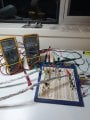
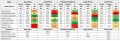
I have attached the updated breadboard and table of results measured if you are interested to have a look.

I think the wiring could be further improved, but I really wanted to get the testing done and it took long enough as it was. The reason I like to use the loopy wires is because it is quick. Well maybe not when you are chasing noise related issues all day.
 

Attachments

Top