2 output buck switching voltage regulator

Thread Starter

Dsmroots

Joined Aug 7, 2014
20
I need help choosing a component. I am new to circuit design and unfortunately the first pcb that I want to make up has me spinning in circles with options, formulas supporting components, packaging requirements ect.

My plan is to use one battery 3s 11.1v lipo (12.8 max charge) to power an existing control board which uses 7-8.4v dc. The existing board drives a solenoid and is button programmable.

The 11.1v lipo will drive a small dc motor at the same time the solenoid is activated.

I plan to use a photo transistor (maybe a SFH9206) to run a FDC6305N mosfet. This would allow me to send the required 11.1v to the motor and also control the solenoid which uses 3.5v if I recall correctly.

Power requirements are super low. The control board only uses 100mA and the motor only uses 180mA at max torque.

My problem is trying to figure out which buck converter to use. The SFH9206 needs 1.25-1.65v for the forward emmiter so one channel of the buck will be dedicated to provide that, the other channel of the buck will need to provide the control board power at roughly 8v.

Mosfets will simply switch on/off the 3.5v for the solenoid as well as the 11.1 for the dc motor.

Am I out of line asking for component selection? I am new to this and have been staring at data sheets until I am cross eyed for days now and while I now know what options are out there, that has really just made things worse. I can provide a list of the 14 buck converters that I believe would cover my needs. I should also mention, this is not digital. The motor won't need pwm and the control board is normally plugged directly into a 2s battery so it should all be analog to the best of my knowledge.
 
Last edited:

Thread Starter

Dsmroots

Joined Aug 7, 2014
20
This is a list of options that I came across from digikey or mouser. Can't remember which one. The list will continue to grow as my eyes get more crossed from the data sheets. Some have Low voltage shut off, high v shut off, thermal shutdown ect. The low voltage shut down would be useful to protect the 11.1 lipo from over discharge. Some of these have options that I am just not experienced enough to even comprehend.
MAX17521

LT3688EFE

LTC3633

TPS55386PWPR

TPS54286PWPR

LTC3855EFE

TPS54383PWPR

LM26400YMHX
TPS65283RGET

TPS65253RHDR

TPS54386PWPR

LM2717MT-ADJ/NOPB

TPS54283PWP

MP2223GJ-P
 

Papabravo

Joined Feb 24, 2006
22,058
You certainly bit off a challenging first project. It helps when you have the opportunity to learn to crawl and walk before running a marathon. With all these questions about component choices I'm guessing that you do NOT have a working breadboard prototype. If that guess is incorrect, then my apologies. I understand that the modern approach is to go directly to PC boards on the first round, but this is for those with extensive prior experience.

Using a buck converter to power a motor can be a problem when it comes to startup current requirements and dynamic response. The startup current for a motor can be 4 to 5 times the average running current. The first time I tried to do this, forty-five years ago, the converter's output voltage dropped to its knees on startup and didn't bother to stop there. It took nearly 30 seconds to recover.

In short you are asking for component selections based on datasheet analysis only. In my humble opinion this is a risky proposition. There are many things about components that are not evident from the datasheets.

Good luck with this project, it sounds interesting.
 

Thread Starter

Dsmroots

Joined Aug 7, 2014
20
Hi Ian, thanks for the heads up. That is a powerful tool but it only has single buck options in it's menu. While I could use 2 parallel buck converters to do what I am trying to do, it will make my overall footprint larger. 2 single bucks in parallel or even in series would be significantly cheaper than most of these options I listed but I expect with all the supporting components caps, resistors, inductor ect, that I will be running out of room.
 

Thread Starter

Dsmroots

Joined Aug 7, 2014
20
I have used adjustable buck converters in the past. This is the first time I have had to do any component selection and the first time I am going to attempt a pcb design. So what you are saying is that even with the soft startup option, I may have to size out the current output capacity 4-5 times my max current load to keep from starving for power? That actually makes sense. I've seen 10 amp motors blow out 30 amp fuses all the time from start up current spikes. For what it's worth, I was planning on going for at least 200% current draw which is only 360mA, but there are so many options just in my list that can max at 2-3 Ampere.

So, are you saying that what I am doing isn't possible, isn't easily done, shouldn't be attempted without a micro controller? I am simply looking for direction.

To answer your obvious question, no I don't have a working circuit using these components. It currently is run off of 2 seperate batteries, isolated by 2 different micro switches which I used a battery spot welder to weld the micro switch trigger bars together with nickle strips. This way the two circuits swith on at the same time. My issue with that setup is switch delay, loose wires that are 28awg a lot of times break at the crimp, having to charge 2 seperate batteries as well as store them in seperate locations s due to size constraints. So yes it works, but leads to a ton of headach in the field. So I am willing to go through design headaches to eliminate physical failures, make it more reliable and eliminate field trouble shooting and needing to carry a ton of spare harnesses or switches.
 

Thread Starter

Dsmroots

Joined Aug 7, 2014
20
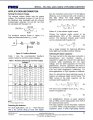
I decided to try out a MP2223 Converter. While looking at the data sheet to decide resistor values for the resistor divider circuit, it seems as though they assume you already have a predetermined R1 value so that you can calculate out your R2 value.

So does the value of R1 even matter? Or is it simply a starting point to determine R2? Also I don't see anything that would direct me to select the RT value. They do have a formula for the output capacitor and MPS's website has a nice Inductor calculator. It is just the RT and R1 values that I am unsure of. I see nothing about total ohm resistance requirements for the divider circuit like I have seen on other data sheets which leads me to believe you can select any rational resistance value for RT and R1.

My output would need to be 8v on channel 2. So if I used a 40.2 kOhm R1, it looks like a 4.47 kOhm for R2. Does that sound right?

If so, what should RT be?
 

Attachments

Thread Starter

Dsmroots

Joined Aug 7, 2014
20
I stumbled upon MPS' dc-dc calculator and selected the mp2223 with my requirements. It spit out component criteria which I bought. It works great and is giving me a 8.07v output and a 1.516v output.

Now I just need to find an soic 6 breakout board for the phototransistor. The sot 6 breakout for the mosfet is quite easy to come across but an soic 6 seems to be elusive. Any suggestions so I dont have to hardwire each pin for testing?

Should I just buy a soic 8 breakout and not use 2 of the pins? I don't care how rigged up it looks. It's just to verify operation before I design a board and have that printed.
 
Top