Strange buck converter output wave...

Thread Starter

eromlignod1

Joined Sep 26, 2017
58
Guys:

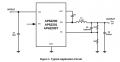
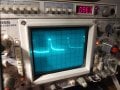
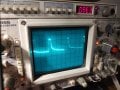
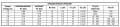
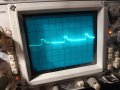
I'm designing a circuit where the supply is 15Vdc. I have chips that run on 5Vdc, so I have added a buck converter (Diodes, Inc. #AP62201). This is on a PCB for embedded work. As far as I can tell, I have hooked it up exactly like in the spec sheet (see schematic), but the output is the wave you see below. It is low-frequency (about 100 Hz) and the peaks are about 5V. I put a 120-ohm resistor at its output to give it some load. The input from my benchtop power is currently only 5V, but I'm afraid to turn it up until I find out about this wave (the MCU is powered by this regulator).

What am I doing wrong? Thanks for any insights.
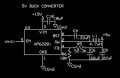
Capture.JPG

IMG_20241005_154855782.jpg
Don
 

LowQCab

Joined Nov 6, 2012
5,101
Increase the Input-Voltage to at least ~3 to ~4-Volts higher than You expect the Output-Voltage to be.
( ~10-Volts should do it, ~15-Volts would still be comfortable )

I would expect that the Output is randomly cycling On and Off because of low Input-Voltage.

~100hz just accidentally happens to be the frequency that
the whole system resonates at under your odd conditions.
.
.
.
 

MisterBill2

Joined Jan 23, 2018
27,164
What voltages are we seeing on the scope??? The input voltage is already 15 volts..
AND there is something wrong with the circuit since there is no way for current to be switched on to flow thru the inductor and then the voltage charge the output capacitors. So there is an error in the circuit. It is not a buck converter circuit.
 

Thread Starter

eromlignod1

Joined Sep 26, 2017
58
Well, the first time I fired it up I connected the enable pin to the 15V input. I had neglected to notice that the input pin can only handle 8V and I smoked the pin. Ever since then I have been easing into full voltage.

Don
 

MisterBill2

Joined Jan 23, 2018
27,164
The circuit is not even similar to a buck regulator. Others can verify that.
In addition, if part of the IC is damaged, the rest may not be right either.
 

Ian0

Joined Aug 7, 2020
13,097
The circuit is not even similar to a buck regulator. Others can verify that.
In addition, if part of the IC is damaged, the rest may not be right either.
Looks like the app-note circuit to me
Screenshot from 2024-10-06 07-24-21.pngIt's a synchronous converter with built-in output transistors.
 

Ian0

Joined Aug 7, 2020
13,097
Guys:

I'm designing a circuit where the supply is 15Vdc. I have chips that run on 5Vdc, so I have added a buck converter (Diodes, Inc. #AP62201). This is on a PCB for embedded work. As far as I can tell, I have hooked it up exactly like in the spec sheet (see schematic), but the output is the wave you see below. It is low-frequency (about 100 Hz) and the peaks are about 5V. I put a 120-ohm resistor at its output to give it some load. The input from my benchtop power is currently only 5V, but I'm afraid to turn it up until I find out about this wave (the MCU is powered by this regulator).

What am I doing wrong? Thanks for any insights.
View attachment 333092

View attachment 333093
Don
You won't get any sensible output from a buck regulator unless the input voltage is more than the output voltage.
At 30p each, you might have to get a dozen and be prepared to break a few before you get it right. Have you got the input capacitor right next to the IC?
 

Thread Starter

eromlignod1

Joined Sep 26, 2017
58
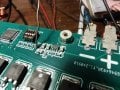
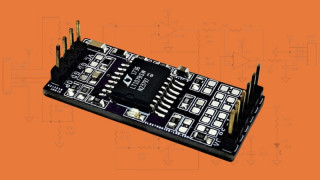
Well, here's the board. I tried turning it up to 6V, but I still get that wave. I'm afraid to go higher and blow up my MCU. It's not that expensive, but once you try to resolder those TQFP's the new one is a nightmare to get straight and connected.

Any more thoughts?

DonIMG_20241006_092121192.jpg
 

MisterBill2

Joined Jan 23, 2018
27,164
For checking the power supply circuit you can disconnect the 5 volt feed to the processor and substitute a resistor that should draw about the same current at 5 volts as the processor. That should not be very difficult and covers any goofs.
 

Thread Starter

eromlignod1

Joined Sep 26, 2017
58
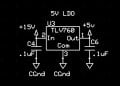
OK, so the wave went away but I still had the overvoltage problem. I gave up on the buck converter and changed the circuit to use a fixed-voltage LDO (TLV76050). But it appears that I have the same problem. When I turn the power above 7.5V or so, the output gets up to 5.3V and keeps going. The spec sheet claims the output tolerance is +/-5%, which would be 5.25V. I'm powering an MCU that can't handle over 6V, so I'm afraid to go any higher. I had eased into the 5V, starting at 3.3V and increasing, so I though maybe that had damaged the LDO chip. But I replaced the chip with a new one and it does the same thing even if I start at 5.5V input.

If I put a considerable load on it (like 40 mA) with a resistor, I can get it to stabilize back to 5V. Anything less and it starts going too high. The spec sheet makes no mention of minimum loads and 40 mA is awfully high.

What am I doing wrong?

Don

Capture.JPG
 

MisterBill2

Joined Jan 23, 2018
27,164
In the photo the solder connections to that 6-legged IC do not look right.
And if there is any excess resistance in the regulator negative connection that will certainly cause problems. So examining the voltage at the IC "GND" pin relative to the supply negative point that you are using to measure may reveal an additional voltage.
 

ronsimpson

Joined Oct 7, 2019
4,646
Are you using the AP62200/1 or the AP62200T? That will through the voltage off by 10%.
Do you have R1 & R2 reversed?
Measure the resistors. They should be 1% parts.

1729344057910.png
 
Top