Facebook
 Google
 GitHub
 Linkedin

No.What you say makes sense for voltage but not for current.
It applies to both voltage and current.
Why makes you think there's a difference?
That's true as far as it goes.2A rms AC has the same heating effect as 2A rms DC.
Hence the power from 2A AC is the same power as 2A DC.
That is the definition of rms.
But the current out of the transformer is not 2Arms in your example, it is 4.5Arms.
As you pointedly noted in post #12 "RMS is the square root of the mean squared" which applies to current as well as voltage.
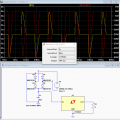
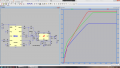
So if you look at the high peak current drawn by the rectifier-capacitor in post #9, you can see that this causes the transformer RMS current to be ≈1.9 times the DC output current (in the small Waveform window).
The is because of the high I²R loss in the transformer windings from the high peak currents as compared to the average current.
If you don't believe the simulation calculated RMS value, you can do your RMS calculation of that waveform to see its high RMS value.
Why do you think Hammond derates the transformer by 60% if that weren't true?