Wrong power supply !

Thread Starter

Amtotuna

Joined Jul 28, 2025
10
Hello all,

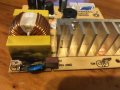
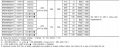
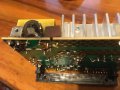
I'm ashamed by my confusion, a brand new electrical appliance, received today, was damaged .... 220 V instead of 120 V. Some blew inside, after a while I opened the case and detached the supply unit, where a capacitor was damaged. No idea about its value, therefore I'm asking for help. The marking on the PCB is ZNR1, is this a Zener diode ?IMG-20250728-WA0016.jpgIMG-20250728-WA0017.jpg
 

MrChips

Joined Oct 2, 2009
34,807
You need to explain the situation more clearly in detail.
In what country are you?
What is your country's AC line voltage and frequency?
What is the appliance?
What voltage is the appliance designed to accept?
 

Thread Starter

Amtotuna

Joined Jul 28, 2025
10
You need to explain the situation more clearly in detail.
In what country are you?
What is your country's AC line voltage and frequency?
What is the appliance?
What voltage is the appliance designed to accept?
I'm in Europe, RO. The line is 220 V, 60 Hz. I've made a mistake when making the order :))) I take it the appliance is accepting 120 V, it's a coffee roaster of 1500 W power.
 

Thread Starter

Amtotuna

Joined Jul 28, 2025
10
That would narrow it down to ERZV14D241 or ERZV14D271. Personally, I'd go for the first one (lower voltage).
Thanks again, Dennis !
A friend just told me now this power supply should function even without the blown piece, but he fears other components downstream may be damaged ... and I should clean the PCB, the carbon creates short circuits on it. What do you think ?

Best regards,

Marius

P.S. He asked me also: why use a fuse of 220 V for a 120 V line supply ? :)) I don't have the faintest idea :) The fuse seems unaffected.
 

Thread Starter

Amtotuna

Joined Jul 28, 2025
10
That would narrow it down to ERZV14D241 or ERZV14D271. Personally, I'd go for the first one (lower voltage).
You need to know the normal operating voltage for one, 120v ? you may get one at the local TV repair store.
We have no repair stores today (it's a dead chapter !), but small shops with electronic components.
 
Last edited by a moderator:

MrChips

Joined Oct 2, 2009
34,807
Fuses are meant to protect against high current (greater than 15 A in this case), not voltage. The voltage rating means that the fuse will withstand 250 V.

Applying 220 V on a circuit designed to operate on 120 V usually means that the circuit is toast.

BTW, Europe power is commonly 230 V @ 50 Hz.
 

Thread Starter

Amtotuna

Joined Jul 28, 2025
10
Fuses are meant to protect against high current (greater than 15 A in this case), not voltage. The voltage rating means that the fuse will withstand 250 V.

Applying 220 V on a circuit designed to operate on 120 V usually means that the circuit is toast.

BTW, Europe power is commonly 230 V @ 50 Hz.
I thought the appliance is designed for 220V by default, forgetting it's coming from the USA :)
 

dl324

Joined Mar 30, 2015
18,326
A friend just told me now this power supply should function even without the blown piece, but he fears other components downstream may be damaged ... and I should clean the PCB, the carbon creates short circuits on it. What do you think ?
It is possible that the device would work after the MOV was removed, provided there was no other damage. The intent is for it to protect the device from over voltage. If the fuse wasn't blown, it might work.
He asked me also: why use a fuse of 220 V for a 120 V line supply ?
It could be an effort by the manufacturer to reduce the number of parts it stocks.
 
Top