Besides, I remember now that silicon gives off some sort of vapor that attacks copper... Not a good thing. Even considering that there's a layer of lacquer protecting it.
Besides, I remember now that silicon gives off some sort of vapor that attacks copper... Not a good thing. Even considering that there's a layer of lacquer protecting it.
Besides, I remember now that silicon gives off some sort of vapor that attacks copper... Not a good thing. Even considering that there's a layer of lacquer protecting it.
Store-bought vinegar is usually 4-5% acetic acid. It’s written on the label. A balsamic might get higher but I’ve never seen any product in the store over 10%.
@cmartinez , Not all wire insulation is the same. You may get a better seal by choosing an insulation more compatible with whatever potting material you choose.
Anyway. Of course I'm considering using Room Temperature Vulcanizing silicon! ... it's just that it sounds too easy to be true! ... that's why I'm (probably) getting ahead of myself, here. I want to be prepared and try different options when I finally dig my hands into this thing.
RTV is a generic term.
Over the years I have found there are quite a few Different Versions of RTV.
For example.
J-B Weld Hi-Temp Red Silicone Gasket Maker and Sealant is an RTV (Room Temperature Vulcanized) Silicone gasketing material, designed for use in mechanical assemblies where the existence of higher, continuous temperatures up to 550 degrees F or 650 degrees F intermittent might exist. Upon curing, which occurs when the product is exposed to the moisture in air, the silicone forms a tough, waterproof seal on most surfaces. It will not shrink or crack, resists weathering, is sensor safe and is great for many automotive applications.
First, since you can't divulge secretive information, the two wires passing through the PVC; you say they have insulation on them. So you can't be measuring conductivity of the water. Second, you're using a very specific wire size (32 gauge). If that is critical then my suggestion (to follow) will be of no use.
If size and conductivity are non-critical issues then you could use a couple long self tapping screws to go completely through the pipe. The nature of their thread size compared to their drill tip may be enough to hold back the low pressure water. You can then make connections to the screws. That is IF you can tolerate both the size and conductivity between the two electrodes.
Another thing that came to mind was to slip a Tee over the pipe into the location you want to penetrate the PVC. To do that you will have to sand out the center diameter so that the Tee can slide over the entire length of the pipe. OR you can heat it and expand it, slip it in place then heat it again and allow it to contract. A Tee with two slip joints with a threaded side outlet can provide a lot of strength to bond a sealant to as well. You can also get a threaded plug and tighten that into place to assist in sealing the holes.
Something that you may want to consider; what if (assuming) a home owner adds a water softener? The residual salt content in the water will make the water more conductive. Of course, changes in mineral count in the water will also change the conductivity as well, but you did say the wires you want to use will have enamel on them; so it doesn't sound like you're trying to measure the conductivity in the water.
I've seen four way Tee's as well. Again, sliding the 4way into place then shrinking it down will give you two locations where - in the event of a leak - you can re-seal the plumbing and end the leak by simply screwing a pipe plug in place.
I don't know if I can add anything else to this thread. Seems like there've been a lot of comment on how to accomplish the task you're considering. But I just HAD to throw my two nickels into the mix. Good luck.
On aircraft, sealant is applied to joints from the side that will see the pressure. Under pressure the sealant tends to be pushed into the joint. Sealing from the outside will simply blow out. Which I think is why in @cmartinez illustration (post #13) there's a chamfer on the inside of the pipe. The pressure will press the sealing plug into a tighter and tighter hole, thus not blowing out.
Geez I hate to be the guy who finds problems with the solutions. To be honest, I don't really have a good solution largely from a lack of understanding of the overall purpose of this project. But I respect the request for privacy and the protection from piracy of a good idea / invention. For the life of me I can't imagine why anyone would run insulated wires through a water pipe. But again, I don't fully understand the purpose of doing so.
Latex craft glue might be worth considering. It has a relatively low viscosity, which should assist in getting it to penetrate a 1/32" hole (providing you work quickly, as it cures/dries rapidly ).
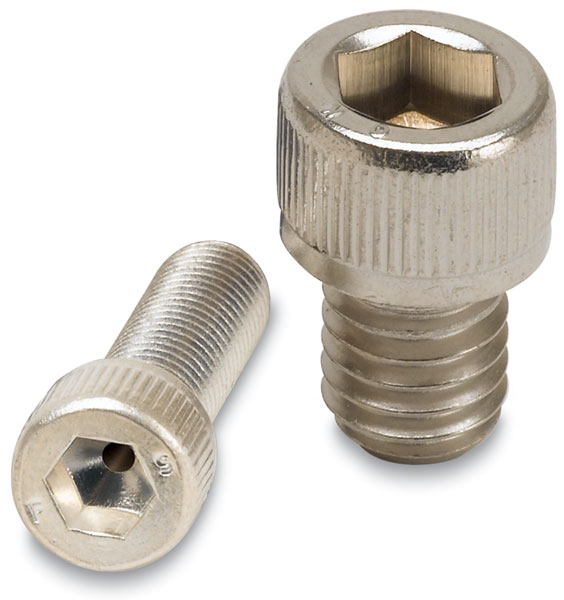
Drill, tap the PVC for the screw, insert with a good thread sealer. Run the wires in the hole, then epoxy the head/wires in the screw head and hole for a watertight seal.
Since we're talking PVC we're not talking about potable water (drinking / cooking water). At least I HOPE we're not. If we are then that changes things a little. A CPVC pipe can be used on potable water.
That's actually a good idea. You can pre-seal one side. But the other side will have to be sealed after installation.
A couple concerns with this approach, since the thickness of the PVC is fairly thin a long bolt may interfere with the opposite side. Use of a Tee (or a 4 sided Tee with slip fit joints all four's) may work better. {{ Is this Tee thing vague? }}
Here's a "Saddle Tee". It can be snapped over an existing PVC, be glued in place and provide a side outlet for something else. You can put a threaded plastic screw cap on the end and seal it before installation.
Looking at the 360˚ view you can see that after installation you drill your small hole into the existing PVC.

 Facebook
 Google
 GitHub
 Linkedin



 ... it's just that it sounds too easy to be true! ... that's why I'm (probably) getting ahead of myself, here. I want to be prepared and try different options when I finally dig my hands into this thing.