why use curly tracks

Thread Starter

bug13

Joined Feb 13, 2012
2,002
Hi guys

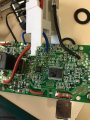
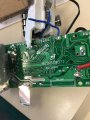
I come across this today, this is a PCB in a lithium battery for a cordless power tool (this: http://www.ryobi.co.nz/power-tools/products/list/family/brushless)

From my quick google search, I can understand that it maybe used to reduce reflection. But I don't understand these curly tracks are required in a lithium battery pack. I mean they don't do high frequency (in GHz range) in these battery right? So why did the design do that?
IMG_3048.JPG IMG_3049.JPG
 

joeyd999

Joined Jun 6, 2011
6,279
That board looks like it was laid out with tape and/or marker. I didn't realize this was done anymore. Very time and skill intensive.

Designed by North Korean workers in a slave shop?
 

Thread Starter

bug13

Joined Feb 13, 2012
2,002
Mmm... date codes suggest it was designed in 2012, lots of free PCB design tools available I believe.
 

GopherT

Joined Nov 23, 2012
8,009
It was done with a PCB drawing tool.
Some people are just insistent about converting corners to a radius (easily done with better tools).

The key indicator that it is a drawing program is that the radius around the vias is too consistent so the "gap" setting on the copper pours is used. See yellow circles. Nobody would cut tape that way.17FA402F-1A74-4483-A23C-E68778352A24.jpeg
 
Last edited:

Non-Sequitur

Joined Oct 27, 2014
85
The problem is that with sharp trace corners the electrons have to slow down too much, and then re-accelerate into the straight PCB trace. With the curved traces, they can lean into the curve and with appropriate safety gear lean all the way over so that their tiny little knees are scraping the trace. This cuts down on the resistance and improves their capacity for maintaining speed along the long PCB traces.

This picture of a high-speed electron leaning into a curved PCB trace was taken with an extremely high resolution electron microscope. Notice the curved trace just off the electron's knee
motorcycle-pictures-1.jpg
 

GopherT

Joined Nov 23, 2012
8,009
The problem is that with sharp trace corners the electrons have to slow down too much, and then re-accelerate into the straight PCB trace. With the curved traces, they can lean into the curve and with appropriate safety gear lean all the way over so that their tiny little knees are scraping the trace. This cuts down on the resistance and improves their capacity for maintaining speed along the long PCB traces.

This picture of a high-speed electron leaning into a curved PCB trace was taken with an extremely high resolution electron microscope. Notice the curved trace just off the electron's knee
View attachment 139964
In my bad-ass projects, the electrons don't wear no stinking helmets.
 

cmartinez

Joined Jan 17, 2007
8,761
I used to draw PCB traces with sharp corners in the old days... until I noticed that the copper started peeling off at those sharp edges, and were also more prone corrosion over time ... those problems disappeared completely after I started drawing traces with a radius of at least 0.031" at the corners.
 

joeyd999

Joined Jun 6, 2011
6,279
I used to draw PCB traces with sharp corners in the old days... until I noticed that the copper started peeling off at those sharp edges, and were also more prone corrosion over time ... those problems disappeared completely after I started drawing traces with a radius of at least 0.031" at the corners.
That's huge compared to the 5 mil track/ space I use in my designs.
 

Tonyr1084

Joined Sep 24, 2015
9,744
Interesting. I find that helmets protect your brain. If you don't have a brain then you don't need a helmet. If you consider the nature of it all; helmet - no helmet - it all seems to sort itself out in the long run. Darwinism I think it's called. That's why I want to call for a ban on warning labels. Let nature solve the problem.
 
Top