Why resistor is used @ feedback?

Thread Starter

0by1

Joined May 10, 2011
11
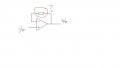
In case of voltage follower, why resistor is used @ feedback??
Is it for current limiting???

I have attached the circuit image.
 

Attachments

kubeek

Joined Sep 20, 2005
5,796
AFAIK if the resistor shown is the same value as the output impedance of the stage before, it helps reducing errors from input current offset.
Or probably just the influence of input current, important for high impedance circuits.
 

praondevou

Joined Jul 9, 2011
2,942
Simply speaking, the Opamp will adjust its output trying to maintain the voltage difference on its input at zero volt. The resistor is the path to do this.

If you take the resistor away and leave the input open or clamp it to some voltage, the opamp output will saturate.
 

davebee

Joined Oct 22, 2008
540
op-amps themselves are built sort of like an incomplete circuit. Before they can do any sort of useful work, the circuit has to be completed with external parts.

They are built with so much voltage gain that they would not work if directly wired as a voltage amplifier; some additional circuitry must reduce the gain to a reasonable level.

The resistor in your diagram feeds the output signal back to the inverting input to reduce the gain to one, making the op-amp into a voltage follower.

Usually the input impedance of an op-amp is so high that very little current would ever flow into the input, so no, the resistor is not needed to limit current.
 

ErnieM

Joined Apr 24, 2011
8,415
AFAIK if the resistor shown is the same value as the output impedance of the stage before, it helps reducing errors from input current offset.
Or probably just the influence of input current, important for high impedance circuits.

QFT. It is there just to match impedance (fancy way of sayin resistance) for both + and - inputs to give the best DC offset possible.
 

Thread Starter

0by1

Joined May 10, 2011
11
Thank you all for your answers:)

Still I am not clarified myself, I am not asking about following resistors
-Gain control FB resistors
-FB resistor in current feedback amplifiers

My question is about feedback resistor, when i/p resistance is infinity in case of voltage follower.
 

praondevou

Joined Jul 9, 2011
2,942
In case of voltage follower, why resistor is used @ feedback??
Is it for current limiting???
Now I got it , you didn't ask why there is a feedback, but why there is a resistor in the feedback and not a short circuit.

As others already said, the only possible reason could be to match the input bias current into the inputs. But on the other side , if the gain is unity, a difference in bias input current wouldn't translate into a big voltage difference at the output.

I think the answer is in the pdf I attached.

"The basic configuration in Figure 1 has a gain of 1 with extremely
high input impedance. Setting the feedback resistor equal to the
source impedance will cancel the effects of bias current if desired."
 

Attachments

Audioguru

Joined Dec 20, 2007
11,248
If your opamp circuit is sensitive to input bias current then why not use a modern opamp that has no input bias current like Jfet input or Cmos opamps?
 

praondevou

Joined Jul 9, 2011
2,942
If your opamp circuit is sensitive to input bias current then why not use a modern opamp that has no input bias current like Jfet input or Cmos opamps?
Yes, you are right. But I guess he just saw the drawing he posted somewhere and was asking himself what it is for. ;)
 

billbehen

Joined May 10, 2006
39
When I was just stating out as a EE, the man I worked for said that some op amps would work with direct connection of output to negative input, but that not all op amps would. Maybe whoever was using the circuit found that the op amp used just latched up without some finite resistance between pins 2 and 6.
 

Adjuster

Joined Dec 26, 2010
2,148
That might well have applied to certain historical op-amps like the 709. More modern amplifiers are less likely to suffer from these problems, and I would say that a resistor is not usual in this configuration unless to balance input bias current voltage drop.
 
Top