Which Semiconductor company writes the best IC datasheets?

Thread Starter

schmitt trigger

Joined Jul 12, 2010
2,027
I know this is a trick question. One cannot compare the datasheet for a 555 to one from an advanced 32 bit microcontroller.
One would have to compare exactly identical ICs, sourced from a multitude of companies, including obscure and defunct ones, in all three continents. In other words, an ubiquitous, low cost, well known, easy to buy IC.

Off my head, I could think of a few candidates, 555, 741, 358, 7805. I am sure there are a few more. From these I chose the 358 because.....reasons.
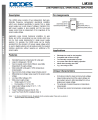
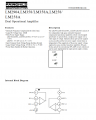
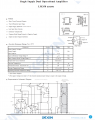
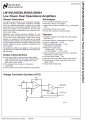
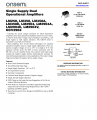
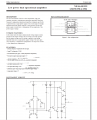
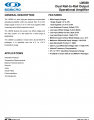
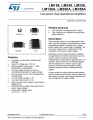
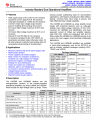
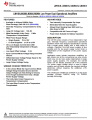
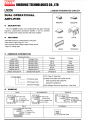
I searched for the datasheets from 10 different companies, and took a screenshot of the front page, which I have attached. You will notice that I included two from Texas Instruments. TI has recently revamped its datasheet portfolio, and greatly expanded the datasheet information with all the myriad variants, but simultaneously becoming more verbose. I prefer their older style.

To me the best looking datasheets are (were) those from National Semiconductor. The font, the way schematics are drawn, the amount and arrangement of the parametric information and relevant circuit examples. To me at least, those datasheets are the gold standard. Of course, other people will have different opinions.
 

Attachments

WBahn

Joined Mar 31, 2012
32,703
Historical data sheets and modern data sheets from the same company are often very different in terms of quality, so that is a huge variable in the mix. Also, most companies have either been bought or have bought others so many times that their current data sheet collection is often a mish-mash of legacy sheets which may or may not have had much effort applied to harmonizing them with the company's other data sheets -- and if they have been harmonized, it has often been a source of introduced errors because the people doing the harmonizing are usually not technically adept and are doing it as grunge work.

Also, even without the company merger/split factor at play, I've found that data sheets from a given company to be pretty variable from one product area to another.

I definitely miss the days of the actual data books, which usually had a lot of articles and application notes in addition to the data sheets. Also, I think that the fact that something was being prepared for print resulted in more time and effort being spent to make it professional quality with an editorial oversight to strive to make it polished and consistently presented throughout. That seems to be lost when everything is just disjointed and separate PDF files on some server somewhere.

I have fond memories of National Semiconductor, Texas Instruments, and Motorola data books. I seem to recall that the early Maxim data sheets were pretty nice, but what was frustrating about them was that, for many years, the books were organized by year of release instead of functionality. While I'm sure that saved time and effort in maintaining their library, it was a nightmare to find the data you wanted unless you just happened to know when the part was first released. That eventually came to a head and they took out a full page ad (in EETimes??) declaring, "We heard you!" when they finally reorganized their data books by functionality. I also seem to recall liking the Analog Devices data sheets because of the wealth of detailed information they usually provided.

Many data sheets today seem to really limit the information they want to provide, making it very difficult to estimate their min/typ/max specs at various operating conditions. Although I seldom actually needed that information, I definitely appreciated it being there when I did. I love seeing lots of curves and plots in a data sheet, even though only a couple are generally relevant to me. But the emphasis today seems to be on "decluttering" the data sheets and making them as short and simple-minded as possible, which is ironic given that they are now almost all exclusively in electronic format instead of taking up physical dead trees. But, apparently, the push in that direction is partly due to feedback that having all of the information at hand is too confusing for a lot of today's engineers -- I actually have no problem believing that, either that they can't comprehend the more information-laden data sheets or that they vocally complain and want any information that they can't grasp removed.
 

WBahn

Joined Mar 31, 2012
32,703
I really miss the internal circuit diagrams!
Agreed. There were a number of times when having those allowed me to estimate parameters that weren't in the datasheet. Or just to understand how something was accomplished or why the chip had certain behaviors and limitations (and sometimes how to get around them).

I do understand that many of today's parts have so much internal circuitry that it is not feasible to provide anything more than a pretty high level block-diagram view of the internals, but still....
 

Ian0

Joined Aug 7, 2020
13,097
Agreed. There were a number of times when having those allowed me to estimate parameters that weren't in the datasheet. Or just to understand how something was accomplished or why the chip had certain behaviors and limitations (and sometimes how to get around them).

I do understand that many of today's parts have so much internal circuitry that it is not feasible to provide anything more than a pretty high level block-diagram view of the internals, but still....
I learned quite a lot about discrete amplifier design by studying the internals of op-amps. (Though I did sometimes wonder where to get a transistor with three collectors)
They also tell you immediately WHY the input common mode range is what it is, or why the output can only swing a certain number of volts from the rails.
The 555 datasheet (or, at least, the one I looked at) didn't specify minimum values for pin 5. That can be determined from the internal circuit.
 
Last edited:

MaxHeadRoom

Joined Jul 18, 2013
30,557
There are data sheets and also application notes. Siemens, Fairchild, and others publish APP notes, typical uses for their products.
 

Ian0

Joined Aug 7, 2020
13,097
Back in the day, you had to buy the databook, unless you could convince the sales rep you would buy lots of components if you had a free databook. Now datasheet are free, but there are "development boards" and they aren't.
 

WBahn

Joined Mar 31, 2012
32,703
Back in the day, you had to buy the databook, unless you could convince the sales rep you would buy lots of components if you had a free databook. Now datasheet are free, but there are "development boards" and they aren't.
I think this was something that came and went. For the most part, I was lucky to be in a sweet spot in the late 80s and early 90s when it was easy to call up most of the companies and just ask for a few data books and even a few sample parts and they sent them to you promptly, for free and they even covered the shipping. I got a lot of sample parts sent to me in a hand-addressed envelope. It was also usually pretty easy to get in touch with an actual engineer. This was especially true as a student, but I also found it to largely be the case as a new engineer at a small company.
 

WBahn

Joined Mar 31, 2012
32,703
Recent datasheets seem to have limited or even no example circuits compared to days of old.
This probably is a direct reflection of the availability of circuits on the Internet, whereas before, it was hard to find example circuits for specific parts. So the manufacturers had to give lots of examples of different kinds of applications for their parts in a place that was easy to find, which meant the data sheet.
 

Ian0

Joined Aug 7, 2020
13,097
I think this was something that came and went. For the most part, I was lucky to be in a sweet spot in the late 80s and early 90s when it was easy to call up most of the companies and just ask for a few data books and even a few sample parts and they sent them to you promptly, for free and they even covered the shipping. I got a lot of sample parts sent to me in a hand-addressed envelope. It was also usually pretty easy to get in touch with an actual engineer. This was especially true as a student, but I also found it to largely be the case as a new engineer at a small company.
I remember telephoning Farnell's techincal department and being sent a datasheet by fax (and if I left it on the desk in the sunlight, it was illegible the next time I needed it)
 

atferrari

Joined Jan 6, 2004
5,001
Application notes from NS were the best!

I bought the whole lot in Brazil. Extremely cheap paper deteriorated along these 30++ years. Had to pay for them dearly in an electronics dedicated bookshop.

The next and last lot were those I asked and received at home directly from them. Incredibly high quality books.

They used to come after all the datasheets.

Also Sensym (pressure sensors) and Motorola (temperature sensors) sent incredibly good manuals with ANs.

Burr Brown had a similar mix including their so many ICs for 4-20 mA circuits.
 

Thread Starter

schmitt trigger

Joined Jul 12, 2010
2,027
Good app notes were the norm, not the exception. And companies would compile them and publish them in handbooks, where one could learn not only about the semiconductor products themselves, but also lots of circuit techniques.

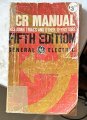
Members here have already discussed handbooks from National, Motorola, TI and others. But an absolute gem is General Electric’s “SCR Manual Including Triacs and other Thyristors”.

This almost 700-page thyristor encyclopedia would provide the most comprehensive treatise on these devices, including discussion of some extraordinary complex circuits like the cycloconverters and resonant-commutated choppers and very obscure semiconductors like the PUT, programmable unijunction transistor and the SUS, silicon unilateral switch.
I still have my well-used 1972 copy.
 

Attachments

Top