What Stabilizes The Electron Orbit In An Atom?

Motanache

Joined Mar 2, 2015
652
this means at that space also stores energy
(about empty space, about electromagnetic waves)
if the electron is such a concentration of energy?

What can happen with electromagnetic radiation (gamma),
when it passes through the proximity of a nucleus,
to transform into electron and positron? (pairs generation)

How can we transform (with imagination) a wave which propagates rectilinearly in space in a stationary wave (the electron)?


To be stationary wave must have 2 reflective surfaces:
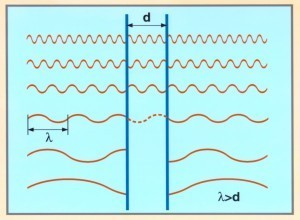
(Casimir Effect)
 

Papabravo

Joined Feb 24, 2006
22,083
Looking at a focused beam of particles aimed at a dense target you still have a great deal of empty space. A large number of particles will go through the atomic structure of a metal like gold for example without being scattered at all. Some percentage of particles will scatter into an annular ring and you can't really distinguish the individual particles or the tracks to say what is happening.
 

Thread Starter

Glenn Holland

Joined Dec 26, 2014
703
I've done a lot more reading about quantum mechanics and electron stability and here's another question:

I'm wondering what would happen if a hydrogen atom is ionized and the electron is allowed to "drop back" into the remains of the atom.

If the path of the electron is tangent to any of the possible orbital shells, it will be captured in the shell of the ground state which is the lowest stable state. However, what would happen if the electron drops straight toward the nucleus? In that case, it seems the electron could not enter the ground state (or any other state) and it would hit the nucleus and form a neutron.
 

nsaspook

Joined Aug 27, 2009
16,344
I've done a lot more reading about quantum mechanics and electron stability and here's another question:

I'm wondering what would happen if a hydrogen atom is ionized and the electron is allowed to "drop back" into the remains of the atom.

If the path of the electron is tangent to any of the possible orbital shells, it will be captured in the shell of the ground state which is the lowest stable state. However, what would happen if the electron drops straight toward the nucleus? In that case, it seems the electron could not enter the ground state (or any other state) and it would hit the nucleus and form a neutron.
Not going to happen outside a neutron star. What is a neutron (fermion bound by the strong force ) and what is a hydrogen atom (boson bound by the electromagnetic force)?
http://www.physlink.com/education/askexperts/ae688.cfm

 
Last edited:
Top