Facebook
 Google
 GitHub
 Linkedin
In order for electrons to leave their lower shells to higher shells, they need energy i.e voltage. Electrons also move from high concentration to lower concentration.
If we take a single piece of N-type (which is not joined with P-type piece) and connect one side of N-type with negative terminal of a battery and another side with a positive terminal of a battery, there will be a current. And if we connect the terminals again but oppositely, there will also be a current going in opposite direction.
If we take a single piece of P-type (which is not joined with N-type piece) and connect one side of P-type with negative terminal of a battery and another side with a positive terminal of a battery, there will be a current. And if we connect the terminals again but oppositely, there will also be a current going in opposite direction.
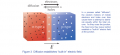
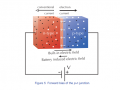
If we connect these two pieces together, high concentration of electrons from N type would naturally migrate into low concentration of electrons on P type, resulting in negative charge depletion layer on P type, and a positive charge depletion layer on N side, which will prevent further migration.
My question, why can’t the N electrons that got combined in P side to form a PN junction move further into P side? Is it because there’s no enough energy for that (i.e no voltage?) to excite electrons? If the answer is the depletion layer has become depleted of free carriers to do that, please continue reading below.
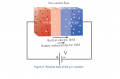
If the PN junction is physically there in forward bias(if it doesn’t disappear), why dont electrons that got pushed from N type to P type widen the PN junction as they also get recombined as mentioned in the above paragraph?
If the PN junction disappears in forward bias, why can’t current flow in reverse bias? As the electrons can move both sides in single pieces of either N type or P type. So if the electrons started to flow from P type, they should also flow to N type in the same direction?
If we take a single piece of N-type (which is not joined with P-type piece) and connect one side of N-type with negative terminal of a battery and another side with a positive terminal of a battery, there will be a current. And if we connect the terminals again but oppositely, there will also be a current going in opposite direction.
If we take a single piece of P-type (which is not joined with N-type piece) and connect one side of P-type with negative terminal of a battery and another side with a positive terminal of a battery, there will be a current. And if we connect the terminals again but oppositely, there will also be a current going in opposite direction.
If we connect these two pieces together, high concentration of electrons from N type would naturally migrate into low concentration of electrons on P type, resulting in negative charge depletion layer on P type, and a positive charge depletion layer on N side, which will prevent further migration.
My question, why can’t the N electrons that got combined in P side to form a PN junction move further into P side? Is it because there’s no enough energy for that (i.e no voltage?) to excite electrons? If the answer is the depletion layer has become depleted of free carriers to do that, please continue reading below.
If the PN junction is physically there in forward bias(if it doesn’t disappear), why dont electrons that got pushed from N type to P type widen the PN junction as they also get recombined as mentioned in the above paragraph?
If the PN junction disappears in forward bias, why can’t current flow in reverse bias? As the electrons can move both sides in single pieces of either N type or P type. So if the electrons started to flow from P type, they should also flow to N type in the same direction?