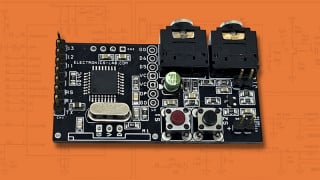
What is an OctalPlus Board?

Thread Starter

ESSO

Joined Feb 14, 2015
30
Hi Everyone,

I am looking to learn more about this board OctalPlus - Looks like it is a board to control communication between a host computer and a Robot Controller - Our Robot at work failed to perform an action and my logs read -
Read failed due to error 995 on com port OctalPlus0_B,
ALARM ::OctalPlus0_B: The RS232 hardware detected a break condition,

I am trying to learn more in details what this board does and if error 995 is an industry standard error code and it will point me into the correct direction for TS.

Thanks in advanced

gesso
 

KeithWalker

Joined Jul 10, 2017
3,606
Hi Everyone,

I am looking to learn more about this board OctalPlus - Looks like it is a board to control communication between a host computer and a Robot Controller - Our Robot at work failed to perform an action and my logs read -
Read failed due to error 995 on com port OctalPlus0_B,
ALARM ::OctalPlus0_B: The RS232 hardware detected a break condition,

I am trying to learn more in details what this board does and if error 995 is an industry standard error code and it will point me into the correct direction for TS.

Thanks in advanced

gesso
RS232 error code 995 indicates that communication was aborted. To find out more specific information you will have to contact the manufacturer of your host computer software.
 

MisterBill2

Joined Jan 23, 2018
27,501
Have you tried to do a reset? If the robot is somehow connected to the internet there may have been a hacking attempt.
What brand of robot?
 

MisterBill2

Joined Jan 23, 2018
27,501
OK, if it was indeed an extended logic low, that may be an indication of an open circuit momentarily in a communications line. It is hard to see the difference between zero and nothing. Thus the first move could be to check for a loose connection. Intermittent electrical connections are a difficult fault to locate most of the time. And sometimes they get fixed without really knowing just what was wrong. That is a spooky situation.
 

WBahn

Joined Mar 31, 2012
32,823
OK, if it was indeed an extended logic low, that may be an indication of an open circuit momentarily in a communications line. It is hard to see the difference between zero and nothing. Thus the first move could be to check for a loose connection. Intermittent electrical connections are a difficult fault to locate most of the time. And sometimes they get fixed without really knowing just what was wrong. That is a spooky situation.
Proper RS-232 transmits a zero as a positive voltage between +3 V and +25V while a one is transmitted as a negative voltage between -3 V and -25 V. The gap from -3 V and +3 V is there specifically to be able to detect open line conditions. Now, that's "standard" RS-232. The levels that are actually used by both transmitter and receiver vary all over the place and many receivers move the threshold for a zero down to +2 V and the one up to around +1 V so that they can be compatible with TTL logic levels.
 
The levels that are actually used by both transmitter and receiver vary all over the place and many receivers move the threshold for a zero down to +2 V and the one up to around +1 V so that they can be compatible with TTL logic levels.
Isn't that the truth. There is no such thing as "TTL RS322:, but it;s called that. It's usually a serial port with inverted TTL levels.
 

MisterBill2

Joined Jan 23, 2018
27,501
Isn't that the truth. There is no such thing as "TTL RS322:, but it;s called that. It's usually a serial port with inverted TTL levels.
I have come across serial communications ports using the identical protocol as RS232, but with much lower voltages, like +5 and -5 volts instead of the +/- 12 or 15 volts. That was quite a few years ago, long before USB was unleashed on us. How else would it be described?
 

WBahn

Joined Mar 31, 2012
32,823
I have come across serial communications ports using the identical protocol as RS232, but with much lower voltages, like +5 and -5 volts instead of the +/- 12 or 15 volts. That was quite a few years ago, long before USB was unleashed on us. How else would it be described?
+/- 12 V is quite common and is completely compliant.

The standard doesn't REQUIRE that the transmitter go all the way to +/- 24 V. Even +/- 5 V is compliant.

But 0 V and 5 V isn't, but it is commonly found.
 

Thread Starter

ESSO

Joined Feb 14, 2015
30
Thanks all for the feedback - as of now - In order to get the Robot to work and initialized we went through several parts/components still unclear of the root cause but - So far everything point towards a break in a Cat-Track cable that carries the Power/Signal and/or a Bad Robot axis - damaging the axis board when the robot was at a specific location.
 

MisterBill2

Joined Jan 23, 2018
27,501
Thanks all for the feedback - as of now - In order to get the Robot to work and initialized we went through several parts/components still unclear of the root cause but - So far everything point towards a break in a Cat-Track cable that carries the Power/Signal and/or a Bad Robot axis - damaging the axis board when the robot was at a specific location.
A cable break in such a hi-flexing location is certainly a reasonable diagnosis
 
Top