What capacitor for 12V 1A source

Thread Starter

NVZN1

Joined Dec 17, 2016
35
So I have designed a relay that automatically switch to battery source input if blackout happens, to power my 12V wifi.

But the relay has 1 second delay to switch to battery input.

Many people suggest me to get a capacitor, to buy time waiting relay to switch.

Question is : how much uf?

I was thinking to get 4700uf 35V x2 (paralel, so it must be around 9400uf 35v)

All is in DC. 12V. Thank you!
 

Ian0

Joined Aug 7, 2020
13,098
The equation you need is V=It/C.
How much drop in voltage will it stand? That's the V in the equation.
I is the current it is using.
C=It/V (by rearranging above)
 

Thread Starter

NVZN1

Joined Dec 17, 2016
35
The equation you need is V=It/C.
How much drop in voltage will it stand? That's the V in the equation.
I is the current it is using.
C=It/V (by rearranging above)
What's "t" for?

C=800mA/12V then?

C=66.6? I need 6k uf?

Sorry my newbie level.. I'm not from electronics background.
 

Ian0

Joined Aug 7, 2020
13,098
t is the time (which you said was 1 second)
V is the amount that the voltage may drop without causing the equipment to shut down or otherwise misbehave.
If it will still function at 10V, then V=2V
If it will still function at 9V, then V=3V

The answer will be in Farads.
 

Juhahoo

Joined Jun 3, 2019
302
So I have designed a relay that automatically switch to battery source input if blackout happens, to power my 12V wifi.

But the relay has 1 second delay to switch to battery input.
You designed the relay system, and then there is a one second delay !? Why dont you redesign the relay system to remove that one second delay, would be the easiest solution.
Share how did you design the relay that has one second delay so it maybe can fixed first.
 

Ian0

Joined Aug 7, 2020
13,098
I'd take out the relay and just use two Schottky diodes. One in the 12V supply from the PSU, and one in the positive supply from the battery. Or perhaps I might power it from a battery kept on 13.65V float-charge.

But the question was how to calculate the size of the capacitor!
 

Juhahoo

Joined Jun 3, 2019
302
I'd take out the relay and just use two Schottky diodes. One in the 12V supply from the PSU, and one in the positive supply from the battery. Or perhaps I might power it from a battery kept on 13.65V float-charge.

But the question was how to calculate the size of the capacitor!
Don't fix things with pile of capacitors. How do you charge the huge capacitor bank when the system gets empty? It will create so enormous surge, have you though of that ?
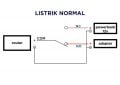
If you have a Diode, bypass the relay and after one second relay will take over the diode.
1630323661220.png
 

Thread Starter

NVZN1

Joined Dec 17, 2016
35
You designed the relay system, and then there is a one second delay !? Why dont you redesign the relay system to remove that one second delay, would be the easiest solution.
Share how did you design the relay that has one second delay so it maybe can fixed first.
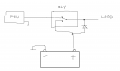
This is my diagramFB_IMG_1630430899948.jpgUsing a 12V relay arduino module. Low trigger. I simply put GND to IN pin in the relay. When the main power loses energy (blackout) the relay itself LED indicator still lit around 600ms (not one second, half) and then the relay will click to their default state.

The battery source itself is two option :

3s 18650
Or
A powerbank with 5v to 12V step up product.

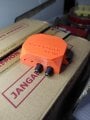
I made it universal socket, DC jack 5.5mm. Probably I will go to 3s 18650. Because powerbank auto off can't wake itself up when main power goes offline..

My electronic skill is still basic though, and I only could think about NO NC relay could work. Is there any other solution?
IMG_20210830_232552.jpg
I don't want to include auto charge feature to the 3s 18650, I want to make it just idle. Charge manually. I heard keeping 18650 fully charged is bad for long run, so I'll just keep it at 80% charged, and charge manually (that's why I put DC jack, easy take out plug in) what's your suggestion? Thank you for answer!
 

Thread Starter

NVZN1

Joined Dec 17, 2016
35
Don't fix things with pile of capacitors. How do you charge the huge capacitor bank when the system gets empty? It will create so enormous surge, have you though of that ?
If you have a Diode, bypass the relay and after one second relay will take over the diode.
View attachment 246878
This is interesting, what specs of diodes I could put? I haven't got many experience with diodes, all I Know diodes is just to prevent reverse polarity. Gotta learn new things!

I read by your diagram, so the diode will take over for a bit while waiting the relay loses power completely and click?
 

Thread Starter

NVZN1

Joined Dec 17, 2016
35
t is the time (which you said was 1 second)
V is the amount that the voltage may drop without causing the equipment to shut down or otherwise misbehave.
If it will still function at 10V, then V=2V
If it will still function at 9V, then V=3V

The answer will be in Farads.
So..
Wait, current in A or mA? I assume it's A.
Acutally it's less than one second, around 600ms.
Soo..
C= 0.8*0.6/2
C= 0.24 farads.
Convert to microfarad (uf) then I Need... 240k uf? Sorry my newbie level :(
 

Ian0

Joined Aug 7, 2020
13,098
So..
Wait, current in A or mA? I assume it's A.
Acutally it's less than one second, around 600ms.
Soo..
C= 0.8*0.6/2
C= 0.24 farads.
Convert to microfarad (uf) then I Need... 240k uf? Sorry my newbie level :(
Yes.
ALWAYS do your calculations with the base units. i.e. work it out in Amps, Farads, Volt etc. not milliamps, microfards etc.
Otherwise you'll end up with the wrong answer.
And 240,000μF is the right answer, and 600ms is a really slow relay.
 

Juhahoo

Joined Jun 3, 2019
302
This is interesting, what specs of diodes I could put? I haven't got many experience with diodes, all I Know diodes is just to prevent reverse polarity. Gotta learn new things!

I read by your diagram, so the diode will take over for a bit while waiting the relay loses power completely and click?
As soon as the PSU drops off diode starts to conduct and source energy to your load from the battery. Once the relay activates after one second, diode no longer is part of the circuit because relay takes over and shorts the diode. What is exactly the PSU output voltage ?, Is battery always fully charged ? PSU should have equal or slightly higher voltage than the battery, else the diode will conduct constantly and drains your battery.

Diode must be rated to higher current than your maximum load current.
 

Thread Starter

NVZN1

Joined Dec 17, 2016
35
As soon as the PSU drops off diode starts to conduct and source energy to your load from the battery. Once the relay activates after one second, diode no longer is part of the circuit because relay takes over and shorts the diode. What is exactly the PSU output voltage ?, Is battery always fully charged ? PSU should have equal or slightly higher voltage than the battery, else the diode will conduct constantly and drains your battery.

Diode must be rated to higher current than your maximum load current.
PSU output voltage : 12.1V (its the wifi router adaptor itself)
Battery Voltage : 12.6V

about battery, im planning to stay at 80% charged.

hmm so diodes not good for this application? hmmm..

Or else i just let it offline for a second.. when the battery kicks in the router will automatically restarts.
Much less hassle i guess.. hmm...
 

Thread Starter

NVZN1

Joined Dec 17, 2016
35
Yes.
ALWAYS do your calculations with the base units. i.e. work it out in Amps, Farads, Volt etc. not milliamps, microfards etc.
Otherwise you'll end up with the wrong answer.
And 240,000μF is the right answer, and 600ms is a really slow relay.
i will calculate again the time. 600ms still is rough estimation though.

damn, 240k uf is quite huge. I just bought a 4700uf 35V x 2 caps, was going to paralel that to achieve 9400uf.. (other community said aim for 10k uf, it should be enough, they said)
 

Ian0

Joined Aug 7, 2020
13,098
ther community said aim for 10k uf, it should be enough, they said)
That's the sort of answer you get by guesswork!

You can work it back the other way: V=It/C
It/C = 0.6 * 0.8 / 10000*10^-6 = 48V
Clearly you can't lose 48V off a 12V supply so the answer is nonsense, but it shows it will run out of voltage before the relay clicks in.
Alternatively t=VC/I which gives 150ms for the supply to drop to zero, and long before that the equipment will have ceased to function - gone into some brownout state or reset.

Why don't you get a lead-acid battery, and keep it on float-charge at 13.65V. The load connects directly across the battery. There is no switching required, as soon as the power supply fails the battery takes over seamlessly
 

Juhahoo

Joined Jun 3, 2019
302
PSU output voltage : 12.1V (its the wifi router adaptor itself)
Battery Voltage : 12.6V

about battery, im planning to stay at 80% charged.

hmm so diodes not good for this application? hmmm..

Or else i just let it offline for a second.. when the battery kicks in the router will automatically restarts.
Much less hassle i guess.. hmm...
Diode is good, keep the battery voltage the same as the PSU or add two diodes in series to make sure the battery voltage is lower than PSU and skip the capacitor bank, such a waste of money and space.
Get yourself a diode like 1N4007, it will hold for 1Amp and that's all you need, higher amperage diode wont hurt either..
 

Thread Starter

NVZN1

Joined Dec 17, 2016
35
That's the sort of answer you get by guesswork!

You can work it back the other way: V=It/C
It/C = 0.6 * 0.8 / 10000*10^-6 = 48V
Clearly you can't lose 48V off a 12V supply so the answer is nonsense, but it shows it will run out of voltage before the relay clicks in.
Alternatively t=VC/I which gives 150ms for the supply to drop to zero, and long before that the equipment will have ceased to function - gone into some brownout state or reset.

Why don't you get a lead-acid battery, and keep it on float-charge at 13.65V. The load connects directly across the battery. There is no switching required, as soon as the power supply fails the battery takes over seamlessly
Didnt keeping lead acid battery stays at float charge will shorten the battery lifespan significantly? (float charge means it is always connected to a charger)?
 

Thread Starter

NVZN1

Joined Dec 17, 2016
35
Diode is good, keep the battery voltage the same as the PSU or add two diodes in series to make sure the battery voltage is lower than PSU and skip the capacitor bank, such a waste of money and space.
Get yourself a diode like 1N4007, it will hold for 1Amp and that's all you need, higher amperage diode wont hurt either..
oh right, the diode itself drawing some power right? voltage drop around 0.6V i think. So it could work (psu 12.1v) Battery (12.0v)? hmm i'll take a consideration and research!
 

Juhahoo

Joined Jun 3, 2019
302
damn, 240k uf is quite huge. I just bought a 4700uf 35V x 2 caps, was going to paralel that to achieve 9400uf.. (other community said aim for 10k uf, it should be enough, they said)
240kuF
oh right, the diode itself drawing some power right? voltage drop around 0.6V i think. So it could work (psu 12.1v) Battery (12.0v)? hmm i'll take a consideration and research!
Sure, 0.7V drop * ~0.5A = 350mW, but that's only during the relay delay <1second.
Diodes are the most typical way of making load sharing systems, however they are power consuming but in this case it has no meaning since the relay is the primary switch carrying most of the energy.
 

Ian0

Joined Aug 7, 2020
13,098
Didnt keeping lead acid battery stays at float charge will shorten the battery lifespan significantly? (float charge means it is always connected to a charger)?
You can get batteries designed for that type of use, guaranteed to last 12 years. They are used in backup power supplied (emergency lighting, for instance)
 
Top