What Are I/O Resistors?

Thread Starter

t_glover

Joined Mar 16, 2021
56
What are I/O resistors? I am working on an Isuzu N series truck with a 5.2 litre diesel engine. It logged a fault code for high temperature in urea reductant tank. I scanned the truck and it reads 176F. It should have read around 60F.
There is a temp sensor in the tank and according to the shop manual it is a I/O resistor. I did a quick search of the internet for I/O resistor but did not find much.
I would have expected the temp sensor to be a simple thermistor. The operating temperature range is around -15F to 150F .
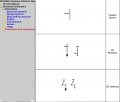
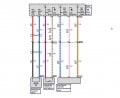
I am attaching a couple pages out of the manual.
tank.jpgisuzu.jpg

Terry
 

MrChips

Joined Oct 2, 2009
34,629
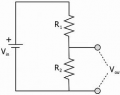
I/O resistor means that there is either a pull-up or pull-down resistor connected to the sensor so as to create a voltage divider.

1718394912226.png

If R1 is the sensor then R2 is the pull-down resistor.
If R2 is the sensor then R1 is the pull-up resistor.
 

MisterBill2

Joined Jan 23, 2018
27,193
Posts #2 and #3 reference the common meaning of I/O resistor, and that is what I would also guess.
BUT it seems that somebody chose to use the term to mean something else. I CALL THAT A STUPID MOVE.
Evidently it is part of the undefined 3-terminal block connected by J-107
My guess is that it is a thermister biased by a resistor internal to the controller module to indicate the fluid temperature. Evidently the measured value is outside the limits.
So if that resistor is not damaged or defective then I suggest checking the connections of those three wires between the control module and that temperature/level monitor in the tank.

And it is rather obvious that whoever produced the documentation was not aware of electrical circuit details. The I/O resistors are inside the module.
 

narkeleptk

Joined Mar 11, 2019
586
I/O resistor means that there is either a pull-up or pull-down resistor connected to the sensor so as to create a voltage divider.

View attachment 324675

If R1 is the sensor then R2 is the pull-down resistor.
If R2 is the sensor then R1 is the pull-up resistor.

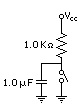
This is essentially how this ECU (and many others) handle many of the sensors:

A 5V supply from the ECU is passing through a resistor, which acts as a pull-up for the microcontroller's (MCU) input/output (I/O) that serves as the sensor's input. Its pretty basic design for most all sensors but not all auto wiring diagrams will show you it. In fact most do not these days. I think they used to add it to help techs with diagnosis. (e.g. knowing they should see 5V's on the circuits signal side even with sensor unhooked)

You can easily test this circuit using a 1k potentiometer in place of the sensor and monitoring changes in live data using a scan tool.
 

Thread Starter

t_glover

Joined Mar 16, 2021
56
This is the first urea tank I have seen that did not use the J1939 data link to monitor the tank sensors.
Its also the only one I have seen that does not have a urea quality sensor.
For a small fee I was able to get access to Isuzu's service portal and download the wiring diagrams and connector pin outs. It even has a good component locator. The Emissions Control Unit is located behind the front bumper, one of the last places I would have looked.
I have a 5k potentiometer sitting with the diagrams for for later in the week when I return to work.
 

Wendy

Joined Mar 24, 2008
23,798
If you send a current down the wire to the sensor the sensor can signal (as in a LED) and tell you it is connected.
 

MisterBill2

Joined Jan 23, 2018
27,193
Certainly the documentation was not done by anyone with electronic knowledge. The I/O resistors are INSIDE the ECU, not outside, used as sensors. So that would be rather confusing. More confusing: I/O resistor is an application description, not a part description.
And putting an electronics package behind the front bumper, it would not last one winter around here where roads get salted a ton per mile.
 

narkeleptk

Joined Mar 11, 2019
586
The I/O resistors are INSIDE the ECU, not outside
That is exactly what the diagram shows. On auto diagrams when things are inside the box for labeled module that means its inside the module.

Certainly the documentation was not done by anyone with electronic knowledge.
I doubt that. I think the main intent is to make it understandable for the automotive technicians who work on the cars. Since they do not typically have very deep electronic knowledge, it is simplified to show basic information. You have to keep in mind with this wiring diagram there is typically a flow chart for technicians to follow with a DMM. The basic information that 5V is coming out of ecu through X wire and ground from X wire is enough to follow the flow chart with zero understanding of electronics. They also will measure resistance sometimes so perhaps the resistor is shown in diagram on pin X for that reason.
 

geekoftheweek

Joined Oct 6, 2013
1,429
Certainly the documentation was not done by anyone with electronic knowledge. The I/O resistors are INSIDE the ECU, not outside, used as sensors. So that would be rather confusing. More confusing: I/O resistor is an application description, not a part description.
And putting an electronics package behind the front bumper, it would not last one winter around here where roads get salted a ton per mile.

Did you consider maybe they are referring to the resistors shown in the ECU as the diagrams match exactly what it shown there? Maybe the IO resistors are the first half of the voltage divider and they just didn't draw the bottom half in the sensor itself. Look at the EGT sensor signal for further explanation...

Edit...

Being an Isuzu unit English is most likely not the native language of whoever wrote the documentation. Consider that next time before bashing something you don't understand.
 
Last edited:

geekoftheweek

Joined Oct 6, 2013
1,429
For a small fee I was able to get access to Isuzu's service portal and download the wiring diagrams and connector pin outs. It even has a good component locator. The Emissions Control Unit is located behind the front bumper, one of the last places I would have looked.
That is the best thing you could have done for yourself!!!

I have seen over and over again on here people basically throwing out guesses for problems with no real documentation to go off of (I'm guilty of the same myself). Guesses will only get you so far, but 99% of the time manufacturer's documentation will either give you the answer or point you in the direction to find the answer.
 

geekoftheweek

Joined Oct 6, 2013
1,429
This is the first urea tank I have seen that did not use the J1939 data link to monitor the tank sensors.
I can't say for sure since it's been a while since I left that line of work and I didn't do too much with them, but I'm pretty sure the Detroit Diesels are basic analog type sensors also. The ACM (aftertreatment control module) is right next to the tank. The DPF / DOC temperature sensors are also your basic thermistor sensors. NOx sensors are J1939 though.
 

MisterBill2

Joined Jan 23, 2018
27,193
If we agree that those {/O resistors are internal to the module, and are actually pull up or pull down resistors, , which I would agree with, then what is this: "There is a temp sensor in the tank and according to the shop manual it is a I/O resistor. " That seems to be a biy confusing.
 

geekoftheweek

Joined Oct 6, 2013
1,429
"There is a temp sensor in the tank and according to the shop manual it is a I/O resistor. " That seems to be a biy confusing.
OK. I see now where things are coming from. It is a bit confusing, but at the same time it's probably more of a translation error than someone not knowing what they are talking about. In a round about sort of way it is still an I/O resistor since it is a resistor in an I/O circuit... just not what you would expect.

The first thing I thought of when I read this thread is the manuals for a Japanese molder I read at a previous job to keep myself from falling asleep one day. Some of the sentences were pure comedy, but they made their point. One indicator had the words all out of order, but it still made sense.
 

Thread Starter

t_glover

Joined Mar 16, 2021
56
In the top diagram it refers to the diesel exhaust fluid tank and temperature Sensor. Is should have read: diesel exhaust fluid tank level and temperature Sensor. The level sensor consists of a number of reed switches and resistors with the reeds switches being activated by a float with a magnet in it, which is not shown in the diagram.
This truck with its electrical problem will probably be today's or tomorrows project. I will update with what I find.
 

MisterBill2

Joined Jan 23, 2018
27,193
My dealings with Japanese built industrial robots documentation in the distant past showed an intention to not provide any information than they had decided I needed to know. That included cables with different labels on opposite ends, rather than conductor numbers. That was done so that it would be much more difficult to understand what the circuits did. It only told where to connect each wire. It seemed that the intention was to not provide any help to those who would service the system. The wiring diagrams shown indicate the same intention, as I see it.
 
Top