VW - not so "Clean Diesel"

nsaspook

Joined Aug 27, 2009
16,363
That's my argument on the whole emissions level thing. What is the actual reductions for each level when compared to the original nonemison base line using modern fuels in a older engine design? Cheating and not meeting an 80% change level sounds like a major thing but when it's actually 20% of 20% of 20% of 20% instead of 20% of 20% of 20% of 20% of 20% it's not a huge number. It's insignificantly tiny. :(
That's a great argument for VW vs EPA/CARB in a regulations case but not a good one to use in a admitted criminal case like this one. Your honor, my client only cheated by transferring fractions of a penny from millions of transaction to his account but the bank is worth $25 billion dollars. It's insignificantly tiny. Hand-waving at its finest to bad facts.
 

tcmtech

Joined Nov 4, 2013
2,867
I disagree. Not meeting an unrealistic compliance that when viewed against its true context and value when compared to everything else of similar effects natural or otherwise is meaningless is not theft.

To me it's like mandating that all homes must have electric heat because it's 98% (+-1%)efficient over gas that is 80% efficient then mandating they should have lightbulbs that are 99 % efficient rather than 90 % efficient in order to reduce electrical energy consumption.

The first mandate made a major change in overall energy efficiency and is largely justifiable. The second one when viewed against the measured gains of the first is largely irrelevant because it falls right at the border of the variable +- 1% aggregates of the first mandate.

Now take mandate two and it's focus four more times over on light bulbs again until you are at a mandate to have 99.999% efficient lighting in you electrically heated house. Sure the last mandate required another 80% increase in efficiency when compared to the last one that required lighting to be 99.99 % efficient.

Mandate 5 sounds great again being it's another 80% gain and when spread over millions of homes that last mandate saves a few hundred kilowatts of power and to anyone who has no clue about overall energy levels of any stage of mandates nor understands basic math it sounds super being 5 levels of 80% energy efficiency have been gained!
However until measured against mandate one, that saved Quadriwatts of energy, and mandate 2, that saved gigawatts, and as the end consumer each tier of mandates cost you $10,000 to comply and the investments for mandates 3 through 5 each cost you $10,000again while saving you $1000, then $100, and then finally $10 for a total outlay of $30,000.

Tier one mandate saved you $100,000 over your lifetime for a $10,000 investment. Justified.
Tier two saved you $10,500 over you lifetime for a $10,000 second investment. Barely justified.
But by tier 5 you have spent $30,000 more to save yourself $1110. Now who's really stealing from whom and letting it happen?:oops:

That's what I am talking about. Saving 80% of a penny is not of the same measurable value as saving 80% 0f a thousand dollars nor worthy of equal expense and effort to achieve.

At some point the cost and effort to save outweighs the value of what is being saved. Which when the numbers of emissions reductions VS costs Vs actual measured reduction from the initial starting point everything past tier 3 is pointless. 20% of 20% of (20% (+-1%)) :(
 
Last edited:

nsaspook

Joined Aug 27, 2009
16,363
Last edited:

cmartinez

Joined Jan 17, 2007
8,791
I need you as my lawyer when I've knowingly violated some completely unrealistic RCRA compliance requirement. :)
I don't know how things work in the U.S., or in the international arena, for that matter. But in my country, a contract is automatically invalidated if it contains a clause that is scientifically impossible to meet.
 

nsaspook

Joined Aug 27, 2009
16,363
I don't know how things work in the U.S., or in the international arena, for that matter. But in my country, a contract is automatically invalidated if it contains a clause that is scientifically impossible to meet.
It's scientifically possible to meet so you can't win that argument. The cost/benefit ratio is what kicks your behind.
 

tcmtech

Joined Nov 4, 2013
2,867
Doing some more digging today.

Pre emissions engines baseline numbers. (Giant pumpkins of death)
https://www3.epa.gov/ttnchie1/conference/ei13/mobile/helmer.pdf

Tier 0 and tier 1 specs by engine capacity. (watermelons of mild irritation)
https://www.dieselnet.com/standards/us/nonroad.php#tier3

Tier 4 specs by engine capacity. ( raisins of imperceptibility)
https://www.dieselnet.com/standards/us/nonroad.php#tier4

The numbers through the years.
https://www.dieselnet.com/standards/us/hd.php

HMM........ After tier 2 there is an obvious drop in rates of returns Vs efforts and costs involved and in comparison to pre-emissions number the changes between tier 3 and tier 4 are almost imperceivable considering the efforts and costs involved to meet that last tier step. :rolleyes:

So is VW's lying and cheating about meeting tier 4 requirements but only achieving actual tier 3 levels really grossly affecting the environment compared to what a non-emissions-compliant equivalent number of vehicles would contribute?

Rather looks like a comparison of giant pumpkins to grapes to raisins by the numbers. :rolleyes:
 
Last edited:

tcmtech

Joined Nov 4, 2013
2,867
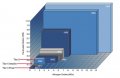
For those who might have a hard time visualizing the various numbers and how they compare from pre-emissions days (before ~1970) to present.
Emission tier comparison.jpg

That's how it looks comparing today's present standard to the pre-emissions days level. :rolleyes:
 

Thread Starter

GopherT

Joined Nov 23, 2012
8,009
For those who might have a hard time visualizing the various numbers and how they compare from pre-emissions days (before ~1970) to present.

That's how it looks comparing today's present standard to the pre-emissions days level. :rolleyes:
And this is what the air looked like in 1970. I understand your frustration but your perspective from a town of 350 people is much different than the perspective of people who walk sidewalks of manhattan where there are 25000 people per square mile and tall buildings to trap all of the NOx. Just because numbers are down to a fraction of a percent doesn't mean it is at a healthy level.

image.jpg
 

Thread Starter

GopherT

Joined Nov 23, 2012
8,009
Wonder how VW feels now about their decision to cheat, instead of just using DEF/blue fluid?

Nobody at VW will ever ask that question. What will happen? All kinds of employee training on ethics, sustainable business models, competition laws (anticompetitive practices) and many others with the implication that a low level or mid-level employee was responsible for the decision to cheat and, additionally implies, ethics training will solve the issue and the training will insure that it never happens again.
 

tcmtech

Joined Nov 4, 2013
2,867
And this is what the air looked like in 1970. I understand your frustration but your perspective from a town of 350 people is much different than the perspective of people who walk sidewalks of manhattan where there are 25000 people per square mile and tall buildings to trap all of the NOx. Just because numbers are down to a fraction of a percent doesn't mean it is at a healthy level.

View attachment 104862

Oh, it gets even worse when you throw the actual financial cost in behind each tier change.

Here's that actual financial outlay for getting to where we are.
http://www.theicct.org/sites/default/files/publications/ICCT_LDVcostsreport_2012.pdf

Going from tier 0 no emissions to tier 3 which was a massive 98% reduction took about 1/3 of what it cost to go from tier 3 to tier 4 which was the equivalent of going from 98% to ~99.5% reduction.

BTW the vast majority of the smog, as shown in pictures from back then, was from coal-burning heating systems in the cities not the vehicles themselves.
Vehicles only represented about 10% of that at best and with the reformulations of fuels that number was cut significantly despite that fact that at the time vehicles with any type of emissions systems still represented a minority of the vehicles on the roads.
The switch to natural gas for city-based commercial and residential heating plus the reformulation of gasoline did the majority of the smog clean up. Not the early emission system that were only on a handful of vehicles at the time.

Giving automotive emissions system credit for the smog clean up is about as valid as giving EV's of today credit for airborne diesel particulate reductions in cities. :(
 

JoeJester

Joined Apr 26, 2005
4,390
What I never see discussed is the additional cost to the consumer.

There is a breaking point in this at any cost dictates of the government.

Laws can be repealed. Nothing is etched in stone.

I remember the smog alerts and the recommendations to not leave the home to go to work in NYC.

Yes the problem can be solved. At what cost is yet to be determined.
 

#12

Joined Nov 30, 2010
18,224
I need you as my lawyer when I've knowingly violated some completely unrealistic RCRA compliance requirement with common chemicals. :)
I used to say, "I know more about electrons than most people know about water."
Then I found out I had set a very low standard for my bragging.:(
I still act like most people aren't blatantly stupid, but I classify that as a social skill, not a fact.:D
 

Thread Starter

GopherT

Joined Nov 23, 2012
8,009
What I never see discussed is the additional cost to the consumer.

There is a breaking point in this at any cost dictates of the government.

Laws can be repealed. Nothing is etched in stone.

I remember the smog alerts and the recommendations to not leave the home to go to work in NYC.

Yes the problem can be solved. At what cost is yet to be determined.
Another new record was set for number of automobiles produced and sold in the US in 2016. No matter what your concern is, I don't think we hit a breaking point yet.
 

tcmtech

Joined Nov 4, 2013
2,867
What I never see discussed is the additional cost to the consumer.

That link I have in post 412 shows the basics behind it in both European and US emissions standards.

In US terms going from Tier 3 to Tier 4 in a diesel is roughly $1000 per liter of engine displacement which is also a rough doubling of the cost to build the engine itself.

Add in that a Tier 4 compliant diesel now has similar to even lower average fuel economy and power numbers to it gasoline burning equivalent plus a higher cost per mile operating and maintaining price tag and it's not too hard to see that for the customer we are really taking it in the shorts on this all for an actual ~1 - 2% further improvement in emissions numbers. :mad:
 

Thread Starter

GopherT

Joined Nov 23, 2012
8,009
That link I have in post 412 shows the basics behind it in both European and US emissions standards.

In US terms going from Tier 3 to Tier 4 in a diesel is roughly $1000 per liter of engine displacement which is also a rough doubling of the cost to build the engine itself.

Add in that a Tier 4 compliant diesel now has similar to even lower average fuel economy and power numbers to it gasoline burning equivalent plus a higher cost per mile operating and maintaining price tag and it's not too hard to see that for the customer we are really taking it in the shorts on this all for an actual ~1 - 2% further improvement in emissions numbers. :mad:
Be careful with those statistics. Look at the last "performance" engines Ford produced before pollution control devices were required - other manufacturers were similar- but a 5.7 liter was getting approximately 300 HP and 12 mpg. Now, my 3.5 L Nissan gets approximately 300 HP and 21 mpg. The smaller engine means it is much lighter and, therefore, handles way better in the turns and stops way sooner. How did the experts segregate all of the improvements and assign costs or did they just assume all added cost of the engine was for pollution control?
 

tcmtech

Joined Nov 4, 2013
2,867
From what I am reading it appears that the numbers are based on the same base engine designs from one Tier level to the next.

Comparing the costs of one family of engines to another is totally irrelevant being a high output small displacement V6 or even I4 could easily cost more to build than a basic but larger displacement workhorse type V8.

The best first hand example I have of that is this.

Some years ago I rebuilt and old Ford 460 out of an old mid 70's Lincoln town car into a heavy duty work engine for a pickup I had with the intention that the build would be aimed at being a reliable fuel efficient 400 HP and 500 Ft/Lbs heavy towing engine.

About the same time frame a buddy of mine had also built a ~400 HP I4 2. somthing liter engine for his VW Jetta and spent pretty close to the same for it as I did for my big block V8.

He was teasing me that I could have had my 400 HP in a much smaller engine for what I spent. I told him sure yea but lets put a 12,000 # trailer behind your engine an the same behind mine and let's go for a drive and see who's blows up first! :p

I put about 50K miles on mine before a little old lady took the front end off my pickup one day (engine is still good and waiting to go in something newer) . He made it about 500 before he put his crankshaft on the ground along with half his lower engine block! :D

My point is to build a smaller higher powered engine that will be as durable as it's larger displacement equivalent could easily put its base price way higher without any emissions gear on it.

Also from what I can find your fully equpied Nissan 3.5 V6 weighs in about around 370 - 400 pounds Vs the 5.7 V8 weighing in at around 530 - 580 pounds which is not a huge weight reduction to which has me thinking that the V6 has a pretty stout block design to handle the higher power. :cool:
 
Top