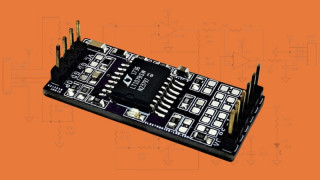
So combining posts 15 and 27, a lowpass filter and comparator circuit. this can drive a SPST power relay to switch the PWM power to the headlight and a power MOSFET to switch pure DC to the new DRL, or one DPDT relay to switch both devices.
the single relay approach is less complex, but I'm not a big fan of relying on normally-closed contacts in an automotive environment.
A diode feeding that filter operating a relay that could be adjusted to pull in at the higher voltage could work. No need for complex electronicx. Consider that a comparator has at least 8 pins and need sort of clean power.
The NC contact pressure is not as great as the NO contact pressure, which is why Bosch and other automotive relays are rated for something like NO - 30 A and NC - 20 A, It is almost impossible to move the armature away from the relay coil pole when energized, but relatively easy to move the armature against its spring when the relay is de-energized. Hence, in bad driving conditions, NC contact bounce.
Did some work for an ambulance company, and they enlightened me on exactly how crappy the physical and electrical environment is.
OOPS!! True indeed. Another option could be to use some other light power as the control, if there are other lights that switch on only when the headlights are on. Are the tail lights also used as stop lights? I know on some vehicles it is the same LEDs, either dim for tail or bright for stop. But if not, then that might work. If that $310 harness actually works, and does not include some active circuits, then a suitable circuit must exist someplace, which could be discovered somehow.
Looking at the scope displays, it does appear that the on voltage is different between DRL and Low beams, but not by much. The different sweep speeds confuse the fact that the pulse rate is about the same, so scheme to detect a frequency difference will not work either. The pulse rate seems to be about 100 Hz in both cases. Possibly a diode-isolated RC filter would provide an adequate voltage difference to operate a voltage sensitive relay. The isolating diode would be needed to prevent the existing loads from pulling the voltage down.
A diode feeding that filter operating a relay that could be adjusted to pull in at the higher voltage could work. No need for complex electronicx. Consider that a comparator has at least 8 pins and need sort of clean power.
IN times long past some relays had adjustable contact spacing, air-gap adjustment, and variable spring tension. Now it takes bending tabs to do an adjustment. But as I look at those waveforms, the flat line of the top voltage only changes from 12.9 to 13.4, according to my interpretation. Given the variability of voltages in an automotive electrical system that does not seem adequate for reliable control.
So some other scheme needs to be considered.
How about the gauge illumination circuit?? I am guessing that the gages are only illuminated when the headlights are switched on. If there are lights for the gages at all. One more thought is the "night sensor" that switches on the headlights when it gets dark. An extreme would be another sensor like that controlling a relay.
One more thought is the light circuit for the license plate. That one would be off except when the headlights need to be on. The challenge will be locating that circuit.

 Facebook
 Google
 GitHub
 Linkedin