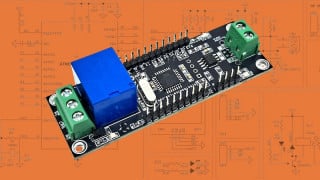
Using a DC power supply as input with a solar charge controller

Thread Starter

Keebler

Joined Mar 28, 2020
23
I want to use a DC power supply as the input to a solar charge controller instead of a solar panel. Is it better to use an MPPT or PWM controller in this case or even possible at all? Thanks.

Why? Because I need to charge a battery from 208V 2-phase NO NEUTRAL. Why is no neutral significant? Because even if I use a transformer to drop the voltage there is still no neutral so ordinary chargers may not work. However, 12/24VDC 208 2-phase DC power supplies are readily available. In the case of a 12V supply I would use one that allows me to trim the output voltage up to 15V.
 

Ian0

Joined Aug 7, 2020
13,097
I want to use a DC power supply as the input to a solar charge controller instead of a solar panel. Is it better to use an MPPT or PWM controller in this case or even possible at all? Thanks.
Don't try that - the MPPT algorithm keeps increasing the power to find the peak power from the panel. When it is going to find the peak power from an AC supply?
Use a 220V charger like @BobTPH says.
 

Thread Starter

Keebler

Joined Mar 28, 2020
23
208 is within the allowed tolerance of ±10%
I did a parametric search on Digikey and have come up with several candidates. I still think the lack of a neutral is an issue. Also, no terminal block for the AC kinda sucks as this will be directly wired.

Anybody know if "universal input" means a charger or DC power supply can work without a neutral? This will be wired to 2 phases of a 3-phase supply. I'm waiting for MeanWell to answer the exact same question regarding another product application
 

MisterBill2

Joined Jan 23, 2018
27,182
You could also use two similar rated 120 volt battery chargers in series across 220 volts, or even 208 volts. They are isolated so no hazard.
 

Thread Starter

Keebler

Joined Mar 28, 2020
23
You could also use two similar rated 120 volt battery chargers in series across 220 volts, or even 208 volts. They are isolated so no hazard.
Thanks. Something else I hadn't considered. Maybe I am just chasing a red heron but I really think the lack of a neutral is a problem even if the nominal AC voltage is possible.
 

BobTPH

Joined Jun 5, 2013
11,463
Thanks. Something else I hadn't considered. Maybe I am just chasing a red heron but I really think the lack of a neutral is a problem even if the nominal AC voltage is possible.
It is not. The neutral would not even be used.

Why don’t you explain why the charger would need a neutral?
 

Thread Starter

Keebler

Joined Mar 28, 2020
23
Well the short explanation is probably an incomplete understanding of AC electricity. I guess I don't understand the difference between North American 220/240 split phase with a neutral and 220/240 in other countries. In my particular case I need to use 2-phases from a 3-phase transformer. In the "other countries" does 220/240 have a neutral or are they just 2-phases of a 3-phase system? Also, these are the common markings I see on North American power supplies and what the datasheets say about the input voltage:

1) L1/L2 for those power supplies/chargers specifically called out in the datasheet as supporting 2-phases. Sometimes in this case single phase operation is stated as possible.
2) L1/N for those power supplies/chargers that support the voltages I need and are called "universal" in the datasheet and do not mention 2-phase operation specifically.
 

BobTPH

Joined Jun 5, 2013
11,463
Using the two lives as 220V in the US is the same as using the 240V across the pond. It us a single phase, 220V AC line.

Up until recently, most 220 outlets did not have a neutral. The third prong was a safety ground. Newer ones bring out neutral and ground separately to a 4 prong outlet.
 

Thread Starter

Keebler

Joined Mar 28, 2020
23
Using the two lives as 220V in the US is the same as using the 240V across the pond. It us a single phase, 220V AC line.

Up until recently, most 220 outlets did not have a neutral. The third prong was a safety ground. Newer ones bring out neutral and ground separately to a 4 prong outlet.
That's generally what I thought. Why the distinction (in North America at least) of using L1/L2 markings on some equipment and L/N on others even if they support similar voltages? Both of these power supplies from MeanWell will work on 220/240VAC. Which one (or both) will work when connected between 2-phases of a 3-phase transformer without a neutral?

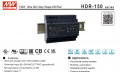
For example the HDR-150 has L/N markings:
1720399101932.png


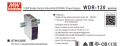
While the WDR-120 has L1/L2 markings:
1720398744509.png
 

MisterBill2

Joined Jan 23, 2018
27,182
The difference between the L1, L2 and the L/N is that at least in good theory, if you grabbed the /N wire you would not get shocked . That is because at some point, the "N" and the safety ground (green wire) circuit are supposed to be tied to "earth ground", or very close to it. I had thought that in the UK, the 220 volts was between a single line and a neutral, different from the US where the 220 volts always were both hot, and the neural was halfway between. (L1/N/L2)
 

MisterBill2

Joined Jan 23, 2018
27,182
Really, going back to post #1, if you use a transformer to step the 240, or 220, or 208, down to 120 volts, you can use that 120 volts totally independent of everything else, no need for a neutral.
 

Thread Starter

Keebler

Joined Mar 28, 2020
23
I had thought that in the UK, the 220 volts was between a single line and a neutral, different from the US where the 220 volts always were both hot, and the neural was halfway between. (L1/N/L2)
I am aware of how split phase works in North America in that the neutral is grounded. When you said "I had thought" do you mean that in the UK and elsewhere there is or is not a neutral for 220V? Why the difference in markings between L1/L2 and L/N if they don't convey any differences between 2 pieces of equipment?
 

Ian0

Joined Aug 7, 2020
13,097
had thought that in the UK, the 220 volts was between a single line and a neutral,
You are correct, though to be pedantic it's 230V (and adding an extra layer of pedantry it's 230V +10% -6%, different from continental Europe where it's 230V +6% -10%)
 

MisterBill2

Joined Jan 23, 2018
27,182
In response to the various comments from post #10 on, my limited experience with power in the UK had been that the minimum single phase mains voltage in the UK was 220 (or230) volts, referenced to Neutral, while in the USA, that same minimum single phase mains voltage, relative to Neutral, was 120 volts. In this explanation I am using "Neutral" as the distribution line INTENTIONALLY tied to earth ground/"green wire" ground.
In every case, the condition of one of the supply lines as being a "neutral" tied to earth, should not have any effect on the operation of whatever the load might be. That is entirely separate from safety issues and concerns.
 

zimba77

Joined Nov 23, 2024
1
I want to use a DC power supply as the input to a solar charge controller instead of a solar panel. Is it better to use an MPPT or PWM controller in this case or even possible at all? Thanks.
Both controllers are ok, PWM clips overvoltage, mppt controllers have buck boost converters to track max power from incoming source, making them more expensive from the extra circuitry.

With a "DC power supply as the input to a solar charge controller instead of a solar panel", the source voltage would be fairly constant so no need for mppt. pwm will do same job but at lower efficiency because mppt controllers, in addition to extra circuit for max power, have better quality components, hence more expensive, eg bigger capacitors for lower reactance and inductors sized to pulse frequency, wasting less heat.

Caution: Charge controller should be able to handle incoming power ie. rated at higher voltage than power supply highest DC ripple at output. Most charge controllers also have current limiter.

Sidenote: charge controllers are for varying voltage sources eg. solar panels, wind turbines, rainfall hydroelectrics, oceanwave pistons, cowdung methane powered steam drives etc. for regulated voltage out eg. from erratic voltages due to clouds on panels and crosswinds in turbines. "DC power supply" voltages are pretty much regulated so no need for charge controller at all. Just plug in your DC load to DC power supply.
 

MisterBill2

Joined Jan 23, 2018
27,182
I am still uncertain as to why the TS is needing to substitute for solar power into a solar charge controller to charge a battery. Is it because the battery is part of the solar power system?
AND, what sort of battery charger will demand a "neutral connection" instead of simply the correct ac voltage supplied to the mains input terminals???
 

nsaspook

Joined Aug 27, 2009
16,251
I am still uncertain as to why the TS is needing to substitute for solar power into a solar charge controller to charge a battery. Is it because the battery is part of the solar power system?
AND, what sort of battery charger will demand a "neutral connection" instead of simply the correct ac voltage supplied to the mains input terminals???
Maybe.

I use a 1500W utility DC power supply connected to a charge controller to charge a separate dump-load battery using the off-grid AC generated from the main solar battery bank. I can also use that same power supply to jump-start recharge the solar energy bank (cross connect the normally separate banks) using an external fuel powered generator for really extended outages.
 
Top