USB C Charger

Thread Starter

Kristian99

Joined Jan 21, 2023
2
Hello!
First Post here.
I have a broken Lenovo laptop charger that had a broken USB c connector that want to fix. I cut the cable and (unfortunately) throw the USB C connector away.

Now, months later, I see its only two wires(red and black) and shielding inside. How is possible going to work? only have ca3,85v between red and black. I understand it need to have a PD cabel, but how can it communicate with the charger? Greatfull for tips!
 

MisterBill2

Joined Jan 23, 2018
27,522
I own several laptop computers that will not accept a charge unless they can communicate with the charger,. So the communication might be needed. None of them is a Lenovo, But now you know, communication may be required.
 

jiggermole

Joined Jul 29, 2016
185
some usb-c cables have an active end. That has circuitry in the molded end that you connect to your device so the device can negotiate with the charger. You may have cut off and threw away that part. The specification sheet for the charger should have that information. If you're lucky it was just some resistors on the CC lines but since it was for a laptop it might be proprietary stuff or a full on Power Delivery management IC.
 

MisterBill2

Joined Jan 23, 2018
27,522
I doubt very much that any information included with an OEM charger will include any information as to the communication required, because the reason for that communication is to assure that any replacement charger must be purchased from them. That is the main reason for the communication requirement of the secret password.
 

jiggermole

Joined Jul 29, 2016
185
the usb-c chargers have to comply with the power delivery standard. The standard has the kind of communication that has to happen. whether that is just the indication with the static resistor pulling the cc lines to vcc or ground or its a dedicated chip that handles the power negotiation. the charger has something similar to PDO and it should have a couple of different voltages next to it. If it has multiple than it has to negotiate. If it has to negotiate and you only have two wires in the cable than it had an active end to do that negotiation.
 

MisterBill2

Joined Jan 23, 2018
27,522
An actual charger for an actual laptop computer is probably quite a bit different from all of those 5 volt chargers for everything else.
Perhaps the TS can let us know what the specification tag on the charger claims the output to be: Watts, Voltage, and current should be listed.
 

Jon Chandler

Joined Jun 12, 2008
1,596
@MisterBill2 your knowledge of USB-C PD chargers is a bit out of date. Many laptop computers are using them now.

They provide 5 volts unless/until a different voltage is negotiated. The standard includes a number of fixed voltages (5, 7.5, 9, 15 and 20-something as I recall), but not all chargers provide all of the possibilities. 12 volts used to be part of the standard but no longer is – some chargers can provide it.

There are some chargers, not complying with the USB-C PD standard that provide a higher fixed voltage w/o any negotiation. Using one of these will be death to devices complying to the standard and expecting 5 volts until negotiations.
 

MisterBill2

Joined Jan 23, 2018
27,522
OK, and certainly it may be correct, since it has been a couple of years since I last got a new laptop computer. But is it reasonable to assume that an individual is repairing a NEW computer?? My older ones that require 18 or 19 volts have been in use quite a few years and never needed a power connector replaced, although I did get one that had the computer side of the connection fail. That was a VERY POOR design, the connector only attached by the surface mount solder connections to the motherboard.
Perhaps others can learn from this sad story that disposing of the failed part prior to completing a satisfactory replacement installation is not a wise action. One may need to see exactly how the connexions went.
 

Jon Chandler

Joined Jun 12, 2008
1,596
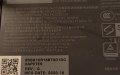
Here's a picture of my Lenovo laptop charger that's a couple years old.

It can output:

20v @ 3¼ amps
15v @ 3 amps
9v @ 2 amps
5v @ 2 amps

The computer requires to 20 volt range to charge.

USB C PD chargers tend to be a lot smaller and lighter than other switch mode chargers due to improving technology.

One of my peeves when traveling is that I need several power supplies when I travel. The supply for the computer. A 12v supply for my CPAP. A phone charger and possibly others. To cut down on volume, I've down some experimenting. Sadly, the 12 volts needed by my CPAP is no longer part of the standard.

To convert the CPAP to use a USB C PD supply, a device called a "PD Trigger" is needed. This handles the negotiation to get the voltage you want. A trigger has a USB C connector on one end and an output on the other; triggers with coaxial barrel plugs are available with make a tidy solution if the device to be powered can handle one of the voltage options. 12 volt triggers are available, but since most chargers don't support 12 volts, that wasn't a good option for the CPAP. I got a 20 volt trigger and a DC buck converter, and my CPAP is very happy running from the Lenovo supply.

120 watt PD chargers are available with several USB C connectors, so one charger can handle my CPAP, the laptop, the phone and other devices at the same time in a package smaller and lighter than the CPAP charger. A very slick solution for traveling!


CM230124-000145001.jpg
 
Top