USA 240V three wire L1, L2 and a Ground

Thread Starter

adoolittle212

Joined Oct 6, 2026
1
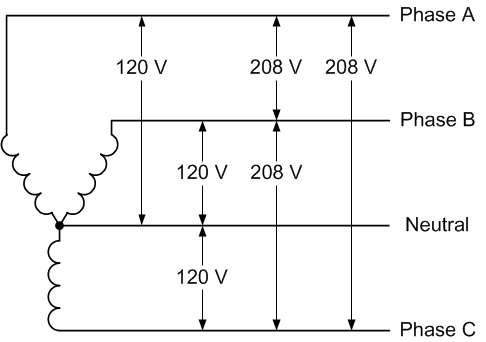
Across the L1 and L2 is 208V
Across the Ground to each Line is 120V
Feed from 3 Phase 208V Panel
Is turning 208VAC on and off with only controlling one line with a solid state relay, actuated by 24Vdc, a common practice or should both lines be turned on and off at the same time at all times to control 208VAC? If I am understanding correctly there would still be an active 120V AC looking to ground out. Although it would work it is NOT the correct way to turn on or off a device running on 208 three phase.

Thanks for the help in advance.
 

MisterBill2

Joined Jan 23, 2018
28,605
Unfortunately, it is a fairly common practice to only switch one side of the 208 volt line feeding a single phase motor.

I CONSIDER THAT A VERY POOR PRACTICE at all times and in all applications!!
THE ONLY reason it is done is for cost reduction. There is no other benefit for normal applications, such as motor control.
The obvious big DISADVANTAGE is that, for motor control applications, it leaves the entire motor windings subject to damage from transient line voltage spikes, such as nearby lightning strikes.

I have seen that sort of damage first hand, in a A.C. compressors with 3-phase motors, with only two of three phases opened. ALL of the 3-phase motors damaged by arc-over from the windings to the frames.
So while breaking only a single pole for a 240 volt single phase application can function satisfactorily, it is a POOR CHOICE!!
The ONLY motivation is initial cost reduction, with no regard to safety or protection from line transient spikes.
 
Last edited:

MaxHeadRoom

Joined Jul 18, 2013
30,885
Across the L1 and L2 is 208V
Across the Ground to each Line is 120V
Feed from 3 Phase 208V Panel
Is turning 208VAC on and off with only controlling one line with a solid state relay, actuated by 24Vdc, a common practice or should both lines be turned on and off at the same time at all times to control 208VAC? If I am understanding correctly there would still be an active 120V AC looking to ground out. Although it would work it is NOT the correct way to turn on or off a device running on 208 three phase.
Something does not sound right for a N.A, 120v supply, how do you get that from 208 v ?
Typically N.A, does not use 3ph to produce the typical 240v centre tapped 120-0v-120 supply
 

schmitt trigger

Joined Jul 12, 2010
2,292
To the TS:
All of the Worldwide electrical codes I've browsed require, without exception, that always all of the live phases MUST BE SIMULTANEOUSLY disconnected. Full stop.
Some situations may even require that the neutral to be disconnected.
The only thing that can remain connected is the green grounding wire.
 

MisterBill2

Joined Jan 23, 2018
28,605
Something does not sound right for a N.A, 120v supply, how do you get that from 208 v ?
Typically N.A, does not use 3ph to produce the typical 240v centre tapped 120-0v-120 supply
The answer is clear and obvious to many of us!! The 240 volts system and nomenclature relate to SINGLE PHASE/SPLIT PHASE systems, which have been common for many years!!
The 208 volts/120 volts nomenclature and arrangement are found with THREE PHASE systems ONLY!! With three phase power the math is quite different!! Suddenly VECTOR MATH is required.
Instead of the phases being 180 degrees apart they are now only 120 degrees apart! So the old "center tapped mains" does not work that way any more, IN SYSTEMS WITH THREE-PHASE DISTRIBUTION.
IT IS MORE EFFICIENT because the same systems can provide a lot more power with only one more wire.
What gets confusing sometimes is that 440 is now closer to 480 between phases and 277 between each phase and neutral. AND, acording to those who have experienced it, "277 bites a lot worse than 220".
 

MaxHeadRoom

Joined Jul 18, 2013
30,885
The answer is clear and obvious to many of us!! The 240 volts system and nomenclature relate to SINGLE PHASE/SPLIT PHASE systems, which have been common for many years!!
The 208 volts/120 volts nomenclature and arrangement are found with THREE PHASE systems ONLY!! With three phase power the math is quite different!! Suddenly VECTOR MATH is required.
Instead of the phases being 180 degrees apart they are now only 120 degrees apart! So the old "center tapped mains" does not work that way any more, IN SYSTEMS WITH THREE-PHASE DISTRIBUTION.
IT IS MORE EFFICIENT because the same systems can provide a lot more power with only one more wire.
What gets confusing sometimes is that 440 is now closer to 480 between phases and 277 between each phase and neutral. AND, acording to those who have experienced it, "277 bites a lot worse than 220".
I am well aware of the difference!!!?

I had issue, or rather question I had where was the OP obtaing those figures if derived from a N.A. Domestic supply?

Re OP:
USA 240V three wire L1, L2 and a Ground
 
Last edited:

MisterBill2

Joined Jan 23, 2018
28,605
I am well aware of the difference!!!?

I had issue, or rather question I had where was the OP obtaing those figures if derived from a N.A. Domestic supply?

Re OP:
USA 240V three wire L1, L2 and a Ground
Those figures were correct back in 1954, and as recently as 1965, IN SOME RESIDENTIAL AREAS that had not yet been updated.
 

GetDeviceInfo

Joined Jun 7, 2009
2,286
Across the L1 and L2 is 208V
Across the Ground to each Line is 120V
Feed from 3 Phase 208V Panel
Is turning 208VAC on and off with only controlling one line with a solid state relay, actuated by 24Vdc, a common practice or should both lines be turned on and off at the same time at all times to control 208VAC? If I am understanding correctly there would still be an active 120V AC looking to ground out. Although it would work it is NOT the correct way to turn on or off a device running on 208 three phase.

Thanks for the help in advance.
It actually is, or was, common practice, within approved envelopes. Heating circuits come to mind, which I've come across many with single pole switching. Outside of those envelopes, codes require all poles be switched, as mentioned.
 

MisterBill2

Joined Jan 23, 2018
28,605
I think that the question in post #11 has been asked already. The short answer is YES, it has been done, the longer answer is that it CAN WORK BUT IT CREATES A SAFETY HAZARD that is hidden.
Consider a 208 volt heater circuit: opening either side of the circuit stops the heating current completely. BUT ALL of the heater circuit is still live at the full supply voltage. The heater is not heating but it is still electrically live, just like when it IS heating.
To be safe, the control must break all of the hot feeds. There is no "shortcut " in that respect.
What is very clear is that cost reduction is far more important than product safety to those making this sort of design decision.
 
Last edited:

SamR

Joined Mar 19, 2019
5,544
I specified and used 208V 3ph panels because we co-generated 3.5MW 19200V 3 phase that was synced with Georgia Powers grid. Even with our capacitor banks GA Pwr. was not happy with us due to unbalanced phases. Almost all of our motors were 3 phase 480V with a few 9600V both delta and wye. But all of the older shops power, lighting, and area heating/cooling were single phase and keeping the phases balanced was a nightmare.
 
Last edited:

kaindub

Joined Oct 28, 2019
187
The question no one has asked is what is the application/purpose?
If the purpose is to control a load (heater, motor, light) then switching just one of the active legs is OK.
If the purpose is to provide some sort of isolation to the load, then DONT use a SSR for that prupose. They leak current and any part of the circuit has to be considered live. If its for isolation, then the only option is a two pole isolator on the active lines.
 

ZhangSheng

Joined Sep 25, 2026
23
First thing I'd do is meter it at the load with the SSR off, 24V control off — check each line to ground. You'll still see about 120V on the leg the SSR isn't switching, that's normal for 208Y/120, it's not a fault, it's just still live. That's why I wouldn't treat a single SSR as isolation — they leak a bit off, too, so I treat that leg as live until the breaker is off. If it's a heater, single-pole switching works in practice; if it's anything you'll touch or service, put a two-pole isolator in and switch both lines together, ground wire stays put.
 

MisterBill2

Joined Jan 23, 2018
28,605
Just because some scheme produces the desired results does not mean that IT IS NOT A VERY POOR CHOICE!! switching only one HOT side of the mains power is placing cost reduction above human safety!! AND it exposes ALL of those expensive parts to all of the high voltage spikes arriving on the mains power lines during a lightning storm. ALL to save less than a dollar!!

The fact that it is routinely done does not make it a good choice.

MY comments here about this are restrained to avoid offending the standards of this site. UNDERSTAND THAT!!!
 
Last edited:

be80be

Joined Jul 5, 2008
2,400
I've been wiring for 45 years in the US and it 208 3 phase and 120 to neutral or 208 phase to phase you only get 240 if its a house and thats single phase


My take is the simple 208 is cheaper to get 240 you have a bigger transformer 6 coils and the 208 has only 3 coils

In a Wye system, measuring from any single hot phase to the neutral wire yields exactly 120V. However, because the three phases are offset by 120 degrees (not 180 degrees), measuring line-to-line between any two hot phases results in a voltage multiplied by the square root of 3 (≈ 1.732):

You you want to turn off all phases your supplying with you'll be happy you did.
 
Last edited:

MisterBill2

Joined Jan 23, 2018
28,605
CERTAINLY to switch off a 3-phase device, or system ALL THREE phases must be opened. OPENING ALL THREE phases is needed to reduce the shock hazard.
The VERY REAL PROBLEM comes from those nasty voltage spikes that somehow appear. OPEN contacts stop them quite well, but if only one line is opened then they pass right on thru! THAT is when we get those spikes that punch thru the insulation.
 
Last edited:
First thing I'd do is meter it at the load with the SSR off, 24V control off — check each line to ground. You'll still see about 120V on the leg the SSR isn't switching, that's normal for 208Y/120, it's not a fault, it's just still live. That's why I wouldn't treat a single SSR as isolation — they leak a bit off, too, so I treat that leg as live until the breaker is off. If it's a heater, single-pole switching works in practice; if it's anything you'll touch or service, put a two-pole isolator in and switch both lines together, ground wire stays put.
For ANY 3-phase load, if any one point of that load is not opened then the entire load is at the mains potential. The POWER is off but the voltage is still present andstill quite dangerous.
THAT is the reason I always use my "little voltage probe" on circuits that I have switched off, prior to working on them.
 

be80be

Joined Jul 5, 2008
2,400
Don't be to believing in your little voltage probe in 45 years the worst shock i ever got was on 3 way switch the probe showed no voltage till i touched the wires to change the switch out i think where the wires run together it cancels out most good electricians will tell you the same there good most times but they can let you down i use a meter never fails me but that just me
 
Top