US nuclear force still uses floppy disks

Reloadron

Joined Jan 15, 2015
7,892
That's an argument for punch cards!

Unfortunately I threw my last punch cards - with my FORTRAN program on them - off the roof of my dorm. (That was more-or-less standard practice at the time.)
A very good friend of mine did his thesis for MIT on IBM Punch Cards. I saw Paul a few years back and in a closet he still has the thesis in shoe boxes piled up. He got his BSEE around 72 and not sure when he completed his masters. Really pretty cool and took some thought.

Ron
 

nsaspook

Joined Aug 27, 2009
16,344
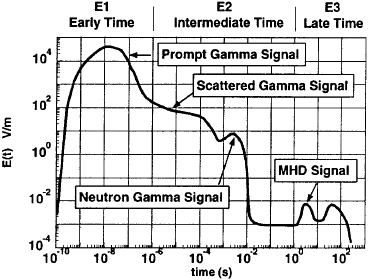
One big part of the reason is that the newer the technology, the more susceptible it is to electromagnetic pulse (EMP). Modern storage devices and electronics are inherently far more susceptible to EMP than older technologies. It is much easier to shield old floppy drives and older computers than modern ones.
New technology is very susceptible to EMP. I had a upgrade to a acceleration machine that the used the fancy new switching supplies with nice LCD displays instead of the old school SCR controlled heavy iron transformers for DC power. The supplies last about 6 months due to the transients from ion beam glitching. First the display go blank, then the control electronics start to lockup at random, finally the output stages blow.
We had to design extra internal and external suppression networks with new firmware to power down the output during glitching to make them last at least a year.

The original EMI boat anchor (heavy) supplies lasted 20 years.
 

Reloadron

Joined Jan 15, 2015
7,892
When I retired we were still using older transformer analog supplies and they were in the department when I got there and when I retired 25 years later with most running 24/7. I have an old 60 volt 25 amp supply laying here which weighing about 60 pounds works just fine. The things are brutes in every sense.

Ron
 

WBahn

Joined Mar 31, 2012
32,929
New technology is very susceptible to EMP. I had a upgrade to a acceleration machine that the used the fancy new switching supplies with nice LCD displays instead of the old school SCR controlled heavy iron transformers for DC power. The supplies last about 6 months due to the transients from ion beam glitching. First the display go blank, then the control electronics start to lockup at random, finally the output stages blow.
We had to design extra internal and external suppression networks with new firmware to power down the output during glitching to make them last at least a year.

The original EMI boat anchor (heavy) supplies lasted 20 years.
Few people realize how susceptible the U.S. is to an EMP weapon, despite the risks being known since the 50's and 60's. When I got my Ground Radiological Monitoring certification back in 1979 they explained that the most likely scenario would be to detonate a high-megaton warhead above the atmosphere over Kansas and that this would destroy virtually all solid state electronics that weren't specifically shielded. The "new" cars would probably be rendered obstacles due to the electronic brain boxes they had. There didn't seem to be a huge concern about the power grid (that I recall), but that has changed completely now since the grid is highly dependent on control electronics at almost every level. The same with transportation and communication systems. Old-style phone systems were quite resistant to EMP, but now they will be almost completely wiped out. The same with planes and trains. Most modern aircraft will fall out of the sky -- the larger aircraft completely out of control because the flight control systems are mostly fly-by-wire with the computers driving the control surfaces.

In an instant we would be set back several hundred years. Not just to the mid-1800's before electrification, but much further back than that because in the mid-1800's we had an infrastructure that could cope with pre-electric technology. In survival-related aspects most communities were largely self-sufficient with local storage of food and supplies. Today most communities rely heavily on the constant influx of many critical things they need, particularly food. If you were to isolate most cities and towns you would quickly discover that at any given time they only have a few weeks supply of food available. In many respects our entire economy has evolved into a highly-optimized "just-in-time" system. Manufacturing of almost everything has become highly specialized and highly distributed -- the place that makes the medicine relies on packaging for that medicine that is manufactured thousands of miles away. The raw stock for the medicine is produced thousands of miles in the other direction. Both of those rely on a steady stream of supplies from far away places. Our entire ability to survive is dependent on the ability to move an unimaginable amount of material throughout the world in a steady, reliable fashion and to be able to plan and coordinate those movements effectively.
 

WBahn

Joined Mar 31, 2012
32,929
That's an argument for punch cards!
It certainly is. Of course, we have to balance capability against survivability. Unfortunately, we've largely completely ignored survivability in the post-Cold War decades.

We think that the issue isn't too important with the reduction in the likelihood of a full-scale nuclear exchange. What we've failed to keep in mind is that our entire infrastructure can be effectively smashed with a single device. Worse, we have gone out of our way to make ourselves highly susceptible to that device. We are so susceptible that even a low-yield device (a fraction of the Hiroshima yield) can probably have catastrophic effects. Now imagine the missile technology required to deliver such a light device to necessary the necessary altitude over the continental U.S. from a ship or ocean-going barge ostensibly headed to someplace like Galveston, Texas. A missile only somewhat more capable than the Scud missiles using by Iraq in Desert Storm is all that would be needed. In fact, if you have a half dozen devices, the Scud is more than adequate if launched from barges in the Pacific, Atlantic, and Gulf of Mexico.
 

nsaspook

Joined Aug 27, 2009
16,344
Few people realize how susceptible the U.S. is to an EMP weapon
A EMP weapon over Kansas would be a case of absolute unlimited nuclear war on the aggressor so the EMP effects to the populations consumer devices would be the least of our worries for the short term in this biblical catastrophe. A EMP part of an attack would only be part of a total attack so if your cell phones stop working (the isolated cell phone/radio will usually not be affected as EMP fields is measured in volts per meter) due to a bright blob in the sky get the lawn chairs ready for the big fireworks show later. What's far more likely is a natural (weather or earthquake), Sun or Space based event (much slower EMP type E3 waveforms) affecting the satellite based infrastructure and/or power grid due to changes in the earths fields.

http://www.bmpcoe.org/library/books/mil-std-464a/9552.html
https://snebulos.mit.edu/projects/reference/MIL-STD/MIL-STD-464C.pdf

The EMP threat is layered and over-hyped. At the consumer device level there is little or no protection to devices connected to conducting lines while in use but a lot of effort has been spent over the years hardening the critical infrastructural to maintain command and control for a nuclear response.
Our critical communications infrastructure is today more resilient to EMP now than it was 50 years ago. The copper lines interconnect structure have been replaced by fiber networks that are mainly immune to EMP on the lines/interconnect repeater switches and the major switching networks are still on DC battery power busses in bunker like shielded buildings designed to handle EMP. The power grid in this part of the country is still dominated by hydro built in the last century. There is a overlay of control electronics but the old electromechanical controls systems still exist for backup control and most of the old wire comm network is still in the ground dark.
 
Last edited:

Reloadron

Joined Jan 15, 2015
7,892
A little off topic but...

EMP would be the least of my concerns. How many major blackouts has the US suffered in recent years? The blackout of 2003 being a good example. Power lines sagging in heat dropped to a tree setting in motion a display of how vulnerable the grid is. August 14, 2003 it all began and like dominoes it cascaded across several states.

A coordinated attack on several large sub-stations during January / February time frame when it is cold would leave people in the cold and dark which people tend to dread. Within 24 hours peoples pipes begin bursting in freezing temperatures. There is no need for a nuclear holocaust to bring the main parts of the power grid down. Major sub-stations are all above ground making for easy targets. Think about those large transformers.
MPEG of an Arcing 138 kV Substation and Exploding Power Transformer!

High Voltage Fuse Fails in a Substation, Continues Arcing...

Imagine several subs like those above all at once? It would not take a nuclear EMP strike to cripple everything and that is the least of my concerns.

Ron
 

WBahn

Joined Mar 31, 2012
32,929
A EMP weapon over Kansas would be a case of absolute unlimited nuclear war on the aggressor so the EMP effects to the populations consumer devices would be the least of our worries for the short term in this biblical catastrophe. A EMP part of an attack would only be part of a total attack so if your cell phones stop working (the isolated cell phone/radio will usually not be affected as EMP fields is measured in volts per meter) due to a bright blob in the sky get the lawn chairs ready for the big fireworks show later.
I don't think that is necessarily the case in a world increasingly dominated by highly asymmetric warfare. Yes, if the EMP weapon detonated over central Kansas were launched by a Russian or Chinese ICBM, then it would be the opening act of a full two-sided exchange. But the number of smaller countries and organizations capable of carrying out such an attack without any intent of carrying out any kind of follow-up action is only going to grow. The fact that the U.S. will undoubtedly retain the ability to strike back in overwhelming force is largely immaterial for two reasons. First, who do we strike back against? If the offending missiles are launched from commercial ocean-going cargo vessels that are blown up while the missiles are still in their boost phase, how will we even know who was responsible? And even if we do find out and retaliate, so what? The damage to our infrastructure will already have been done.

The fact that bits and pieces of our infrastructure will survive will also largely be irrelevant. Our physical survival has become reliant on a fully functioning integrated infrastructure. It would be like blowing off someone's arms, legs, and head and then saying things will be okay because their vest successfully protected their heart and lungs.

Let's assume that we somehow manage to maintain 100% of our electrical generating capacity in terms of physical plant. In many regions of the country power plants are coal-fired and rely on the daily deliveries of coal trains for fuel and only have a few days supply of coal on hand. What happens when nearly all of the trains stall on the tracks because their electronics have been blown? Even as you start to get locomotives up and running again, you still have to clear thousands of trains from the tracks before you can transport goods, including that coal. Even for places with hydro or nuclear power, consider the day-to-day maintenance engaged in by the power company to keep the grid up and working. How long before a significant fraction of the grid is nonfunctional if all of the utility vehicles used for those maintenance operations aren't usable?

Hell, just consider the impact of something like the various garbage collector's strikes on large cities. What happens when only a tiny fraction of trash trucks, fire trucks, ambulances, snow plows, you name it are capable of being used. The cities will become hellholes in very little time -- days in some places, weeks in others.
 

WBahn

Joined Mar 31, 2012
32,929
A little off topic but...

EMP would be the least of my concerns. How many major blackouts has the US suffered in recent years? The blackout of 2003 being a good example. Power lines sagging in heat dropped to a tree setting in motion a display of how vulnerable the grid is. August 14, 2003 it all began and like dominoes it cascaded across several states.

A coordinated attack on several large sub-stations during January / February time frame when it is cold would leave people in the cold and dark which people tend to dread. Within 24 hours peoples pipes begin bursting in freezing temperatures. There is no need for a nuclear holocaust to bring the main parts of the power grid down. Major sub-stations are all above ground making for easy targets. Think about those large transformers.
MPEG of an Arcing 138 kV Substation and Exploding Power Transformer!

High Voltage Fuse Fails in a Substation, Continues Arcing...

Imagine several subs like those above all at once? It would not take a nuclear EMP strike to cripple everything and that is the least of my concerns.

Ron
Oh, there are many, many ways in which small strikes can have huge, highly disproportionate effects, and they are far more likely, too. But the kinds of things you are talking about are quite local and quite transient. Take out the grid in a region somehow (attack, accident, natural disaster) and you have an immediate response. Even within the affected region you have a functioning infrastructure of emergency generators, communications, equipment, and personnel that react and then you have an influx of relief workers, supplies, and equipment into the affected areas within hours or days by air and land (and sea if possible) because the larger country still has effective communications and an intact transportation infrastructure. The body reacts quickly to mitigate and heal.

But what if there are no effective communications? What if only a few of the emergency generators work? What if only a tiny fraction of vehicles and equipment in the affected region can be started? What if there is no ability to transport significant amounts of people and material into the region? What if instead of affecting a handful of states, it affects all but a handful of states?

Think back to the horrors of Katrina. Now think what it would have been like if virtually no outside assistance had been able to get into the region for months and, on top of that, even less of the communication and transportation capabilities within the region had survived.
 

nsaspook

Joined Aug 27, 2009
16,344
I don't think that is necessarily the case in a world increasingly dominated by highly asymmetric warfare. Yes, if the EMP weapon detonated over central Kansas were launched by a Russian or Chinese ICBM, then it would be the opening act of a full two-sided exchange. But the number of smaller countries and organizations capable of carrying out such an attack without any intent of carrying out any kind of follow-up action is only going to grow. The fact that the U.S. will undoubtedly retain the ability to strike back in overwhelming force is largely immaterial for two reasons. First, who do we strike back against? If the offending missiles are launched from commercial ocean-going cargo vessels that are blown up while the missiles are still in their boost phase, how will we even know who was responsible? And even if we do find out and retaliate, so what? The damage to our infrastructure will already have been done.
I won't argue it's not a possibility but the possibility of an nuclear EMP attack on mainland America, from out of the blue, from a unknown country or organization seems a lot more remote than Yellowstone blowing it's top and wiping out the world. Ours (the US/NATO/Allies), the Russians, the Chinese, and just about all of the nuclear clubs national security forces highest national priority is tracking possible nuclear weapons threats from adversaries and rogue actors.

You might use an EMP attack in a SIOP like plan with many targets and many types of weapons for those targets but I believe the uncertainty of even moderate damage from a space based explosion would NOT be acceptable to a nut with at bomb when a large crater where LA was is a much more likely and pleasing possibility.

https://worldview.stratfor.com/article/gauging-threat-electromagnetic-pulse-emp-attack
 

Thread Starter

AlbertHall

Joined Jun 4, 2014
12,629
Most modern aircraft will fall out of the sky -- the larger aircraft completely out of control because the flight control systems are mostly fly-by-wire with the computers driving the control surfaces.
Of course, there are plenty of bad effects to worry about following a nuclear strike but such planes generally survive direct lightning strikes as the skin is bonded and forms a Faraday shield. I don't think EMP effects on planes would be worse.
 

WBahn

Joined Mar 31, 2012
32,929
I won't argue it's not a possibility but the possibility of an nuclear EMP attack on mainland America, from out of the blue, from a unknown country or organization seems a lot more remote than Yellowstone blowing it's top and wiping out the world. Ours (the US/NATO/Allies), the Russians, the Chinese, and just about all of the nuclear clubs national security forces highest national priority is tracking possible nuclear weapons threats from adversaries and rogue actors.

You might use an EMP attack in a SIOP like plan with many targets and many types of weapons for those targets but I believe the uncertainty of even moderate damage from a space based explosion would NOT be acceptable to a nut with at bomb when a large crater where LA was is a much more likely and pleasing possibility.

https://worldview.stratfor.com/article/gauging-threat-electromagnetic-pulse-emp-attack
Well, let's review. The notion that a hijacker would intentionally fly an airliner into a building was out there long before 9/11 -- it was a plot element in a host of fiction novels. But the actual threat was not considered significant since the prevailing wisdom was that hijackers trying to achieve political goals were better served by holding the aircraft, passengers, and crew hostage and issuing demands. Plus, the notion of suicidal fanatics as hijackers seemed at odds with the self-discipline needed to acquire the skills required to fly the plane (which always struck me as a bit of wishful thinking whenever I heard it pre-9/11). But even those that allowed for the potential for suicidal pilot fanatics as hijackers argued that no organization would carry out such an attack because of the nature of the response it would provoke.

So the standing guidance to crew and passengers on the morning of 9/11 was to cooperate with hijackers and do what they say -- do NOT attempt to retake the plane as that will only get innocent people killed. It was guidance that, overwhelmingly, had worked pretty well up to that point. It was so firmly believed that that was the best policy that the things like requiring that cockpit doors be closed during flight, let alone locked from the inside and designed to resist attempts at forcible entry, weren't even considered as reasonable precautions against such a low-likelihood threat.

Needless to say, that mindset no longer applies. An organization that DID look at the long-term impact of such an attack and concluded that the likely retaliatory response represented an acceptable risk/reward tradeoff exploited our lack of preparedness and carried out the attack, knowing full well that it was a one-time opportunity. Part of that opportunity was the ability to plan and prepare under the radar because the threat model we were operating under didn't realistically acknowledge the threat.

Now our threat model DOES acknowledge it -- because such an attack WAS carried out just one time. We learn from our mistakes.

Is it really THAT unrealistic to think that a nation such as North Korea or Iran isn't capable of thinking long term and see the extent to which the U.S. (and/or a few others) might be removed from the world stage via and EMP strike alone and be willing to plan and carry out such an attack, perhaps using some suitable terrorist organization as a patsy? Is it really THAT unrealistic to think that they might exploit our lack of preparedness to deal with the aftermath of such an attack as a strong motivator to see such an attack carried out? Is it really THAT unrealistic to think that they might view this type of attack as a one-time opportunity? Is it really THAT unrealistic to think that they might be willing to accept the potential for a retaliatory response as an acceptable risk/reward tradeoff? Is it really THAT unrealistic to think that they might be able to use our unwillingness to take such a threat seriously to carryout the planning and preparations for such an attack without our finding out?

Is this REALLY a mistake we can afford to learn from as a result of such an attack being carried out just one time?
 

WBahn

Joined Mar 31, 2012
32,929
Of course, there are plenty of bad effects to worry about following a nuclear strike but such planes generally survive direct lightning strikes as the skin is bonded and forms a Faraday shield. I don't think EMP effects on planes would be worse.
If it's such a good Faraday cage, then how is it that people can use their cell phones from inside it to send and receive low powered signals -- and I'm not talking about via onboard equipment to act as a repeater?
 

nsaspook

Joined Aug 27, 2009
16,344
Is it really THAT unrealistic to think that a nation such as North Korea or Iran isn't capable of thinking long term and see the extent to which the U.S. (and/or a few others) might be removed from the world stage via and EMP strike alone and be willing to plan and carry out such an attack, perhaps using some suitable terrorist organization as a patsy? Is it really THAT unrealistic to think that they might exploit our lack of preparedness to deal with the aftermath of such an attack as a strong motivator to see such an attack carried out? Is it really THAT unrealistic to think that they might view this type of attack as a one-time opportunity? Is it really THAT unrealistic to think that they might be willing to accept the potential for a retaliatory response as an acceptable risk/reward tradeoff? Is it really THAT unrealistic to think that they might be able to use our unwillingness to take such a threat seriously to carryout the planning and preparations for such an attack without our finding out?

Is this REALLY a mistake we can afford to learn from as a result of such an attack being carried out just one time?
The odds are someone will try eventually and the odds are it won't be very effective in removing us from the world stage.:rolleyes: Starfish Prime was a 1.4 megaton explosion 1400km from Honolulu, the completely unprotected infrastructure of the Hawaiian Islands didn't implode on July 8, 1962. The local newspaper printed articles about the event the next day.
http://ece-research.unm.edu/summa/notes/SDAN/0031.pdf

It's not unrealistic as a possible item to plan for (we are taking/have taken serious countermeasures on critical infrastructure since at least 2001) but think of what the alternatives are to the effort required for even a barge launched ICBM EMP terror level attack, that will be detected because they (some nuclear power with a death wish) would need to design and test much larger weapons than NK is currently testing (20-50 KT fission bomb possible on a current ICBM) to have a even low effectiveness EMP attack from states at the technology of level of Iran/NK/??? vs the box cutters needed to hijack a plane pre-9/11 or high explosives needed destroy power lines. I don't think Iran should even be on the list of possible rouge nuclear nations willing to execute this type of attack but maybe I'm blinded by my interaction with the Iranian military pre-revolution who are not fools with a god complex or cult of personality. The Iranian military are the people who would actually execute such a plan not the religious zealots in government. The more realistic plan is to preemptively stop by any means necessary including war the thwart delivery of all such weaponry to rouge actors to prevent such an attack from happening anywhere because it's not realistic to protect the vast civilian infrastructure already in place from an EMP attack and remember, we never really tried to protect US citizens from total annihilation during the Cold War. Realistic defensive protection measures can provide the means to recover from a localized EMP attack on soft targets.

But really, do we expect the Chinese, Koreans, etc... and other domestic mass consumer providers who are making cheap products to provide EMP protection in the products they sell to the US? I don't think that's a very realistic plan.
 
Last edited:

WBahn

Joined Mar 31, 2012
32,929
Yeah? So? First, EMP and lightening are very different critters. But more to the point, it completely fails to address the question you quoted -- if the design of an airliner makes it a Faraday cage, how is it that cell phones have very little problem operating within one?

As an anecdotal point, a KC-135 nearly 200 miles from the detonation of one of the Operation Fishbowl events suffered major damage to its 1960-era electronics. Fortunately, the electronics were not flight-critical and so the aircraft was able to land safely.
 
Last edited:

WBahn

Joined Mar 31, 2012
32,929
The odds are someone will try eventually and the odds are it won't be very effective in removing us from the world stage.:rolleyes: Starfish Prime was a 1.4 megaton explosion 1400km from Honolulu, the completely unprotected infrastructure of the Hawaiian Islands didn't implode on July 8, 1962. The local newspaper printed articles about the event the next day.
The Starfish Prime detonation did affect the Hawaiian infrastructure, though not very much. Even so, consider the relative vulnerability of a 1962-era street light (several hundred of which were destroyed) or microwave link to today's microprocessor-driven everything. In addition, the strength of the EMP pulse was MUCH weaker than it would have been compared to a detonation over the central U.S. due to the differences in the strength and orientation of Earth's magnetic field between the two places. Plus, the lengths of the power lines in Hawaii were much, much shorter than the continental U.S. power grid. The Soviet K tests showed the much greater destructive potential of a higher latitude burst, with power lines literally being blown off the poles. Phone lines with repeaters, fuses, and gas-filled overvoltage protectors were all blown for the entire 350 mile distance of the instrumented line; who knows how much further out the damage would have gone.

The E-1 and E-2 effects scale at less than the square root of the yield. As a result, you don't need megaton-yield devices and devices smaller than the ~20 kton Hiroshima device are more than adequate. Plus, fusion weapons are generally less efficient than fission weapons at EMP generation and bombs can be constructed specifically to enhance their E-1 and E-2 effects (but I would not expect to see such specialized technology available to small actors anytime soon).

Cars are an interesting tradeoff. Their relatively small size affords quite a bit of protection, as does the normal design of automotive electronics to tolerate the high-noise environment of a car's electrical system. But as more sensitive electronics have become absolutely critical to the operation of most newer cars combined with less and less metal being used in their construction, who knows how well they would survive.
 

nsaspook

Joined Aug 27, 2009
16,344
The E-1 and E-2 effects scale at less than the square root of the yield. As a result, you don't need megaton-yield devices and devices smaller than the ~20 kton Hiroshima device are more than adequate. Plus, fusion weapons are generally less efficient than fission weapons at EMP generation and bombs can be constructed specifically to enhance their E-1 and E-2 effects (but I would not expect to see such specialized technology available to small actors anytime soon).
Very good points.
E-3 effects are ones the most likely to destroy large parts of a unprotected from geomagnetic-storm effects US power grid that would cause long term critical infrastructural damage.
http://www.futurescience.com/emp/test184.html
Other known effects of Test 184 were that it knocked out a major 1000-kilometer (600-mile) underground power line running from Astana (then called Aqmola), now the capital city of Kazakhstan, to the city of Almaty. Some fires were reported. In the city of Karaganda, the EMP started a fire in the city's electrical power plant, which was connected to the long underground power line. The shielded electrical cable was buried 3 feet (90 cm.) underground. The geomagnetic-storm-like E3 component of the EMP (also called MHD-EMP) can easily penetrate into the ground. The E3 component of the Test 184 detonation (caused by the movement of the Earth's magnetic field) began rising immediately after the detonation, but did not reach its peak until 20 seconds after the detonation. The E3 pulse then decayed over the next minute or so. The E3 component only affects equipment connected to long electrical conductors.

The E3 component of the EMP that caused the failure of the underground power cable was 1300 nT/min (nanotelsas per minute) in the Karaganda region during the first 20 seconds after the detonation. For comparison, the solar storm that shut down the entire power grid of Quebec on March 13, 1989 had a magnitude of 480 nT/min, and caused the Quebec power grid to go from normal operation to complete collapse in 92 seconds. Solar storms on other occasions have been known to produce disturbances of 2000 nT/min, and a solar storm on May 14-15 in 1921 produced a disturbance of 4800 nT/min.

If the United States W49 warhead used for the Starfish Prime test had been used in Test 184, the E3 component would have been more than 5000 nT/min in the Karaganda region. According to recent studies, a disturbance in the present-day United States of 4800 nT/min would likely damage about 365 large transformers in the U.S. power grid, and would leave about 40 percent of the U.S. population without electrical power for as long as 4 to 10 years due to the loss of large transformers that would have to be custom-built (many in other countries, especially if power was not available for the two U.S. plants that are able to make these transformers).

I just don't think a realistic budget defensive EMP plan will be very effective in stopping a nuclear device being used just for it's normal effects if a rouge agent decides to attack the US while not giving a damn about the response to them. Security is always about layers and cracks. If we provide X level EMP protection then they will crank up the device to X+ to make it work or use it another way. We need to be ruthless in preventing them from ever having to make a decision on what to do with their bomb.
 

WBahn

Joined Mar 31, 2012
32,929
I just don't think a realistic budget defensive EMP plan will be very effective in stopping a nuclear device being used just for it's normal effects if a rouge agent decides to attack the US while not giving a damn about the response to them. Security is always about layers and cracks. If we provide X level EMP protection then they will crank up the device to X+ to make it work or use it another way. We need to be ruthless in preventing them from ever having to make a decision on what to do with their bomb.
I agree -- security is about multilayered measures and countermeasures and there are certainly limits in all things.

But can we really say that we have taken adequate precautions if, as the quote you provided states, a natural event no larger than one that has taken place within the past century would be sufficient to leave nearly half the population without power for up to a decade? Should we at least not identify and implement a comprehensive recovery plan that can do a LOT better than that?

And can we say that we have been adequately ruthless in preventing rogue actors from developing the capabilities that might place them in a position of having to decide what to do with their bomb?

If we can't protect our infrastructure (and I don't see any way we reasonably could), then shouldn't part of normal regional and local emergency planning and preparedness involve scenarios centered around the loss of the power grid and a significant fraction of the transportation infrastructure for a period of at least a few months without significant relief from outside? The conclusion may well be that it is an event that can't be dealt with in any effective way, but it would at least allow prioritized actions to be identified and planned that would reduce the carnage. For example, it would not be that expensive to establish warehouses to stock nonperishable supplies that can't be obtained locally and that are critical; you could work with the companies that normally provide those products and use the warehouses as part of their normal distribution system. In exchange for the government building and maintaining the warehouse, the companies that keep their stock there agree to leave 10% of each incoming shipment in the warehouse as their fee until the stockpile is fully in place. After that, they simply continue to operate on a modified FIFO basis so that the stockpile is reasonably fresh. The companies would still own everything they have in the warehouse, but have a contract that allowed emergency management authorities to appropriate it to deal with declared disasters.

It seems to me that a huge fraction degree of mitigation could be accomplished if more people were simply trained in being at least somewhat more self-sufficient -- and I'm not talking about becoming the neurotic and paranoid "prepper" that the media loves to paint people as. For example, regardless of whether an event like this ever happens, wouldn't we be a lot better off in general if something like what used to be called "Advanced First Aid" (which was a 45 hour course when I took it) was a course taught in every middle school or high school as part of the core curriculum? It wouldn't be hard to blend it into the existing science curriculum. Think of how many lives could be saved just in the routine course of life when people die because no one with adequate training is around in the first few minutes after a car crash, let alone when a tornado comes through or a hurricane hits.

It's not an all-or-nothing response. We can do a LOT better than we are.
 

MrAl

Joined Jun 17, 2014
13,720
Hi,

This is starting to sound like "Disaster Movie" which was funny as all heck.

Did anyone mention solar flares yet?

Back so many years ago i worked on systems that had several huge tape drives, and had to poll computers in other states using sets of punched cards too. That is all that was around back then.
My first personal tape drive though was a cassette drive that could store data on cassette tape. It took ages to read back a 32k file so it was nuts waiting for it to complete so i could run a program.
Other nightmares involved hand programming EPROMs byte by byte with 8 toggle switches for the data byte that had to be set for EACH and every byte in the EPROM. A batch of incorrectly specified EPROMS (by the head engineer no less) set us back several days trying to figure out why after programing 500 bytes one by one the 501st byte would cause the rest to corrupt. That was just nuts.

I used 5 inch floppies for a while then went to the small ones like 1.44MB or something. I actually had a use for the small ones when i used Win XP because i had to be able to load drivers as XP was installing and the only way to do that was with a floppy drive. That was nuts too. I went for a long time without an ACHI driver when i got a MoBo with no floppy interface.

Times have certainly changed a lot over the past 40 years.
 
Top