Upcycling a lab PSU - project idea

Thread Starter

Irving

Joined Jan 30, 2016
4,996
For many years I've used my trusty Tenma 72-6905 4-channel (2 x 0-30v/0-3A, 2-6v/1A, 8-15v/1A) lab supply, but now our relationship is faltering. Channel 2 is having issues, and my disability makes setting voltages within a volt with a single knob even harder. I want push buttons and, ideally, remote USB/LAN programming to do automated testing alongside my Siglent DMM, signal generator .and 'scope. A new comparable Siglent bench PSU, the SPD3303X-E is 374GBP which I could afford but the engineer in me says 'we can do better, cheaper'! I'm looking for 10mV/10mA voltage/current resolution.
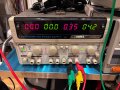
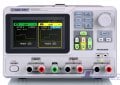
IMG-20251211-WA0009.jpgSiglent-SPD3303X-E-Power-Supply-Front.jpg

The Tenma already has a good toroidal transformer with 2 x 35v/3.2A, 2 x 18-0-18 and 2 x 15v windings plus rectifiers and smoothing caps. Replacing the individual main channels with a LM2596 buck converter+ LT1083 (7A) linear regulator would be relatively easy using modified off-the-shelf modules. I've tested the LM2596 already (see photo below left) .using a '3Amp' off-the-shelf module (which is only good for 2A before thermal shut-down) with an NE5532 opamp in the feedback loop subtracting a reference voltage from Vout to give the required 1.24v feedback voltage and this works well with excellent linearity and response - will track a sine wave to ~55Hz and a sawtooth to ~75Hz with a step response 3 -> 15v. better than 5mS. The LT1083 module won't be here until Jan 5, but will test that out as well using a similar setup. The final arrangement will see the LM2596's reference track 3v above the LT1083 reference using the ubiquitous TL431 voltage reference. All being well I may go to a custom PCB for the two regulators to ensure adequate heatsinking. I've also acquired a '20A' buck converter module as an alternate to the LM2596 - see photo below right. The vendors have ground the part number off the controller chip (the b......ds) but a quick check of the PCB layout and components reveals its most likely a TI TPS4005x or similar Chinese copy. I've not tested it yet - looking at the PCB traces, 20A is unlikely but 5 - 7A will certainly be possible.

On the control side, an ESP32 with a 2-channel 16-bit 32v DAC for the reference volts (TI DAC61402, expensive at 12GBP, but 32v output simplifies things a lot), MCP4725 12-bit DAC for current setting and an ADS1115 4-channel 16-Bit ADC for voltage/current feedback, plus keypad, 480 x 320 tft display and a custom new front-panel. Total estimated cost <150GBP. Thoughts, ideas and suggested improvements welcome!
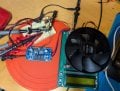
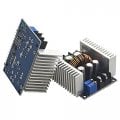
lm2596 testing.jpg20A buck module.jpg
 
Last edited:

wayneh

Joined Sep 9, 2010
18,085
Thoughts, ideas and suggested improvements welcome!
I noticed your thread had 24 views but zero responses. Surely, I thought, someone could say SOMEthing helpful.

I don't think I can say anything useful about your project but maybe you'll get more feedback with a less daunting post. Your first post stands as a great reference for anyone digging in. Kudos for supplying necessary info, but it's hard to stay with it. Try breaking it up into smaller subtopics/questions so you can be more specific. Fish will bite with the right bait.
 

Thread Starter

Irving

Joined Jan 30, 2016
4,996
@wayneh Thanks for your feedback. TBH this was going to be a blog and a project document but I couldn't get my head around the blog system on here. Catch-22, we always complain that TS typically don't give enough or complete info, so its a bit ironic to be chastised for doing so ;) but I get your point. I wasn't expecting much feedback over Xmas or NY anyway!
@tautech Agreed, and I may yet go down that route, but its been an expensive year so I'm trying to cut back a bit. Most of my Siglent kit was bought through the Uni at a substantial discount but that's not an option any more.
 

wayneh

Joined Sep 9, 2010
18,085
My only advice is recognize that you're in a standard make-or-buy decision, one that is very common in business but also in our personal lives. There are good reasons on both sides of the decision and I think it was Benjamin Franklin that recommended making a list of pros and cons. Availability of a commercial product is often a very strong reason to buy rather than build.

One question to ask yourself is whether you would pay someone else, even at minimum wage, to do the project you're considering for yourself. I've had project ideas that once I framed it that way, the answer was "hell no". If a project only makes sense if your time is worthless, maybe it's not the best use of your time.

I'm a DIY guy and it's often hard to say no.
 

MisterBill2

Joined Jan 23, 2018
27,159
I have not made any response because, like already stated, that is a seriously major project.
I am not familiar with the supply you have..
IF it has the option of external remote programming then an external computer controlled scheme may be possible.
I own a similar single voltage power supply, and what it has is course and fine setting knobs. THAT could be an alternative that might be a lot simpler, and not require a massive redesign effort.
Another option that I suggest is a used computer controlled power supply. HP has produced those for many years.
 

Thread Starter

Irving

Joined Jan 30, 2016
4,996
Thanks @wayneh @MisterBill2 This is, to some extent, an intellectual exercise. I could easily buy an off-the-shelf product. I could equally spend a few hours fixing the existing issue with channel 2 - though that doesn't resolve the knob problem or lack of programmability and 25+y old PCBs are notoriously fragile. I could design/build a single channel offline smps + linear back-end as I only really need a single channel programmable supply. But the idea of repurposing readily available cheap smps and linear modules into a replacement near-lab-quality psu with some useful new features like a decent display, WiFi/BT/USB programmability, and, as already said - specifically for me - having no knobs to turn (I cannot physically grasp a knob, but I can push buttons), intrigued me. Once the linear module arrives next week and I've had a play with it, then I'll think further on it.

For the record, I've designed, built and/or managed many projects over the last 50y so I'm well versed in the buy v build calculations, whether its a home DIY project or, to give one example, a £65M refurb of a manufacturing plant (mostly bought-in, but some £10M of which I and my team of 3 redesigned/rebuilt in-house from scratch to control intellectual property). I've also mentored 'small businesses' for a local council; the number that thought they had a small business when in fact it was only an uncosted hobby was surprising.
 

rsjsouza

Joined Apr 21, 2014
424
Interesting project. As others have said, I would carefully consider the amount of time to test and complete this project. If you have plenty of time, I would go for it at least to become a learning exercise.

One aspect to be cautious about the switching modules: make sure they survive and recover gracefully from extreme shorts or some reverse voltages on their outputs. Lots of these modules are either faulty of poorly designed and they might fail catastrophically if stressed.
 

MisterBill2

Joined Jan 23, 2018
27,159
Certainly rsj is correct in the caution about whatever modules might be included in the re-design!. Without adequate knowledge of the strength and capabilities of modules, either from the existing supply or purchased new but without any documentation, it is all a gamble. Not all products offered on the internet are as good as they are claimed to be. (Quite an understatement there.)
 

Thread Starter

Irving

Joined Jan 30, 2016
4,996
Time is not an issue, as I'm retired - though I do have some ongoing commercial work.

I'm well aware of the 'limitations' of off-the-shelf modules. The LM2596 buck converter chip, for example, is pretty indestructible with its internal short circuit, temperature and ovp/uvlo circuitry, however the implementation of some modules leaves a lot to be desired; they typically have less than adequate heatsinking which, while not detrimental to the chip itself, prevents it working to its capabilities, especially the TO-263 SMD device that is the preferred chip for these cheap modules. It's not hard to assess their quality from visual inspection and some simple testing.
 

MisterBill2

Joined Jan 23, 2018
27,159
How accurate are the digital meters on your current power supply? I have an interesting idea. I am guessing that otherwise the performance of the present supply is satisfactory. Regulation and noise annd isolation from mains disturbances.
 

Thread Starter

Irving

Joined Jan 30, 2016
4,996
How accurate are the digital meters on your current power supply? I have an interesting idea. I am guessing that otherwise the performance of the present supply is satisfactory. Regulation and noise annd isolation from mains disturbances.
3 digits. Voltage 00.0 - 31.9, Current 0.00 - 2.99 nominally.

Ideally I'd like 4 digits on both; changing them to 4-digit would be relatively simple, but doesn't address the bigger issues. Regulation and noise isn't bad, given its a 40+ year old design with discrete transistors and a handful of uA741 opamps, though how close to those specs it is now I couldn't say.

1767282314423.png

Surprisingly, the new Siglent SPD3303X-E is not significantly better on spec than that, despite a 40y difference in age!
 

MisterBill2

Joined Jan 23, 2018
27,159
The reason I asked about the meters was about the possibility of using the digital signals from the meters as digital feedback to a computer that was operating a position servo to adjust the voltage control.Quite a different concept, but possibly simpler and not requiring the design of a new power supply system. And the computer would be part of the closed loop system. That would allow setting the voltage within the resolution of the voltage measurement system, which might be good enough.
 

tautech

Joined Oct 8, 2019
496
3 digits. Voltage 00.0 - 31.9, Current 0.00 - 2.99 nominally.

Ideally I'd like 4 digits on both; changing them to 4-digit would be relatively simple, but doesn't address the bigger issues. Regulation and noise isn't bad, given its a 40+ year old design with discrete transistors and a handful of uA741 opamps, though how close to those specs it is now I couldn't say.

View attachment 361462

Surprisingly, the new Siglent SPD3303X-E is not significantly better on spec than that, despite a 40y difference in age!
3 times as good actually.
Way down at 350uV ripple and noise is still difficult to measure even 40yrs later.
Tried with a scope with 500uV/div sensitivity just a few years ago and only saw noise.
 

Thread Starter

Irving

Joined Jan 30, 2016
4,996
3 times as good actually.
Way down at 350uV ripple and noise is still difficult to measure even 40yrs later.
Tried with a scope with 500uV/div sensitivity just a few years ago and only saw noise.
I'll take your word on that, I was just looking at the headline specs on datasheet:

1000008161.png

From that only the step response is better (which you would expect from higher GBW of later opamps).
 

MisterBill2

Joined Jan 23, 2018
27,159
OK, quite good specifications. Certainly adequate for most work.
My supply is similar, but only one output, 1 to 50 volts at 0 to 50 amps (claimed). the max output requires 240 volt operation for the2500 watts out. I run it on 120 mostly, and so far no problems.
The really funny part is that I got it really cheap "because it did not work."
i READ THE MANUAL, AND REALIZED THAT WHEN when the "over-voltage" limiter knob was set to zero there would be no output. Probably the easiest repair ever.
 

tautech

Joined Oct 8, 2019
496
OK, quite good specifications. Certainly adequate for most work.
My supply is similar, but only one output, 1 to 50 volts at 0 to 50 amps (claimed). the max output requires 240 volt operation for the2500 watts out. I run it on 120 mostly, and so far no problems.
The really funny part is that I got it really cheap "because it did not work."
i READ THE MANUAL, AND REALIZED THAT WHEN when the "over-voltage" limiter knob was set to zero there would be no output. Probably the easiest repair ever.
:)
Yep you can get caught with the modern PSU and many have been sold cheap as not working when it's only the current was set to zero !

Another catch for the Asian linear PSU is when sold to NA and their 110VAC mains is to not have the mains inputs set to 110 when they are made in a 230VAC country.
 

MisterBill2

Joined Jan 23, 2018
27,159
My power supply IS setup for 240 volts, however, since I have only been using the lower portion of it's capabilities, the performance operating on 120 volts has been satisfactory. That is amazing, as I see it.
 

tautech

Joined Oct 8, 2019
496
My power supply IS setup for 240 volts, however, since I have only been using the lower portion of it's capabilities, the performance operating on 120 volts has been satisfactory. That is amazing, as I see it.
SMPS ?
They most often don't care about input mains voltage and often operate from 80VAC to 260VAC.

If linear the transformer night be under stress when operated at the incorrect mains voltage.
 

MisterBill2

Joined Jan 23, 2018
27,159
For the supply of mine, to deliver the rated 50 volts at the rated 50 amps=2500 watts, I would need quite a lot mre than available at my 12 volt outlets with 15 amp circuit protection in this old house. Only a very few 20 amp outlets. I don't need more in most places.
 
Top