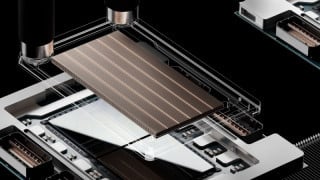
Planar phased array project

Thread Starter

Sabro

Joined Jul 22, 2022
69
Good morning, gentlemen, regarding a planar phased array project, I have some gaps that I would like to fill, and I hope to resolve them with your valuable help. So, considering this planar array, I thought about using patch antennas or PIFAs, but which are the best? What sizes should they have considering a transmission frequency of 800 MHz? Can they be a third of the length, which for me would be ideal, or am I forced to use half a wavelength? And also, can I use a double array, such as a multilayer? I can't find satisfactory answers to these questions, can you help me???
 

MisterBill2

Joined Jan 23, 2018
27,195
What to use for a Phased Array antenna depends very much on what you want to achieve. For amatuer radio communications the goal is usually to point the signal in a single direction, and mostly that is done with what are called "beam antennas", rather than "phased arrays", which is actually what they are a form of.
In the 800 MHz era of cellular telephones there was quite a bit of phasing done to avoid cell to cell interference. So there should be a lot of information available.
 

Thread Starter

Sabro

Joined Jul 22, 2022
69
ok,
you say you cant find ...
where have you looked ?
whats you experiance with Rf and in particukar with phased arrays ?
how are you looking to change the phase of the signals radiated / received ?

https://publications.sto.nato.int/publications/STO Educational Notes/RTO-EN-SET-086bis/EN-SET-086bis-01.pdf

https://www.trsrentelco.com/sites/default/files/content/resource/pdf/2025-03/How to Design and Test a Phased Array Antenna (1).pdf

Thanks for your reply. Even though it's paradoxical, I can't find a satisfactory solution. Usually, a quarter-wave antenna is more efficient than a third-wave antenna, but in an array, it's the exact opposite. Is this information true? I'd be better off using cavity patch antennas or quarter-wave PIFAs. What do you think? And for multilayer applications, can I use a quarter-wave antenna, or will I end up with a feed network that's too complex?
 

Thread Starter

Sabro

Joined Jul 22, 2022
69
What to use for a Phased Array antenna depends very much on what you want to achieve. For amatuer radio communications the goal is usually to point the signal in a single direction, and mostly that is done with what are called "beam antennas", rather than "phased arrays", which is actually what they are a form of.
In the 800 MHz era of cellular telephones there was quite a bit of phasing done to avoid cell to cell interference. So there should be a lot of information available.
Thanks for your reply. Yes, I could use directional antennas like parabolic antennas, but I'm also interested in the issue of wave beats, so I have to use more than two elements, and with the array I get everything. My question is: can I use patch or quarter-wave PIFA antennas, or am I forced to use half-wave or third-wave antennas? Even though a ground plane and ceramic insulators are required, but reality allows it, I would like to use the quarter-wave to be able to insert as many antennas as possible. What do you think?
 

drjohsmith

Joined Dec 13, 2021
1,561
Thanks for your reply. Even though it's paradoxical, I can't find a satisfactory solution. Usually, a quarter-wave antenna is more efficient than a third-wave antenna, but in an array, it's the exact opposite. Is this information true? I'd be better off using cavity patch antennas or quarter-wave PIFAs. What do you think? And for multilayer applications, can I use a quarter-wave antenna, or will I end up with a feed network that's too complex?
you can use any set of antena for a phased array, your wifi router probably has simple phased array, MIMO.
ive seen yagi , patch, L etc

if your really looking at a phased arrsy, you wpuld normaly start with very expencive simulation sw.

there is plenty of data out there,
 

Thread Starter

Sabro

Joined Jul 22, 2022
69
you can use any set of antena for a phased array, your wifi router probably has simple phased array, MIMO.
ive seen yagi , patch, L etc

if your really looking at a phased arrsy, you wpuld normaly start with very expencive simulation sw.

there is plenty of data out there,
Patch antennas are almost always used for their high phase gain, ease of assembly, and control. The MIMO system has very complex management software; I'll limit myself to simple phase directionality. So, what antenna size is best? A quarter wave, a third wave, or the classic half wave?
 

drjohsmith

Joined Dec 13, 2021
1,561
Patch antennas are almost always used for their high phase gain, ease of assembly, and control. The MIMO system has very complex management software; I'll limit myself to simple phase directionality. So, what antenna size is best? A quarter wave, a third wave, or the classic half wave?
What do you define as best ?
Classic is because it's a good compromise
You need to do the maths / simulation to see what the trade offs are .
The number of antenna in the array and your assembly technique are a big decision maker.
Are you looking to make the phase control variable per element or per linear array or per plane affects the decisions..
What do you think are the pro conn on different types of antenna in the assembly technique your looking at using
What are the results from simulation ?
I'd be expecting as a minimum MATLAB simulations of beam patterns , efficiency .
 

Thread Starter

Sabro

Joined Jul 22, 2022
69
What do you define as best ?
Classic is because it's a good compromise
You need to do the maths / simulation to see what the trade offs are .
The number of antenna in the array and your assembly technique are a big decision maker.
Are you looking to make the phase control variable per element or per linear array or per plane affects the decisions..
What do you think are the pro conn on different types of antenna in the assembly technique your looking at using
What are the results from simulation ?
I'd be expecting as a minimum MATLAB simulations of beam patterns , efficiency .
Making the phase control for each element is a very difficult task, we are talking about AESA technology, and I am not so expert to get to those levels, so the phase control will have to be for the array. Unfortunately, I do not have simulation software available, they are expensive. My goal is simply to point the array towards a target in front, and by dividing the number of antennas, the first group of antennas pulses at one frequency (2000 Hz) and the second group at another frequency. Obviously the carrier will be a single 800 MHz, and so I create beats in a single area. But even now I can't find the solution for the best antenna. Is it a half-wave antenna that has gain but only 4 are used, or a quarter-wave antenna that requires more antennas but with less efficiency? So for the nio array, which is the best solution? Yesterday I was studying, and I discovered the Vivaldi antennas that could be right for my case. What do you think?
 

drjohsmith

Joined Dec 13, 2021
1,561
Making the phase control for each element is a very difficult task, we are talking about AESA technology, and I am not so expert to get to those levels, so the phase control will have to be for the array. Unfortunately, I do not have simulation software available, they are expensive. My goal is simply to point the array towards a target in front, and by dividing the number of antennas, the first group of antennas pulses at one frequency (2000 Hz) and the second group at another frequency. Obviously the carrier will be a single 800 MHz, and so I create beats in a single area. But even now I can't find the solution for the best antenna. Is it a half-wave antenna that has gain but only 4 are used, or a quarter-wave antenna that requires more antennas but with less efficiency? So for the nio array, which is the best solution? Yesterday I was studying, and I discovered the Vivaldi antennas that could be right for my case. What do you think?
Sounds like this is university homework ?
As you have so little support and so little time , I'd go with classic design ..
Lots of options out there. Your professor is looking for you to define and justify what is best for you , not just find names and ask .
Try a table / spreadsheet
List the parameters you think are important to distinguish , and then fore each type / option you have a scoring method.

If your carrier is fixed , how are you modulating your two signals . What do you expect to happen when you modulate to the beam angle ?
 

Thread Starter

Sabro

Joined Jul 22, 2022
69
Sounds like this is university homework ?
As you have so little support and so little time , I'd go with classic design ..
Lots of options out there. Your professor is looking for you to define and justify what is best for you , not just find names and ask .
Try a table / spreadsheet
List the parameters you think are important to distinguish , and then fore each type / option you have a scoring method.

If your carrier is fixed , how are you modulating your two signals . What do you expect to happen when you modulate to the beam angle ?
Most of the project is in an advanced stage, the dimensions will be 50 cm on each side, the carrier of 800 mhz, and each group of antennas amplitude modulated (pulsed) at a different frequency (2000 hz and 3000 hz) the antennas are cavity patches, and grid arrangement with multilayer, I will also have space for the feed network and I will be able to use the Rogers dielectric if I can but this will depend on the size of the antenna, i.e. whether half wavelength or a quarter wavelength, unfortunately I can't figure out what is best for my project and that is to create an area in front of the array in which the beat between waves of different modulation occurs, I really can't solve this, can you help me??
 

drjohsmith

Joined Dec 13, 2021
1,561
Most of the project is in an advanced stage, the dimensions will be 50 cm on each side, the carrier of 800 mhz, and each group of antennas amplitude modulated (pulsed) at a different frequency (2000 hz and 3000 hz) the antennas are cavity patches, and grid arrangement with multilayer, I will also have space for the feed network and I will be able to use the Rogers dielectric if I can but this will depend on the size of the antenna, i.e. whether half wavelength or a quarter wavelength, unfortunately I can't figure out what is best for my project and that is to create an area in front of the array in which the beat between waves of different modulation occurs, I really can't solve this, can you help me??
[/QUOTE

Phased arrays are typical used when one wants to beam form and scan the beam .
But this involves either frequency sweeping the carrier or phase changing the elements .
You don't seem to be doing either of these , so why does your professor want a phased array?
In that case , best for you would seem to be the simplest to build .

Why are you looking at the Rodgers dialectric PCB material at 800 MHz carrier .

What do you think are the pro and cons of the 1/4 and 1/2 patch ?

What equations are you using to determine patch location , distance between patches ?
This affects the gain and near / far field and gain you achieve .

We did all this back in the late 1970s using slideruler and tables . But I'd not want to do things without simulation nowadays.
 
Last edited by a moderator:

MisterBill2

Joined Jan 23, 2018
27,195
Various military radar systems have used phased array antennas for decades. BUT those antennas are MUCH larger than half a meter squares. AND a whole lot more complex. AND probably rather secret in just how they work. So the critical information exists but it may be rather secret.
 

drjohsmith

Joined Dec 13, 2021
1,561
Various military radar systems have used phased array antennas for decades. BUT those antennas are MUCH larger than half a meter squares. AND a whole lot more complex. AND probably rather secret in just how they work. So the critical information exists but it may be rather secret.
On the contrary @MisterBill2
Phased arrays are used from missiles up through ship systems to land based .
One could argue the OTH systems such as the woodpecker were phased arrays .
Also just about every cell station mast will use active phased arrays.
Even the radar on your car or your mobile phone is likely to use phased multiple antennas .
I first worked on them in the 70s , our prototype was about 500mm by 500mm
All the information the op wants are covered in many books .
Mill systems , yes the details are secret
But that's more to do with if you have pictures of the antenna , you can relatively easily work out it's frequency coverage , likely tx and rx range , more importantly the side load density and azimuth .
All very useful in countering the radar .
 

Thread Starter

Sabro

Joined Jul 22, 2022
69
On the contrary @MisterBill2
Phased arrays are used from missiles up through ship systems to land based .
One could argue the OTH systems such as the woodpecker were phased arrays .
Also just about every cell station mast will use active phased arrays.
Even the radar on your car or your mobile phone is likely to use phased multiple antennas .
I first worked on them in the 70s , our prototype was about 500mm by 500mm
All the information the op wants are covered in many books .
Mill systems , yes the details are secret
But that's more to do with if you have pictures of the antenna , you can relatively easily work out it's frequency coverage , likely tx and rx range , more importantly the side load density and azimuth .
All very useful in countering the radar .
the translator translated badly, I wanted to write that there was no text in your last comment and then there was the writing (edited by the moderator) yes the translator got confused, anyway yes, the dimensions of my planar array are 50 x 50 cm, cavity patch antennas, with double layer configuration, use of the rogers for easier and less cumbersome feed network, phase managed by software and probably microcontroller, but these last details will be executable only if I know the size of the antennas, also for the power supply I need to know the number of antennas, so I'm stuck, obviously the focalization will take place in the Frasnel area which for the dimensions and the frequency is around 100 cm, but I don't know whether to use the half-wave or quarter-wave patches and I don't have any expensive simulator available, I should also do beamforming hopping that is changing the position of the focal point without moving the antennas, that is I'm here precisely because I can't find the answer alone, no I want to do military things but only aim at one point
 

Thread Starter

Sabro

Joined Jul 22, 2022
69
@drjohsmith I noticed that you are very expert in this topic since you have been working on it since the 70s, so you and @MisterBill2 are more suitable people to fill my doubts, I can do many things on my own but on certain topics I just can't do it alone, because even if I read books, all the answers would be right, in my case using half-wave patches gives me more gain while the pifas give me more antenna density, so both answers at first glance could be correct, but to choose you need your experience that no book will ever be able to surpass and have
 

drjohsmith

Joined Dec 13, 2021
1,561
@drjohsmith I noticed that you are very expert in this topic since you have been working on it since the 70s, so you and @MisterBill2 are more suitable people to fill my doubts, I can do many things on my own but on certain topics I just can't do it alone, because even if I read books, all the answers would be right, in my case using half-wave patches gives me more gain while the pifas give me more antenna density, so both answers at first glance could be correct, but to choose you need your experience that no book will ever be able to surpass and have
So in the case of many answers
You make a table of the different answers, proa and cons of each , then weight the response dependent on your constraints
For instant
Do both require the same level of difficulty in building
Do both come out with the same beam shape , which beam shape do you want
Etc.
Can you do that ?

Also , do a quick mechanical design , how big is each patch , how far apart are they
What arrangement of antennas ? Hex, conical , random or what. .
Then look at how your going to feed them ,
Which layout would make your routing easier
 

Thread Starter

Sabro

Joined Jul 22, 2022
69
So in the case of many answers
You make a table of the different answers, proa and cons of each , then weight the response dependent on your constraints
For instant
Do both require the same level of difficulty in building
Do both come out with the same beam shape , which beam shape do you want
Etc.
Can you do that ?

Also , do a quick mechanical design , how big is each patch , how far apart are they
What arrangement of antennas ? Hex, conical , random or what. .
Then look at how your going to feed them ,
Which layout would make your routing easier
Ok fine I'll do it and try I hope I can do it
 
Top