Unknown type of polyswitch

Thread Starter

MisterLonewold

Joined Jun 5, 2025
20
Hello everyone

This is my first time hearing about this site and thus also posting here. I was curious if anyone knows what kind of polyswitch fuse device things the following descriptions are, they are both orange flat rectangular components with each 2 leads:
- one has the marking P 30V IH33 and is very flat, it comes from an old logitech mx700 charging cradle
- the second has the marking P 30V KH33 and is kind of bloated, it koms from an old logitech mx900 optical bluetooth mouse charging cradle

I was curious what exactly they are and what there specs were, maybe i coudl switch them around in both cradles? A datasheet would be amazing but they are pretty old so I couldn't find it. The reason i wanna know is cause i wanna us the mx900 mouse but the cradle or mouse doesnt charge correctly. It olny charges the 2xAA nimh batteries to 1.36 volts while a dedicated charger charges them to 1.45 ish volts. So i am looking for the problem and found those components i dont know.

Many thanks in advance for reading mine broken English :)
 

Thread Starter

MisterLonewold

Joined Jun 5, 2025
20
Interresant to note is that the IH33 from the mx700 measures 0.18Ohm with a joyit jt-lcr-t7 tester (without desoldering) and the KH33 from the mx900 measures in the same way 16.6Ohm and 1221 mH. So i guess the latter one is broken? But i still dont know enough information to be sure and if it is to order a new one.
 

wayneh

Joined Sep 9, 2010
18,085
What is a polyswitch? Is that a brand name? A picture would help but I know there may be a restriction on new members.
 

AnalogKid

Joined Aug 1, 2013
12,043
Decades old. Working from memory, invented by Raychem, called PolySwitch, then owned by Tyco. Littlefuse also uses the term PolySwitch, so I don't know who the current owner is.

It is a relatively fast-acting positive temperature coefficient resistance device. It acts as a self-resetting fuse or self-resetting circuit breaker. Note that unlike either of those devices, a PolySwitch never becomes a true open circuit; there always is some leakage current. Also, the resistance of the "closed" (low-resistance) state increases a small amount with each trip cycle.

https://www.littelfuse.com/products/fuses-overcurrent-protection/polyswitch-resettable-pptc-devices

ak
 
Last edited:

Thread Starter

MisterLonewold

Joined Jun 5, 2025
20
What is a polyswitch? Is that a brand name? A picture would help but I know there may be a restriction on new members.
Well, i also didnt know what it was, but i came across it and it looked pretty much identical. it seems indeed to be a resetabble fuse of some kind or so, but i dont know how to identify these either since i never worked with these before. As about the picture you asked, currently i am testing another charge cycle with the mice but when thats finished ill see if i can post a picture of both of them.
 

Thread Starter

MisterLonewold

Joined Jun 5, 2025
20
Decades old. Working from memory, invented by Raychem, called PolySwitch, then owned by Tyco. Littlefuse also uses the term PolySwitch, so I don't know who the current owner is.

It is a relatively fast-acting positive temperature coefficient resistance device. It acts as a self-resetting fuse or self-resetting circuit breaker. Note that unlike either of those devices, a PolySwitch never becomes a true open circuit; there always is some leakage current. Also, the low-resistance state becomes a little higher resistance with each trip cycle.

https://www.littelfuse.com/products/fuses-overcurrent-protection/polyswitch-resettable-pptc-devices

ak
Yes i fount littlefuse aswell, but i cant identify what kind of "fuse"they are, like the actual specs and how the karacteristics are supposed to be. However its very interesting how you described it, i did not know that. Thank you for the descriptive information! :)
 

AnalogKid

Joined Aug 1, 2013
12,043
For some of their parts series, the datasheet has a table relating the part numbers to the device markings. Finding your part can be tedious work. Consider calling Littlefuse and having them tell you.

ak
 

Thread Starter

MisterLonewold

Joined Jun 5, 2025
20
What is a polyswitch? Is that a brand name? A picture would help but I know there may be a restriction on new members.
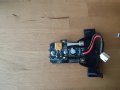
IMG_20250606_123058.jpg
Here is the picture of the mx700's cradle, the orange rectangle is the IH33 one. The KH33 from the mx900's cradle looks very simalair, except for the fact that its a bit more bloated, you dont see the digonal rib (which i presume is a part of the right leg since it goes to that one), which you do see with the IH33 one.
 

Thread Starter

MisterLonewold

Joined Jun 5, 2025
20
For some of their parts series, the datasheet has a table relating the part numbers to the device markings. Finding your part can be tedious work. Consider calling Littlefuse and having them tell you.

ak
I seem to need a partnumber to contact them, but I don't have that.
 

Tonyr1084

Joined Sep 24, 2015
9,744
Welcome to AAC.

You say you need a part number?
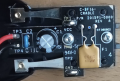
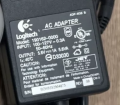
Screenshot 2025-06-06 at 6.26.39 AM.png
Part Number 201591-0000 might be a good starting point. A few more pictures of the whole assembly might be helpful as well. I know you're asking about F1, the IH33 component. IH33 is the value of the component. Unfortunately I don't know how to read that number. Nor do I know much - if anything about that part.

Why are you asking about F1 (F1 - stands for "Fuse #1")? Is it bad? How do you know it's bad? If you don't know then why are you wanting to replace it? Obviously it's a part of a protection circuit so you don't start a fire. There's a saying sort of that says if you start replacing parts you'll have a new car for your radiator cap. It makes better sense to determine what is at fault and why before you start throwing parts at the problem. In this case you might end up with a new board for your plastic housing.
 

Thread Starter

MisterLonewold

Joined Jun 5, 2025
20
Part Number 201591-0000 might be a good starting point.
This number does not really show anything usefull for me.
A few more pictures of the whole assembly might be helpful as well.
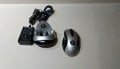
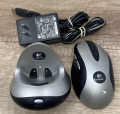
This is the only module in the dock related to the charging circuit. but for context this is the cradle and mouse of that specific pcb.1749214058647.jpeg
Why are you asking about F1 (F1 - stands for "Fuse #1")? Is it bad? How do you know it's bad? If you don't know then why are you wanting to replace it? Obviously it's a part of a protection circuit so you don't start a fire. There's a saying sort of that says if you start replacing parts you'll have a new car for your radiator cap. It makes better sense to determine what is at fault and why before you start throwing parts at the problem. In this case you might end up with a new board for your plastic housing.
Yes, i get what you mean. The thing is that i am trying to determen if one of those 2 fuses are broken since thats the only difference for the docks (bot the earlier mx700 mouse and the mx 900 mouse have such a dock, the one of the mx900 is one with the problem). The difference between them is that the mx700 dock's fuse (the one of the picture i gave) is measurign about 0.18Ohm with my smart meter (joyit device i mentioned before) while the one of the mx900 (not shown since i am still testing it in a different way) is the exact same pcb but the fuse (though it looks to be the same) has a different number (KH33) and is bloated in comparison with the showed pcb. The bloated on measures 16.6Ohm and 1221mH with the joyit measure device, which is completely different from the shown pcb one. Thats why i though, if i could find the datasheet, i could figure out if it was dying or so. Ofcourse the problem could be something completely different aswell since the rest of the charging circuit seems to be located in the mice themselfs. But again, this was the first "bigger" difference i found, so to figure out the problem i wanted to do it step by step with this one as the first step. Though if i dont find any info about it ill proceed to the mouse itself.
 

Tonyr1084

Joined Sep 24, 2015
9,744
I've seen other PS's (Poly Switch) with various markings. Based on what I've seen, yours is a 330mA (0.33A) fuse. Not certain, but IH may indicate High Breakpoint Current (LH = Low Breakpoint Current). Exactly what that means - I don't know. I've seen PS's marked 400 and rated at 4A. So I'm fairly confident yours is a 330mA fuse.
 

Tonyr1084

Joined Sep 24, 2015
9,744
The difference between them is that the mx700 dock's fuse •••{and}••• the mx900 ••• is bloated in comparison with the shown PCB.
They are coated with a brittle coating. If one has bloated for some reason then the coating will be fractured. Simply being a different size doesn't necessarily mean component failure. Even if they are the same exact number. One could have more coating than the other. If their numbers are different - then it's likely that size is part of the construction of the switch.
The difference between them is that the mx700 dock••• is measurign about 0.18Ω ••• while the ••• mx900 ••• measures 16.6Ω
Measuring the two devices should not be done in circuit. Other parts of the circuitry will affect the reading. You need to desolder one lead before taking the measurement. Once done you can resolder the lead back into the PCB.
 

AnalogKid

Joined Aug 1, 2013
12,043
You say you need a part number?
Part Number 201591-0000 might be a good starting point.
He meant a PolySwitch part number. My suggestion is to give LittleFuse the markings on the part and the photo, and let them find the corresponding part number. If you get the "right" person in Customer Service, they will send you a couple of samples.

ak
 

Tonyr1084

Joined Sep 24, 2015
9,744
Again, I'm not the expert on these things, but since it is a fuse or a self resetting switch, a resistance of 180mΩ would suggest a good fuse whereas one with a resistance of 16.6Ω would indicate a blown fuse. Since they are self resetting I don't know what to make of the differences.

Assuming 5V, a 0.18Ω resistor (according to Ohms law) equals 27.8 amps. Not that that much current is flowing through the circuit, just what Ohm's law predicts. Other resistive elements in the circuit will certainly drop the amount of current passing through. Now, assume 5V and 16.6Ω resistor, Ohm's law predicts 301mA (0.3A). In that condition there would be a lot of resistance to charging. But again, I just don't know these things to be factual. I'm trying to work this out with you.
 

panic mode

Joined Oct 10, 2011
4,864
did you try to see if any marks are on the PCB silkscreen underneath the fuse? just bend it up and look.

at least the application is clearly defined.
1749214658598.png

even the PSU output is readily visible so it cannot be more than 1A.
1749214725661.png

finally one can look through datasheets of current crop of such products,
https://www.mouser.ca/c/circuit-pro...table-fuses-pptc/?mounting style=Through Hole

wire sizes and tracks also tell what values are plausible. this must me under 1A that PSU is rated for. thankfully poly fuses do not come in that great variety in that current range and mentioned voltage rating. so considering marking "33" this is either 33mA or 330mA. and - i do not see anything under 50mA so i would say 330mA is the most likely value.
 

Thread Starter

MisterLonewold

Joined Jun 5, 2025
20
They are coated with a brittle coating. If one has bloated for some reason then the coating will be fractured. Simply being a different size doesn't necessarily mean component failure. Even if they are the same exact number. One could have more coating than the other. If their numbers are different - then it's likely that size is part of the construction of the switch.
Ah i did not know this, interesting :)
Measuring the two devices should not be done in circuit. Other parts of the circuitry will affect the reading. You need to desolder one lead before taking the measurement. Once done you can resolder the lead back into the PCB.
Yes i know, but i initially did it to get some idea if they would give simelair values, since the rest of the circuit has exactly the same components (electrolyte 100ñF capacitor and a small ceramic one). But i dont get where the mH value comes from tho, even in circuit. But i think i am gonna take a look inside the mouse aswell for broken parts, if that doesnt deliver something i will probably desolder them and check.
He meant a PolySwitch part number. My suggestion is to give LittleFuse the markings on the part and the photo, and let them find the corresponding part number. If you get the "right" person in Customer Service, they will send you a couple of samples.
Thats certainly worthed to check out, ill try that in the future.
Again, I'm not the expert on these things, but since it is a fuse or a self resetting switch, a resistance of 180mΩ would suggest a good fuse whereas one with a resistance of 16.6Ω would indicate a blown fuse. Since they are self resetting I don't know what to make of the differences.

Assuming 5V, a 0.18Ω resistor (according to Ohms law) equals 27.8 amps. Not that that much current is flowing through the circuit, just what Ohm's law predicts. Other resistive elements in the circuit will certainly drop the amount of current passing through. Now, assume 5V and 16.6Ω resistor, Ohm's law predicts 301mA (0.3A). In that condition there would be a lot of resistance to charging. But again, I just don't know these things to be factual. I'm trying to work this out with you.
Oh i dont know if i mentioned before but its probably important. The mx700 dock (IH33 fuse) is a dock that should charge with 50mA and the mx900 dock (the KH33 fuse) should charge with 300mA, atleast thats written on the docks. But since the batteries of the mx900 dont get fully charged i though there was not enough current to maintain its 6V input from the dock, hence i looked at these fuses.
 

Thread Starter

MisterLonewold

Joined Jun 5, 2025
20
did you try to see if any marks are on the PCB silkscreen underneath the fuse? just bend it up and look.

at least the application is clearly defined.
1749214658598.png


even the PSU output is readily visible so it cannot be more than 1A.
1749214725661.png


finally one can look through datasheets of current crop of such products,
https://www.mouser.ca/c/circuit-pro...table-fuses-pptc/?mounting style=Through Hole

wire sizes and tracks also tell what values are plausible. this must me under 1A that PSU is rated for. thankfully poly fuses do not come in that great variety in that current range and mentioned voltage rating. so considering marking "33" this is either 33mA or 330mA. and - i do not see anything under 50mA so i would say 330mA is the most likely value.
I didnt check under the fuse yet, never thought of it. So ill do it soon. as for the values, the one in the picture is for the dock that supposedly has only 50mA output, but the marking also says 33, just with different letters in front of them. Maybe i should make a clearer post with more pictures, ill do it once the charging test (which takes so long :( ) is done.
 

Thread Starter

MisterLonewold

Joined Jun 5, 2025
20
did you try to see if any marks are on the PCB silkscreen underneath the fuse? just bend it up and look.
So underneet the fuse is only a logitech logo by on the mx700 doc (not the prblem one, but the other is still charging and iff i stop it it starts from 0 till 8 hours again, i think its a timed charger or so, idk). BUT i did find a different number on that same fuse (the IH33) on the back side (very sneaky). It sais P30V I35U (I as in capital i), so the full number of this fuse for the mx 700 dock is : "P30V IH33 P30V I35U"

ps: if i look for p30V i35U on the internet i get intel core i5 processors lol
 
Top